?
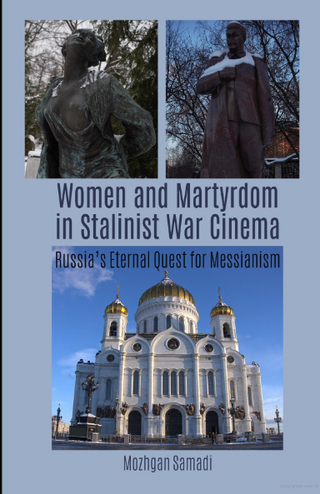
Women and Martyrdom in Stalinist War Cinema: Russia's Eternal Quest for Messianism
This monograph examines representations of women and martyrdom in Soviet war cinema of the Stalin era through an analysis of eight fictional films made between 1941 and 1953, that is from the German invasion of the USSR to the end of Stalin’s regime. It challenges the narrative maintaining that traditional gender differences were radically undone within Stalinist political culture, by demonstrating the extent to which cinematic gender roles were deeply rooted in the Russian Orthodox religious tradition.
The findings of this monograph contribute to the key discourses on Soviet modernity which concur that Stalinist policies were not coherently shaped by Marxist-Leninist ideology, but rather by particularistic traits, above all, traditional Russian Orthodox values. This book examines the female and martyrdom theme as mediator between, on the one hand, ideal female heroism and patriotic duty, and on the other hand, the everyday responsibilities of Soviet women as citizens and as family members. This study sheds new light on the impact of Russian cultural heritage on the Stalinist Ideological State Apparatuses, revealing strong connections between Russian particularism and Soviet universalism.
Mozhgan Samadi is Associate Professor at the HSE University, Moscow. She received her PhD from the University of Manchester, UK. Her main research interests include state-nation relations, women studies, religious studies, and cinema studies in Russia and the Middle East.