?
Role Models and Renegades: Tito’s Team as a Political Infrastructure and the Roots of the Soviet-Yugoslav Split 1938–1948
P. 185–211.
This article will examine the theoretical and practical continuities of the Communist Party of Yugoslavia (KPJ) from Tito’s struggle to become general secretary in 1938 until the Tito-Stalin Split in 1948. I argue that the overarching political strategy of Tito and his closest associates, which remained fundamentally unchanged throughout this period, was a major, if not the primary, cause of the breakdown in Soviet-Yugoslav relations. While the distinctions seemed comparatively minor in the late 1930s, the war and revolution in Yugoslavia exacerbated them.
In book
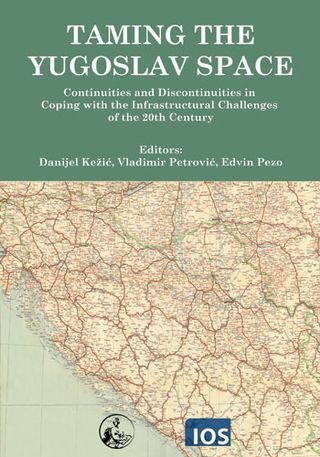
Beograd, Regensburg: Leibniz-Institut für Ost- und Südosteuropaforschung, 2023.
Gužvica S., Tokovi Istorije 2026 No. 1 P. 15–52
The paper analyzes the intellectual climate and political circumstances that shaped and heavily influenced the literary imagination and the semantic horizon of two novels—The Optimists: the Novel of a Revolution by Ervin Sinkó and Like a Tear in the Ocean: A Trilogy by Manès Sperber. Besides introductory remarks and conclusion, the paper’s structure is threefold, ...
Added: May 7, 2026
Дёмин Ю. А., Iranian Studies 2026 Vol. 59 No. 1 P. 55–72
The first decade after the end of the revolutionary events in Gilan (1920-21) was a period of active attempts by the Bolsheviks, the Communist International and the Communist Party of Iran to gain a solid social foothold in Iran. Thispaper, based mainly on Russian archival sources, focuses on studying the dynamics of the guidelines of the CommunistInternational and the Communist Party of Iran, the attempts and features of their implementation, as well as on therelationship of the Iranian Communists with the Bolsheviks and the leadership of the Communist International. The studydemonstrates that the main efforts of the Reds in 1922-25 were aimed at building an inter-class coalition, wherecooperation with Reza Khan became only part of these broader efforts. The failures led the Reds to a previously testedcourse of fomenting the agrarian revolution in Iran and repeated fiascos. Throughout this period, the leadership of the Communist Party of Iran was not a simple executor of directives, but took an active part in the decision-making process,involved the Bolsheviks in its internal party struggle and challenged high-ranking functionaries of the Communist International. ...
Added: April 12, 2026
Zagreb: Srpsko kulturno društvo “Prosvjeta”, 2025.
Milan Durman se bavio i perom i akcijom, među živim ljudima, piše Enis Zebić u biografiji hrvatskog Srbina koji je godinama uređivao najznačajniji hrvatski lijevi časopis nakon Krležinih - Književnik. Već kao dvadesetogodišnjak suorganizator je ilegalne komunističke tiskare u Zagrebu, a dvadesetak godina kasnije kao generalni sekretar Seljačkog kola neumorno na terenu zagovara suradnju Srba ...
Added: January 27, 2026
Gužvica S., , in: Political Transformations in the Interwar Period: The Case of Slovenian Political Thought.: Ljubljana: Inštitut za novejšo zgodovino, 2026. P. 127–135.
Albert Hlebec is a paradigmatic representative of a Slovenian independentist current within the Yugoslav communist movement. Given that the Yugoslav socialist state had eventually been formed on a federal basis, the independentist currents within various local sections of the party withered away after the intro-duction of the Popular Front policy in 1935. The Popular Front ...
Added: January 27, 2026
Gužvica S., , in: Political Transformations in the Interwar Period: The Case of Slovenian Political Thought.: Ljubljana: Inštitut za novejšo zgodovino, 2026. P. 105–114.
Godina was a Slovene participant in the October Revolution from Trieste who, upon his return home, become profoundly involved with Amadeo Bordiga's "ultra-left," rejecting parliamentary forms of struggle and the Bolshevik idea of land redistribution as an alternative to socialist collective agriculture in underdeveloped countries. Around 1923-24, he broke with communism completely, although he would ...
Added: January 27, 2026
Gužvica S., , in: Political Transformations in the Interwar Period: The Case of Slovenian Political Thought.: Ljubljana: Inštitut za novejšo zgodovino, 2026. Ch. 2 P. 53–63.
Srebrnič had a biography similar to Godina, being also a participant in the October Revolution and a "Bordigist" active in Triest. However, unlike Godina, he was of a peasant background, and was an active social democrat before 1914, particularly interested in the peasant question. His 1922 theses were prepared for the Second Congress of the ...
Added: January 27, 2026
Grishina D., Аксентьев Д. А., Корееведение 2025 № 4(13) С. 55–66
The article examines the emergence of the Seoul Faction on the Korean Peninsula during the 1920s. The Seoul Faction, also known as the Seoul Group, was one of the major groups within the Korean communist movement. The article analyzes the activities of representatives of the Seoul Faction and their relationships with the Co
mintern and other Korean communist ...
Added: January 11, 2026
Gužvica S., Historical Materialism 2025 Vol. 33 No. 2 P. 43–80
This article is a reassessment of the ‘right faction’ in the Communist Party of Yugoslavia (kpj) in the 1920s. This group confronted the party leadership and the Comintern over the applicability in Yugoslavia of Leninist self-determination until secession. As such, they had been variously described as either Austro-Marxists or Serbian nationalists. However, the right faction’s ...
Added: December 20, 2025
Ivanov Y., Территория: журнал исторических исследований 2025 Т. 1 № 3 С. 262–273
The article is a review of Claire Kaiser's book Georgian and Soviet: Entitled Nationhood and the Specter of Stalin in the Caucasus, which is dedicated to nation-building in Soviet Georgia. ...
Added: November 8, 2025
Vukliš V., Gužvica S., , in: Jugoslovenski dobrovoljci u odbrani Španske republike: tematski zbornik radova.: Beograd: Institut za noviju istoriju Srbije, 2024. P. 187–249.
Added: December 16, 2024
Beograd: Institut za noviju istoriju Srbije, 2024.
The collection contains works that contribute to existing analyzes of the causes, course and consequences of the war in Spain. The peculiarity of the approach is reflected in the choice of Yugoslavs as a paradigmatic group of participants in the war. The anthology complements the previous histories of the war through new research on the ...
Added: December 16, 2024
Molotov K., Khlevniuk D., Communist and Post-Communist Studies 2024 Vol. 57 No. 3 P. 81–103
Stalin’s era in Soviet history is one of the darkest. Nevertheless, despite numerous historical research, nonfiction and fiction, movies, and museum exhibitions exposing and discussing Stalin’s atrocities, a sizable portion of the Russian population is neutral at best and respectful at worst of Stalin’s leadership and personality. This article examines the “dark side” of Russian ...
Added: November 17, 2024
Samadi M., Cambridge Scholars Publishing, 2024.
This monograph examines representations of women and martyrdom in Soviet war cinema of the Stalin era through an analysis of eight fictional films made between 1941 and 1953, that is from the German invasion of the USSR to the end of Stalin’s regime. It challenges the narrative maintaining that traditional gender differences were radically undone ...
Added: September 9, 2024
Strakhov K., Городские исследования и практики 2022 Т. 7 № 2 С. 35–60
he intracity division of many Russian cities is a legacy of Stalinism. On what principles were intracity boundaries drawn in the late 1930s? This study considers Leningrad, the first city in the country where a fundamental district grid transformation was carried out in 1936.
The purpose of this article is to identify the administrative zoning principles of soviet cities during the fundamental ...
Added: February 29, 2024
Kozlov N., Теории и проблемы политических исследований 2019 Т. 8 № 6А С. 189–199
The article presents analysis and critical comprehension of the Bosnian Civil War 1992-1995 events. These events show one of the successful attempts of the Western establishment to weaken “evil” regimes in strategically important regions; such was the Balkan Peninsula those years. This topic is inexorably relevant because of ongoing color revolutions all around the world and ...
Added: February 4, 2024
Beograd, Regensburg: Leibniz-Institut für Ost- und Südosteuropaforschung, 2023.
This book is the result of close cooperation between the Leibniz Institute for East and Southeast European Studies in Regensburg and the Institute for Contemporary History in Belgrade. In 2019, a core group from these institutions developed a research proposal entitled “Resilient Infrastructures? Exploring Continuities throughout the Yugoslav 20th Century”. This cooperation was turned into ...
Added: January 22, 2024
Gužvica S., Casopis za Suvremenu Povijest 2023 Vol. 55 No. 2 P. 319–331
My colleague Matko Globačnik's review of my book "Prije Tita" abounds in factually incorrect claims and tendentious twisting of the arguments that I presented in the book, but also raises certain historiographically important topics that are of wider significance for historians in the territory of the former Yugoslavia. Because of the above, I considered it important, ...
Added: January 11, 2024
Gužvica S., Istorija 20. veka 2019 Vol. XXXVII No. 1 P. 53–74
This article will examine the course of the factional struggle between Yugoslav communists that developed behind the frontlines of Spain in 1938 and investigate the involvement of foreign communists in their dispute. I will attempt to contextualize the struggles inside the Communist Party of Yugoslavia (KPJ) within broader power dynamics of the Comintern during the ...
Added: November 17, 2023