?
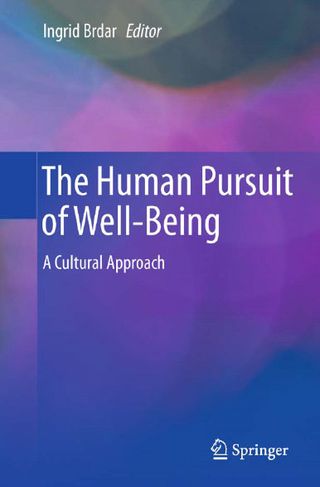
The Human Pursuit of Well-Being: A Cultural Approach
The contributions in this book are based on selected papers presented at the 4th European Conference on Positive Psychology held in Opatija, Croatia in 2008. The chapters are diverse in many ways, yet they all deal with the human pursuit of well-being. 22 chapters are grouped into six parts: happiness and well-being, motivation and goals, personality, academic performance and coping, measurement and intervention.
In Part I different aspects of Happiness and Well-Being are explored, beginning with an intriguing question: “Can We Get Happier Than We Are?” Other contributions analyze and discuss how several phenomena are related to well-being: self-serving attributional bias, affect specificity, leisure activities, the quality of subjective experience throughout daily life, benefits of positive emotions and predictors of post-traumatic growth in patients. The first is focused on biological origins of well-being, and the second analyses gender differences.
Part IV includes research on Academic Performance and Coping. The studies are focused on optimistic attributional style, patterns of self-regulated learning and burnout in secondary school context.
Part V is focused on Measurement and comprises three chapters which analyze psychometric characteristics of five different instruments: Ryff’s Psychological Well-Being Scales, Children Hope Scale, Students’ Life Satisfaction Scale, Keyes’ Mental Health Continuum and Vitality Scale.
Finally, Part VI describes and evaluates Interventions. The first contribution analyzes the effects of school interventions for promoting psychological well-being in adolescence. Other two interventions are aimed for specific groups: obese individuals and male disadvantaged adolescents.
Part II deals with Motivation and Goals. It starts with a review of the relationship between goals and well-being and continues with a study of adolescent life goals. The last paper explores meaning, personal growth and motivation toward therapy.
Part III, Personality, has two chapters about character strengths and well-being.