?
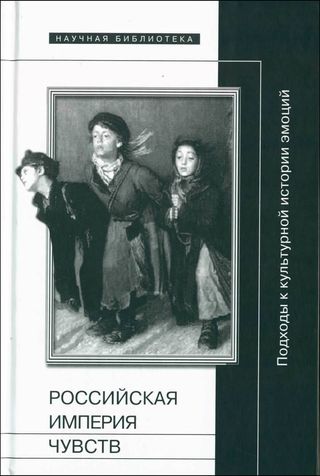
Российская империя чувств: подходы к культурной истории эмоций
M. :
Novoe literaturnoe obozrenie, 2010.
Academic editor: Elie M., Я. Плампер, Ш. Шахадат
Language:
Russian
Nikolay Sarkisyan, Revolutionary Russia 2025 Vol. 38 No. 1 P. 1–23
This article examines the emergence and evolution of revolutionary museology in Imperial Russia between 1901 and 1917, addressing a previously understudied aspect of revolutionary culture. By analysing four successive attempts to establish revolutionary museums – the Russian Museum in Geneva (1901–1902), Maxim Gorky’s initiative on Capri (1912–1913), Vladimir Burtsev’s various projects, and the Petrograd House ...
Added: October 14, 2026
ИДВ РАН, 2026.
This paper addresses the issue perceiving the national Vietnamese costume as a tool of cultural representation in the context of official state events held in Vietnam and abroad. The study focuses on specific cases of protocol visits, meetings, forums, and beauty contests, where the ao dai and other types and elements of national clothing are ...
Added: October 12, 2026
Dadykina M., Известия Российской академии образования 2026 Т. 2 № 74 С. 50–65
In modern economic law, the concept of "business entity" refers to an individual or legal entity (or association) en- gaged in economic activity for profit. Since the concept of a legal entity in Russia only fully developed in the late 18th century, the use of this term in the context of the Russian economy of ...
Added: October 12, 2026
Kanaev A. A., Вестник Пермского университета. Серия: История 2026 № 3(74) С. 159–168
The current article is dedicated to the specifics of how the image of the “East” correlated with Russian national identity in the political languages of Russian nationalists in the 1990s. The focus is on situations in which certain positive features of the imaginary “East,” as opposed to the “West,” were associated with the Russian nation. ...
Added: October 10, 2026
Seleznev M., Vestnik Drevnei Istorii 2026 Vol. 3 No. 86 P. 589–592
The article reconstructs the 'biography' of an alleged (in fact, non-existent) fragment of
4QDeutq said to contain a non-Masoretic reading of Deut 32 : 8. It traces how erroneous
references to the fragment emerged during the preliminary publication of the Scrolls in the
1950s, the scholarly attention this fragment received, its eventual disappearance from Qumran
studies after the official ...
Added: October 9, 2026
Абзалов Л. Ф., Гатин М., Мустакимов И. А. et al., Материалы по археологии и истории античного и средневекового Причерноморья 2026 № 22 С. 395–406
The article is devoted to the analysis of the office of mushrif in the states of traditional Orient. The sources and researches characterize this institution in different ways. One authors consider mushrif as a representative of a treasure office, others states that he was a kind of ‘undercover agent” who fulfilled ruler’s secret orders in ...
Added: October 8, 2026
Popov A., Herald of the Russian Academy of Sciences 2025 Vol. 95 No. 6 P. 689–699
The article examines the export of Soviet oil to the CMEA countries in 1965–1985, relying on statistical data from declassified collections of Foreign Trade of CMEA Member Countries, which are being made available to scholars for the first time. The author argues that economic motives played a significant role in the expansion of Soviet oil ...
Added: October 8, 2026
Rezvykh P. V., Вестник Российского университета дружбы народов. Серия: Философия 2026 Т. 30 № 1 С. 127–143
The issue delivers an analysis of schellingian motives in the later works by A.F. Losev. The author brings information about Losev’s retrospective evaluation of Schelling’s influence on the formation of his own philosophical approach, it’s specific character and it’s grade. The author shows that all the main investigation projects of the later Losev which have ...
Added: October 7, 2026
Khlevniuk O. V., Journal of Slavic Military Studies 2026 Vol. 39 No. 3 P. 447–466
The Gulag as a system of terror and forced labor was the
cornerstone of Soviet mobilization efforts in the 1930s.
Paradoxically, during the war with Nazi Germany, the
Gulag’s capacities and economic significance did not grow,
but in fact declined, contrary to what one would expect. The
massive use of prisoners as a source for replenishing the
army and the huge ...
Added: October 7, 2026
Selin A. A., Яблокова И. В., Вспомогательные исторические дисциплины 2026 Т. 45 № 3 С. 609–619
This article examines the possibility of reconstructing the archives of the Novgorod Prikaznaya Izba (office) from the late 16th and early 17th centuries, the materials of which were partially destroyed and partially scattered across various archival repositories. Some of these materials have been introduced into scholarly circulation, while others remain unidentified. There is a debate ...
Added: October 5, 2026
Popov A., Pivovarov N. Y., Russian Review 2026 Vol. 85 No. 4 P. 461–477
This article challenges the conventional narrative that the transferable ruble was conceived as a Soviet means of challenging Western financial hegemony. Drawing on previously unpublished archival mate rial from Russian state archives, it argues that the currency emerged primarily from a pragmatic need to settle accumulated debts within the Council for Mutual Economic Assistance (CMEA). ...
Added: October 5, 2026
[б.и.], 2026.
This collection presents papers from the 17th All-Russian Scientific Conference (2026), attended by staff and students from Russian higher education institutions, school teachers, and professionals from libraries and archives engaged in research on national history and historiography. ...
Added: October 5, 2026
Поликарпова Д. А., Социологическое обозрение 2026 Т. 25 № 3 С. 432–441
This article is a review of Natalia Samutina's collection of texts «This Music is Too Beautiful: texts on cinema and more» (Moscow: Novoye Literaturnoye Obozrenie, 2025), edited by the author's colleagues, Boris Stepanov and Irina Kaspe. Considering the volume as a «seismograph of time», the author reconstructs the intellectual context of Russian film theory in ...
Added: October 4, 2026
Вебер М., Социологическое обозрение 2026 Т. 25 № 3 С. 318–353
In the concluding part of the Second Anti-Critique (1910), Max Weber summarizes the substantive
findings of his own contributions to the debate with the historian Felix Rachfahl. In doing so, he uses the response to his relentless critic as an opportunity to articulate once again, in an explicit manner and for both his own benefit and that of the ...
Added: October 4, 2026
Kamenskii A. B., Екатеринбург: Издательство Уральского университета, 2026.
This volume has been prepared to mark the anniversary of the distinguished Ural scholar Dmitry Alekseyevich Redin. It presents research and published source texts contributed by Dmitry Alekseyevich’s colleagues, friends, and students. The diverse range of studies—covering various aspects of Russian social history from the late 16th through the 18th century, as well as issues ...
Added: October 3, 2026
Kamenskii A. B., Quaestio Rossica 2026 Т. 14 № 3 С. 939–959
This article examines one of the significant figures in the system of governance of Russia during the reign of Catherine II: Prince Alexander Alekseevich Vyazemsky, Prosecutor General of the Senate, who held this post for approximately thirty years. During this period, the scope of his activities continually expanded to encompass the administration of finances; various construction ...
Added: October 3, 2026
Grishina D., Исаева В. М., Journal of Sinographic Philologies and Legacies 2026 Vol. 2 No. 3 P. 47–64
The second half of the nineteenth century became a time of many dramatic events on the Korean peninsula. With opening the country to trade and diplomacy with Westernized (Japan) or Western (USA, France, Great Britain) countries led to a division within Korean society, since the 1880s Chosŏn (Korea) has entered the age of political and ...
Added: October 2, 2026
Voloshina S., Шаги/Steps 2023 Т. 9 № 4 С. 135–157
Личный дневник российского государственного деятеля М. А. Корфа представляет собой редкий пример слияния интереса личного и государственного, в частности глубоко личного переживания общественно-политических событий. Большинство записей касаются перипетий в высших институтах николаевской власти (царской семье, Государственном совете, министерствах и специальных комитетах). Эти события, как представляется, составляют основной жизненный интерес автора дневников и вызывают у него ...
Added: September 4, 2026
Nikolai F., Диалог со временем 2024 № 87 С. 376–381
The article analyzes «The Routledge Companion to Gender and Affect» (2023), edited by Todd Reeser. The concept of affect is used here to explain the rise of right-wing populists in contemporary world, the active transformation of neoliberal hegemony, and the failure of leftist intellectuals that still dominate Anglo-American universities. It captures the changes in the ...
Added: January 21, 2025
Ivanova M., Вестник Томского государственного университета. История 2025 № 94 С. 38–47
This article is devoted to the reconstruction of the gendarme officers’ collective perceptions about the Russian Empire’s territory on the materials about the 2nd gendarme district. The study examined the records of the high police, which reflected the gendarme officers’ ideas about the people’s political loyalty and loyalist sentiments. The study is based on archival ...
Added: November 16, 2024
Zabrodina E., Артикульт 2020 Т. 39 № 3 С. 65–72
The most tragic emotions were perceived usually as antisocial in the Middle Ages. There was often the link between the emotions and the seven dead sins. However, the perception of these emotions could change under the influence of the situation. Sometimes tragic emotions could become logical or even useful for an individual. This aspect in ...
Added: October 5, 2024
L.: Routledge, 2022.
Byzantinists entered the study of emotion with Henry Maguire’s ground-breaking article on sorrow, published in 1977. Since then, classicists and western medievalists have developed new ways of understanding how emotional communities work and where the ancients’ concepts of emotion differ from our own, and Byzantinists have begun to consider emotions other than sorrow. It is time to look at what ...
Added: October 14, 2022
Kamenskii A. B., Человек 2022 Т. 33 № 2 С. 84–110
The theme of love in the context of the history of emotions is poorly developed
on the Russian material of the early modern period. In a few studies, on the one hand, it is argued that in the 18th century this feeling is freed from the aura of sinfulness and the idea of romantic love is formed, ...
Added: May 3, 2022
Kamenskii A. B., СПб.: Алетейя, 2022.
The monograph is devoted to the struggle of the state and the church in Russia in the 18th century with forms of deviation from the norms of behavior, which were considered criminal according to secular and ecclesiastical legislation. Successively, the seven chapters deal with prosecutions for extramarital affairs, rape, incest, bestiality, sodomy, marriage violations, and ...
Added: May 3, 2022