• A
  • A
  • A
  • АБВ
  • АБВ
  • АБВ
  • A
  • A
  • A
  • A
  • A
Обычная версия сайта
  • RU
  • EN
  • HSE University
  • Publications
  • Book chapter
  • Causatives in Aghul
  • RU
  • EN
Расширенный поиск
Высшая школа экономики
Национальный исследовательский университет
Priority areas
  • business informatics
  • economics
  • engineering science
  • humanitarian
  • IT and mathematics
  • law
  • management
  • mathematics
  • sociology
  • state and public administration
by year
  • 2027
  • 2026
  • 2025
  • 2024
  • 2023
  • 2022
  • 2021
  • 2020
  • 2019
  • 2018
  • 2017
  • 2016
  • 2015
  • 2014
  • 2013
  • 2012
  • 2011
  • 2010
  • 2009
  • 2008
  • 2007
  • 2006
  • 2005
  • 2004
  • 2003
  • 2002
  • 2001
  • 2000
  • 1999
  • 1998
  • 1997
  • 1996
  • 1995
  • 1994
  • 1993
  • 1992
  • 1991
  • 1990
  • 1989
  • 1988
  • 1987
  • 1986
  • 1985
  • 1984
  • 1983
  • 1982
  • 1981
  • 1980
  • 1979
  • 1978
  • 1977
  • 1976
  • 1975
  • 1974
  • 1973
  • 1972
  • 1971
  • 1970
  • 1969
  • 1968
  • 1967
  • 1966
  • 1965
  • 1964
  • 1963
  • 1958
  • More
Subject
News
June 5, 2026
Neural Network Maps as a Method for Constructing Mathematical Models
Scientists from HSE University–Nizhny Novgorod and the Institute of Physics Belgrade, Serbia, are jointly exploring the application of machine learning techniques and neural networks to the study of nonlinear dynamics. Natalya Stankevich, Leading Research Fellow at the Laboratory of Topological Methods in Dynamics of the Faculty of Informatics, Mathematics, and Computer Science at HSE University–Nizhny Novgorod, spoke to the HSE News Service about this international project.
June 5, 2026
‘In the Age of Technology, It Is Interesting to Look into the Past and Think about What We Can Take from It
Polina Tabakova decided to apply for a Philology degree at HSE in Nizhny Novgorod because she grew up in Mari El and did not want to move far away from the Russian forests. In an interview for the Young Scientists of HSE University project, she spoke about the genre of the campus novel, the existential drama of Kolobok, and a blackout version of Eugene Onegin.
June 5, 2026
HSE Scientists Develop Method to Compress Large Language Models Without Losing Quality
Researchers from the AI and Digital Science Institute at the HSE Faculty of Computer Science have developed a new compression method for large language models such as GPT and LLaMA that reduces their size by 25–36% without additional training or significant loss of accuracy. This is the first approach to use mathematical transformations—specifically, rotations of model weights—to make models more amenable to compression with structured matrices. The study results have been published in ACL Findings 2025. The code is available on GitHub.


Have you spotted a typo?
Highlight it, click Ctrl+Enter and send us a message. Thank you for your help!

Publications
  • Books
  • Articles
  • Chapters of books
  • Working papers
  • Report a publication
  • Research at HSE

?

Causatives in Aghul

P. 55–113.
Daniel M., Maisak T., Merdanova S. R.

The paper considers morphology, morphosyntax and semantics of causative formation in Agul, a Lezgic language of Southern Daghestan (Russia). In Agul, the two most frequent causative patterns, periphrastic and compound causatives, apparently share one source of grammaticalization. The former are combinations of ‘do’ with the infinitive of the lexical verb, while the latter put them together as two bound stems. However, semantically 'do'-compounds belong with non-productive causatives (labile verbs and lexical causatives) and are opposed to fully productive periphrastic causatives. All non-productive causatives – only available for intransitive verbs – have parallel periphrastic ‘do’-causatives, the distinction between the parallel forms conveys the semantic contrast of direct vs. indirect causation. The paper makes an attempt at decomposing these typological categories into simpler components (intentionality, physical interaction, event structure), and provides a detailed semantic analysis of labile verbs and semantically irregular causatives. Periphrastic causatives are peculiar in their own way: they may introduce locative or ergative Causee, the choice depending on the degree of the Causee's control over the caused situation. Basing on this morphosyntactic variability, we argue that periphrastic causatives are intermediate between bi- and monoclausal constructions.

Language: English
Full text
Keywords: causativelabile verbsambitransitivesEast CaucasianLezgic languagesAghulcontact causationdistant causationкаузативлабильностьлезгинские языкиагульский языкконтактная каузациядистантная каузациянахско-дагестанские языки

In book

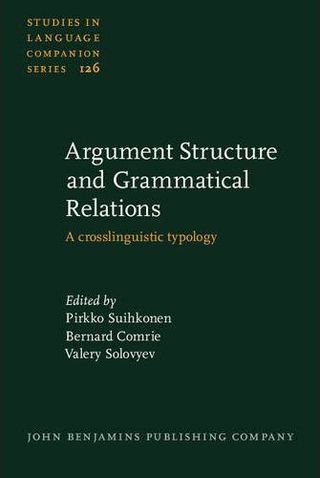
Argument structure and grammatical relations. A cross-linguistic typology
Issue 126. , Philadelphia, Amsterdam: John Benjamins Publishing Company, 2012.
Similar publications
Развитие и упадок неканонической лабильности в шугнано-рушанских языках
Чистякова Д. Г., Известия РАН. Серия литературы и языка 2026 Т. 85 № 1 С. 122–133
The paper focuses on the development and decline of secondary lability in the Shughni-Rushani languages (Iranian branch, Indo-European family). It provides an overview of the phenomena that fall under the definition of lability in these languages, particularly secondary P-lability, A-lability, and labile complex verbs. The study describes the pathways through which secondary P-lability arose in ...
Added: May 12, 2026
Событийная структура морфологического каузатива в собственно хваршинском
Сибилев Г. О., Типология морфосинтаксических параметров 2023 Т. 6 № 1 С. 112–129
he article discusses the event structure of morphological causative in Khwarshi Proper dialect of the Khwarshi language (Tsezic< Avar-Ando-Tsezic<Nakh-Daghestanian). We also analyzed the semantic parameters of the morphological causative on -χ-/-k’- and compared them with the semantic parameters of the analytical causative construction. Note that a construction with a morphological causative can be either monoeventive ...
Added: December 22, 2025
Локутивная модальность в хваршинском языке
Сибилев Г. О., Acta Linguistica Petropolitana. Труды института лингвистических исследований 2025 Т. 21 № 1 С. 163–185
The purpose of this article is to demonstrate the ways speaker-oriented modality can be expressed in Khwarshi Proper (Tsezic<Avar-Ando-Tsezic<Nakh-Daghestanian). Our field data also serves to fill some data gaps in the grammatical sketch of Khwarshi Proper [Testelets, Khalilova in print]. In this article, we describe hortative, imperative, optative, preventive constructions and the jussive construction with ...
Added: December 22, 2025
Такие же, как вокруг: эквасимилятивные конструкции в хваршинском языке
Poliakova E., RHEMA. РЕМА 2024 № 1 С. 28–60
Equasimilative constructions belong to the semantic field of comparison, but have been studied to a much less extent than comparative constructions. There are practically no areal-typological studies in this area. This paper focuses on equasimilative constructions in Khwarshi proper (Nakh-Dagestanian). Additionally, it provides an overview of equasimilative constructions in the languages of the Caucasus to determine the parameters that ...
Added: November 16, 2025
Когда обо всем узнаешь последним: эвиденциальность в хваршинском языке
Poliakova E., Вопросы языкознания 2024 № 4 С. 77–95
One of the common features of the Nakh-Daghestanian languages is the evidential opposition between some of the past tense verb forms, which mark (in)direct access to the information. Khwarshi has two synthetic past forms that are traditionally considered to form this kind of opposition, but, according to our data, it may in fact not be based on ...
Added: November 13, 2025
Симметрическая и ретроспективная темпоральная подвижность в андийских языках
Filatov K., Томский журнал лингвистических и антропологических исследований 2025 № 4(50) С. 75–86
The article is dedicated to the typology of temporal mobility, that is the ability of verbal forms to have temporal opposition. Based on several Andic languages (< Avar-Andic-Tsezic < Nakh-Dagestanian), two formal subtypes of temporal mobility are introduced. The first subtype, — symmetric mobility, assumes that the basic and the past forms are equally marked, ...
Added: August 21, 2025
Causative Suffixes in Tatyshly Udmurt: How Native and Borrowed Morphemes Co-Exist
Belova D., Tomsk Journal of Linguistics and Anthropology 2024 Vol. 1 No. 43 P. 9–19
The paper deals with morphological causatives in the Tatyshly subdialect of the Udmurt language (Republic of Bashkortostan). Surrounded by the Turkic languages (Tatar and Bashkir), Tatyshly Udmurt developed a more complex system of causative markers than Standard Udmurt. It consists of two suffixes: -t, of Uralic origins, and a Turkic borrowing -ttə̑ r absent in Standard Udmurt. In ...
Added: March 28, 2025
К вопросу о событийной структуре морфологического каузатива: данные татышлинского говора удмуртского языка
Belova D., Урало-алтайские исследования 2023 Т. 2 № 49 С. 7–26
В работе исследуются событийно-структурные свойства каузативных глагольных дериватов с суффиксом -t в татышлинском говоре удмуртского языка (респ. Башкортостан). Применительно к каузативам, образованным от агентивных (одноместных и двуместных) основ, рассматриваются следующие явления, связанные с событийной структурой, которые приняты в литературе в качестве диагностик одно- или двусобытийности каузативов: набор возможных контролеров субъекта деепричастной клаузы (только Каузатор / Каузатор ...
Added: March 28, 2025
Каузатив
Belova D., В кн.: Элементы горномарийского языка в типологическом освещении.: М.: Буки Веди, 2023.
В главе рассматриваются морфологические каузативы горномарийского языка. Показатель ‐ə̑kt, который является единственным продуктивным из всего инвентаря каузативных суффиксов, имеет семантику дистантной каузации и образует моно‐клаузальные дериваты. Кроме того, он может употребляться в одной словоформе дважды. Дериваты с двойным каузативом имеют следующие возможные интерпретации по сравнению с единичным каузативом: дополнительное подсобытие каузации, интенсификация усилий каузатора, итерация событий, ...
Added: March 28, 2025
Demonstrative pronouns in Kina Rutul
Mukhin T., Nasledskova P., Studies in Language 2025 Vol. 49 No. 2 P. 456–477
This paper presents the results of an experimental study of exophoric uses of demonstrative pronouns in the Kina variety of Rutul (Lezgic, East Caucasian). We collected the questionnaire designed by Wilkins (1999) from seven female native speakers of different ages to determine the spatial meanings of demonstrative pronouns and to identify secondary parameters affecting the ...
Added: February 10, 2025
Функции аддитивной частицы =lo в зиловском говоре андийского языка: самостоятельное использование аддитива и его сочетание с другими показателями
Russkih A., Родной язык: лингвистический журнал 2024 № 2 С. 6–37
The additive particle =lo in the Upper Andi variety of Zilo is a multifunctional clitic which is used both in contexts typologically frequent for additive particles and in peripheral ones. The paper provides a comprehensive description of the functions of additive =lo in the Zilo Andi in a typological perspective, with special attention to the ...
Added: January 30, 2025
Я ХОЧУ ЗАСТАВИТЬ АХМЕДА СЪЕСТЬ КАШУ: КАУЗАТИВ МЕЛХИ КАК SWITCH-REFERENCE
Bubnov G., В кн.: Двадцать первая конференция по типологии и грамматике для молодых исследователей: тезисы докладов. Санкт-Петербург, 21–23 ноября 2024 г.: ИЛИ РАН, 2024. С. 30–34.
Added: January 11, 2025
Numeral systems in Lezgic languages
Melenchenko M., Folia Linguistica 2025 Vol. 59 No. 3 P. 785–821
The paper presents an overview of numeral systems in Lezgic languages (East Caucasian) and discusses hypotheses about their diachronic development. Similarly to other branches of the East Caucasian family, languages of the Lezgic branch have either a decimal (base-10) or a vigesimal (base-20) system. Decimal systems are attested in languages and dialects in the northwestern ...
Added: December 27, 2024
Морфологический каузатив в чукотском языке
Stenin I., В кн.: Первый Евразийский конгресс лингвистов. Москва, 9–13 декабря 2024: Тезисы докладов.: М.: Институт языкознания РАН, 2025. С. 891–893.
Added: December 27, 2024
Континуативные конструкции в лезгинских языках и их употребление в параллельных контекстах (на материале переводов Евангелия от Луки)
Maisak T., Вопросы языкознания 2024 № 3 С. 60–98
В работе дается обзор грамматикализованных глагольных конструкций с континуативным значением (‘все еще делать, продолжать делать’), отмечаемых в ряде языков лезгинской группы нахско-дагестанской семьи, однако до сих пор не привлекавших должного внимания исследователей. Особенностью четырех лезгинских языков является наличие стативного глагола, описывающего продолжение существования или нахождения в определенном месте (‘все еще быть, оставаться’), именно этот глагол ...
Added: September 3, 2024
Каузативные оппозиции в христианском урмийском новоарамейском
Shvedova E., Вестник РГГУ. Серия «Литературоведение. Языкознание. Культурология» 2024 Т. 26 № 5 С. 110–140
The article is devoted to causative verb alternation in Christian Urmi Neo-Aramaic. I have analyzed the formal types of 31 causal/noncausal verb pairs developed by M. Haspelmath (1993). Field data were collected during the fieldtrip to the village of Urmiya, Krasnodar Krai, Russia. I show that Haspelmath’s ordering of verb meanings according to the likelihood ...
Added: August 23, 2024
  • About
  • About
  • Key Figures & Facts
  • Sustainability at HSE University
  • Faculties & Departments
  • International Partnerships
  • Faculty & Staff
  • HSE Buildings
  • HSE University for Persons with Disabilities
  • Public Enquiries
  • Studies
  • Admissions
  • Programme Catalogue
  • Undergraduate
  • Graduate
  • Exchange Programmes
  • Summer University
  • Summer Schools
  • Semester in Moscow
  • Business Internship
  • Research
  • International Laboratories
  • Research Centres
  • Research Projects
  • Monitoring Studies
  • Conferences & Seminars
  • Academic Jobs
  • Yasin (April) International Academic Conference on Economic and Social Development
  • Media & Resources
  • Publications by staff
  • HSE Journals
  • Publishing House
  • iq.hse.ru: commentary by HSE experts
  • Library
  • Economic & Social Data Archive
  • Video
  • HSE Repository of Socio-Economic Information
  • HSE1993–2026
  • Contacts
  • Copyright
  • Privacy Policy
  • Site Map
Edit