• A
  • A
  • A
  • АБВ
  • АБВ
  • АБВ
  • A
  • A
  • A
  • A
  • A
Обычная версия сайта
  • RU
  • EN
  • HSE University
  • Publications
  • Books
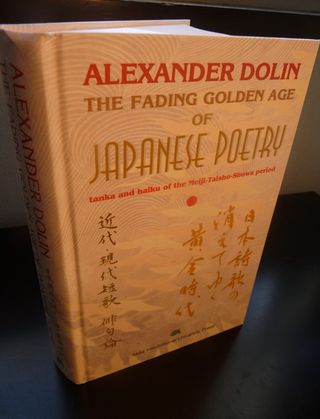
  • THE FADING GOLDEN AGE OF JAPANESE POETRY. Tanka and haiku of the Meiji-Taisho-Showa period
  • RU
  • EN
Расширенный поиск
Высшая школа экономики
Национальный исследовательский университет
Priority areas
  • business informatics
  • economics
  • engineering science
  • humanitarian
  • IT and mathematics
  • law
  • management
  • mathematics
  • sociology
  • state and public administration
by year
  • 2027
  • 2026
  • 2025
  • 2024
  • 2023
  • 2022
  • 2021
  • 2020
  • 2019
  • 2018
  • 2017
  • 2016
  • 2015
  • 2014
  • 2013
  • 2012
  • 2011
  • 2010
  • 2009
  • 2008
  • 2007
  • 2006
  • 2005
  • 2004
  • 2003
  • 2002
  • 2001
  • 2000
  • 1999
  • 1998
  • 1997
  • 1996
  • 1995
  • 1994
  • 1993
  • 1992
  • 1991
  • 1990
  • 1989
  • 1988
  • 1987
  • 1986
  • 1985
  • 1984
  • 1983
  • 1982
  • 1981
  • 1980
  • 1979
  • 1978
  • 1977
  • 1976
  • 1975
  • 1974
  • 1973
  • 1972
  • 1971
  • 1970
  • 1969
  • 1968
  • 1967
  • 1966
  • 1965
  • 1964
  • 1963
  • 1958
  • More
Subject
News
August 21, 2026
Social Integration: At the Crossroads of Knowledge and Values
The International Laboratory for Social Integration Research (ILSIR) at HSE University studies the challenges faced by vulnerable groups and explores ways to help them participate fully in everyday life. To develop effective solutions, the laboratory’s researchers combine cutting-edge methods with practical fieldwork. In this interview with the HSE News Service, Laboratory Head Elena Iarskaia-Smirnova discusses the laboratory’s work.
August 18, 2026
HSE Scholar Presents Research on Postcards in Brazil and South Korea
Timur Khusyainov, Deputy Dean of theFaculty of Humanities atHSE University–Nizhny Novgorod, took part in two international conferences—the XVI World Congress of Rural Sociology in Porto Alegre, Brazil, and the 36th Annual Conference of the Alliance of Digital Humanities Organisations (DH2026) in Daejeon, South Korea. On his way to the conferences, the researcher also visited several other places, where he presented the experience of the Pochtovoe educational project.
August 18, 2026
Physicists Discover What Happens Inside a Stable Vortex
Large vortices with characteristic spiral arms are often observed in the atmosphere and the ocean. Physicists from HSE University have explained how these structures form and why they retain their shape. The researchers found that velocities at points located along the same vortex arc remain correlated even over long distances. At the same time, this correlation weakens rapidly with increasing distance from the vortex centre. These differences help explain the formation of spiral arms and may improve models of atmospheric and oceanic currents. The findings have been published in Physical Review Fluids.


Have you spotted a typo?
Highlight it, click Ctrl+Enter and send us a message. Thank you for your help!

Publications
  • Books
  • Articles
  • Chapters of books
  • Working papers
  • Report a publication
  • Research at HSE

?

THE FADING GOLDEN AGE OF JAPANESE POETRY. Tanka and haiku of the Meiji-Taisho-Showa period

Akita city : Akita International University Press, 2015.
Dolin A.

The book constitutes the third part of a unique research project presenting to the Western scholars the history of Japanese poetry in the New and Modern times -  from the second half of the XIX c. through the end of the XX c.. The book analyzes a brode scope of social and cultural problems scrutinizing the activity of the leading poetic associations and groupings. Literary portraits of the leading poets give a panoramic view of the age.

The general introduction to the book places the traditional genres of Japanese poetry in the national and global context by defining the typical features of tanka and haiku as a specific aesthetic system. The overview of the medieval tanka poetry since the eighth century through the first half of the nineteenth century gives the reader a general idea of the principal poetic and aesthetic concepts, to which later authors would constantly refer.

The new tanka and haiku poetry, which emerged after the Meiji Restoration was the direct successor to the classical medieval schools, transformed and renovated in the age of modernization. Since the end of the nineteenth century, tanka and haiku authors developed a novel worldview by over- coming the restrictions and regulations of the rigid poetic canon.

The pioneers of the new tanka and haiku schools, in their quest for a creative national identity, opposed the overwhel- ming flow of Western culture and instead chose to revitalize the traditional poetics, albeit in a modified form, for which they were nonetheless severely criticized by the shintaishi and kindaishi poets.

The beginning of the romantic revival in tanka was heralded by Yosano Tekkan’s literary criticism and his poetic manifesto. Tekkan was the first tanka poet of the new times who instilled in his verse civil feelings, military vigor, and masculine passion. As a response both to Tekkan’s challenge and to the European decadent trend of the fin de siècle period, there followed the outburst of erotic lyrical confessions by Yosano Akiko. Her work represents a wonderful fusion of the French Symbolist and British Pre-Raphaelite poetics projected onto Japanese tanka. The Myojo journal led by Tekkan and Akiko remained for many years the most significant literary hub in the country.

Another great reformer, Masaoka Shiki, regarded himself and his school mostly within the mainstream of tradition and considered renovation of the classic genres possible only on a conventional basis, not going to any extremes. His major shasei (“reflection of nature”) concept was derived from medieval Chinese aesthetics and had a dramatic impact on both tanka and haiku poetry of the twentieth century. Shiki propagated “objective realism,” focusing first on haiku and then applying the same principles to tanka.

Ito Sachio became the official successor of Shiki and widely promoted rgw shasei theory in his journal Ashibi. The works by Shimagi Akahiko, Nagatsuka Takashi, Koizumi Chikashi, Naka- mura Kenkichi, and other followers of Shiki who rallied around the Araragi poetic journal, eventually gained for the shasei trend poets a dominant position in the world of tanka. Their landscape poetry and “daily routine” sketches were marked by a profound comprehension of the harmony of nature. The poetic genius of Saito Mokichi, with his sharp psychological vision and original interpretation of shasei theory, remained unrivaled in modern Japan.

Some poets of the shasei trend like Tsuchiya Bunmei, Shaku Choku, and Aizu Yaichi studied early medieval art and ancient Japanese poetic monuments in search of new ways.

Meanwhile, Yoshii Isamu, Wakayama Bokusui, Kubota Utsu- bo, and Maeda Yugure chose another path and developed a refined trend of Romanticist and “Naturalist” poetry focused on human sentiment in the current of mundane metamorphoses. They expanded the boundaries of verse and enriched tanka with impressive new imagery. Their poetic collections shaped another colorful facet of the tanka world in the first half of the twentieth century.

The Symbolist spirit represented so brilliantly by Kitahara Hakushu in his kindaishi poetry was also projected onto his early tanka, which were marked by eloquent mannerism with a strong touch of exoticism. However, the evolution of aesthetic concepts later made Hakushu return to traditional values. Thus, his poems composed in the 1930s present a typical Zen vision of the universe.

A fusion of realistic worldview with expressionist techniques makes the poetry by Sasaki Nobutsuna, Kawada Jun,and Kino- shita Rigen the most fascinating product of the new tanka diction.

The poetic concept put forward by Ishikawa Takuboku and Toki Aika is known as the “Life School.” The talent of Takuboku elevated the most prosaic topics taken from daily life to the level of lyrical revelation. His successors were less gifted and eventually the social trend in tanka, which had emerged from the legacy of Takuboku, ended with extremist proletarian propaganda slogans.

In the postwar period the tanka revival contributed greatly to the formation of the new national identity of the Japanese. Kondo Yoshimi, Miya Shuji, Sato Sataro, Saito Fumi, Kimata Osamu, and many other masters of tanka poetry paved the way for the new generations.

The triumph of Tawara Machi, whose tanka collection became the number one bestseller of the twentieth century, proves that the old classic genre is still able to attract the young, overcoming the dogmatic regulations and forging a totally new stylistics.

The introductory chapter to Part II of the book gives a broad overview of the haiku world since the middle of seventeenth century and introduces the reader to the great haijin of the Edo period— Basho, Buson, Issa, et al. Their works laid the foundation of classic haiku and therefore strongly influenced the preferences of the poets after the Meiji Restoration.

New haiku were initiated by the endeavors of Masaoka Shiki, who dared to doubt the authority of Basho, opposing to his poetics the brighter style of Buson. Shiki elaborated and applied to haiku his shasei concept based on the principle of objective realism, which later developed into the most popular poetic theory of the twentieth century and founded a school, which soon would become the mainstream haiku trend in Japan.

After the death of Shiki, his major disciples followed two different paths. Kawahigashi Hekigoto treated shasei theory mostly as a call for further reforms. His concept of the “new trend” in haiku, that is, short verse not bound by any regulations and restrictions, found many adherents. Nagatsuka Ippekiro, Ogiwara Seisensui, Ozaki Hosai, and many other poets were inspired by the idea of non-orthodox haiku. The climax of this movement can be traced in the beautiful and deeply philosophical Zen haiku of Taneda Santoka.

Meanwhile, Takahama Kyoshi remained faithful to the legacy of Shiki and transformed the initial shasei doctrine into a coherent aesthetic teaching. Kyoshi remained for many decades the leader of the “Hototogisu” group and gave his blessing to such renowned poets as Murakami Kijo, Iida Dakotsu, Hara Sekitei, Maeda Fura, and Hino Sojo.

The disciples of Kyoshi who would not support the “flowers and birds” poetics of the old master formed a new society around the old Ashibi journal under the leadership of Mizuhara Shuoshi. The pure and transparent lyricism of Yamaguchi Seishi and Hashimoto Takako can be numbered among the most successful poets of this school.

Another trend in haiku was marked by a powerful humanist drive, which can be regarded as an easily recognizable trait of the poetry of Nakamura Kusatao, Kato Shuson, and Ishida Hakyo. These haiku poets, who became known in the pre-war period as members of “The Search for the Human” school, also shaped the postwar haiku world, instilling in it a vital humanist component. The poets of this trend played a crucial role in the revival of Japanese culture, opening to their readers a window to eternal ethical values and giving them hope in the abyss of pain and humiliation. They brought to life the new generations of authors in Japan and also fostered interest in modern haiku in the West.
Research target: Philosophy, Ethics, and Religious Studies
Priority areas: humanitarian
Language: English
Full text
Keywords: Japanese liteature, tanka, haikutankahaiku
THE FADING GOLDEN AGE OF JAPANESE POETRY. Tanka and haiku of the Meiji-Taisho-Showa period
Similar publications
Mishima's Flame: Samurai Ethics in Art and Action
Moiseev D., Multipolar Press, 2026.
Bushidō, the ethical tradition of the samurai, long ago transcended Japan’s feudal past to become a powerful element of cultural identity and an enduring presence in the global imagination. For Yukio Mishima (1925–1970), one of Japan’s most celebrated and controversial novelists and playwrights, a Nobel Prize nominee, actor, and public intellectual, bushidō was a living ...
Added: August 19, 2026
Прекрасное и утилитарное на Востоке. Между этикой и эстетикой. Книга 2
Zinchenko S., Бейн П. В., Дубровская Д. В. et al., Институт востоковедения РАН, 2026.
Contrary to Antoine de Saint-Exupéry's assertion that "the most beautiful thing in the stars, houses, and deserts is what the eyes cannot see," the authors of this monograph dispassionately test the harmony of beauty in the East through the algebra of scientific analysis, continuing the work of their first book, "The Beautiful and the Utilitarian: From ...
Added: August 14, 2026
Православное сакральное искусство между каноном и современностью: вызовы и трансформации художественных практик в постсоветском контексте (на примере иконописных школ, архитектурных проектов и художественных мастерских 1990–2024-х гг.)
Армандо Б., Религиоведение 2026 № 2 С. 177–185
This study explores the development of Orthodox sacred art in the twenty-first century within the framework of a dialogue between canonical tradition, artistic innovation, and the search for a national artistic style. Special attention is given to the emergence of new schools of icon painting and architecture in Russia and other Orthodox countries, as well ...
Added: August 13, 2026
Интеллектуалы Муссолини: фашистская общественно-политическая мысль
Грегор Э. Д., СПб.: Владимир Даль, 2026.
Фашизм традиционно считался иррациональным и антиинтеллектуальным феноменом, ведомым мистицизмом и приверженным хаосу и грубой жестокости. Настоящее издание — итог почти четырех десятилетий исследований одного из ведущих  экспертов по этому вопросу, американского историка Энтони Джеймса Грегора. Он утверждает, что итальянский фашизм был не более и не менее иррациональным, чем другие революционные идеологии XX века. Грегор прослеживает историю ...
Added: August 10, 2026
Университет как бытийно-исторический объект: опыт М. Хайдеггера
Митлянская М. Б., Высшее образование в России 2023 Т. 32 № 7 С. 157–166
The article is based on the historical and philosophical analysis of fragments of Martin Heidegger’s concept called “Seinsgeschichte”, in which the philosopher considered the phenomenon of the university and the current situation of sciences. Their condition, accord ing to the philosopher, is a direct consequence of the comprehensive extinction of the tradi tion of European ...
Added: July 31, 2026
«Черные тетради» Мартина Хайдеггера: бытийная история и метаполитика
Митлянская М. Б., Философские науки 2020 Т. 63 № 4 С. 132–151
Philosophers actively discuss Black Notebooks – Martin Heidegger's philosophical notebooks. Their publication opened for researchers a new field in the concept of existential history. The Notebooks are a good example of how closely related philosophical thought and the political atmosphere of time can be. Heidegger witnessed events that caused him to be confused. He had ...
Added: July 31, 2026
Хайдеггер глазами русских
Митлянская М. Б., Финиковый компот 2020 № 15 С. 263–266
Review of the anthology "Pro et contra" which has collected the works of several generations of Russian philosophers about Martin Heidegger. More than seventy articles, reviews and excerpts from books of the most significant researchers in this field, according to the editors of the almanac. Author of the review provides general information about the content ...
Added: July 31, 2026
Ректорство Мартина Хайдеггера: историко-философский анализ
Митлянская М. Б., Идеи и идеалы 2020 Т. 12 № 3 (45) С. 121–133
The idea of reorganizing a German university was revealed in the correspondence of the young Martin Heidegger and his friend Karl Jaspers. Prominent thinkers critically analyze the contribution of contemporaries and representatives of the previous generation of scientists and philosophers. Ambitious and confident in their abilities, they hatched a plan, as it seemed to them, ...
Added: July 30, 2026
Ключевые понятия и идеи концепции бытийной истории Мартина Хайдеггера
Митлянская М. Б., Вестник Пермского университета. Философия. Психология. Социология 2020 № 3 С. 384–394
The paper explores Martin Heidegger’s concept of the «history of being». This concept was created in the philosopher’s late period. Critically analyzing the own paths of existential philosophy revealed in Being and Time, Heidegger gradually forms a spectrum of being-historical notions that will occupy a central po sition in contemplation after «the turn». The methods ...
Added: July 30, 2026
Geschick (посыл Бытия) как конституирующая черта мифического
Митлянская М. Б., Известия Саратовского университета. Новая серия. Серия: Философия. Психология. Педагогика 2020 Т. 20 № 2 С. 149–153
This article is devoted to the task of identifying the constitutive attribute of the mythical. The study does not concern the phenomenon of the genesis of myth, considering only those features which allow the myth to survive significant changes, deconstruction and evasion, without losing the basis of its essence, where evasion (der Entzug) is one ...
Added: July 30, 2026
Понимание истины в Бытийной истории М. Хайдеггера
Митлянская М. Б., Финиковый компот 2019 № 14 С. 116–124
The text is devoted to the problem of truth in the late philosophy of Martin Heidegger. The in inquiry based on Heidegger's Plato's Doctrine of Truth. In this paper of his the German philosopher reflected on the "Allegory of the Cave" and through it expressed his understanding of the development concepts of truth and its ...
Added: July 30, 2026
Охота на колдуна из черного леса. Рецензия на сборник статей «Хайдеггер, «Черные тетради» и Россия»
Митлянская М. Б., Финиковый компот 2018 Т. 13 № 13 С. 114–116
Review of “Heidegger, Black Notebooks and Russia”. The text provides a critical review of the articles in the collection and criticizes politically biased interpretations of Heidegger’s philosophy. ...
Added: July 30, 2026
Политический подтекст концепции «бытийной истории» Мартина Хайдеггера в «Черных тетрадях»
Митлянская М. Б., Электронное научное издание Альманах Пространство и Время 2017 Т. 15 № 1 С. 37–42
Philosophical community took the recent publication of Martin Heidegger's philosophical diaries ("Black Notebooks") as a chal lenge and reacted to this event with stormy discussions and new accusations against philosopher of involvement in German Na tional Socialism and its crimes. From my point of view, it would be more competent to analyze the text and, ...
Added: July 30, 2026
«И эта тропа священная по земле уходит в небо...»: религиозный натурализм и литургизация природы у М.М. Пришвина
Knorre B. K., Вестник Православного Свято-Тихоновского гуманитарного университета. Серия 1: Богословие. Философия. Религиоведение 2026 № 125 С. 53–69
Orthodoxy, while others, on the contrary, notice a critical attitude towards it, emphasizing that he spent almost all his life in religious search. In our opinion, the answer to the question of assessing Prishvin’s religiosity lies in such a phenomenon as religious naturalism, which is expressed in Prishvin’s religious experience of nature, admitting making natural ...
Added: July 25, 2026
Post-Symbolic Coloniality: The Metasimulacrum of Otherness in Digital Culture
Aliev R. T., Galactica Media: Journal of Media Studies 2025 Vol. 7 No. 2 P. 166– 186
This article develops the concept of the metasimulacrum of otherness to analyze the structural transformations of difference in digital culture. Unlike traditional representations of otherness, the metasimulacrum reorganizes the very conditions of perception, producing otherness as a managed, aestheticized, and commodified flow. Digital platforms no longer marginalize or suppress difference; they integrate it into the ...
Added: July 24, 2026
Proceedings of the International Science Conference “Scientific research of the SCO countries: synergy and integration” - Reports in English (June 3, 2026. Beijing, PRC)
Scientific publishing house Infinity, 2026.
These Conference Proceedings combine materials of the conference – research papers and thesis reports of scientifi c workers. They examine technical, juridical and sociological aspects of research issues. Some articles deal with theoretical and methodological approaches and principles of research questions of personality professionalization. ...
Added: July 24, 2026
Не только ἐπιχώρια διδάγματα: пайдейя Эпаминонда
Mozhaysky A., Schole. Философское антиковедение и классическая традиция 2026 Т. 20 № 2 С. 1105–1116
This article examines the education of Epaminondas, the most famous Theban military and political figure. However, in antiquity, Epaminondas was also renowned for his education and philosophical authority. The study demonstrates that Epaminondas' education encompassed a complex set of local teachings, which Pausanias describes as ἐπιχώρια διδάγματα. However, Epaminondas' education differed from that of most members ...
Added: July 17, 2026
Cognitive Distortions Are Not Logical Errors: A Conceptual Clarification
Denisova V., Petrović N., Journal of Rational - Emotive and Cognitive - Behavior Therapy 2026 Vol. 44 No. 35 Article 35
Cognitive distortions are routinely described in cognitive-behavioral (CBT) and rational-emotive behavior (REBT) therapies as “errors in logic” or “illogical thinking.” While this terminology is pedagogically convenient, it often obscures a crucial conceptual distinction between violations of logical inference and problems related to the justification, scope, or evaluative force of belief content. In this paper, we do not ...
Added: July 15, 2026
Возможна ли христианская политика в секулярном мире? С.Н. Булгаков и К. Барт о границах политико-религиозного целеполагания в обществе модерна
Girinsky A., Вестник Томского государственного университета. Философия. Социология. Политология 2026 № 91 С. 104–113
В статье анализируются взгляды двух европейских мыслителей ХХ в. – швейцарского протестантского теолога Карла Барта и русского философа Сергия Булгакова. В центре внимания две их работы середины ХХ в., в которых авторы рассуждают о христианском отношении к государству и политике в мире модерна. В статье доказывается, что несмотря на онтологические и догматические различия между протестантской ...
Added: July 14, 2026
Система синтаксических инвариантов текстовой деятельности: статистические дескрипторы, семантическая структура и диагностические профили
Kudriavtseva E., / РЦИС. Серия № 0148-756-286. 2026.
The content of the work is the system is a system for identifying four types of written speech structures. A set of 11 calculated parameters, statistical standards, and semantic characteristics allows for the identification of a text's structure as the result of a specific cognitive schema (scene, event, story, evaluation). The method has been verified ...
Added: June 2, 2026
Почему растущие доходы не делают людей счастливее: эмоциональное объяснение парадокса Истерлина (Why Growing Incomes Do Not Make People Happier: an Emotional Explanation of the Easterlin Paradox)
Vorchik A., / SSRN. Серия Social Science Research Network "Social Science Research Network". 2026.
This work is devoted to a theoretical explanation of the Easterlin paradox, according to which long-term economic growth does not make average level of people's happiness increasing. By happiness, we mean the intensity of emotions people experience while comparing their new income with its expected value, or the target income with its original value. In the first case, ...
Added: May 31, 2026
Школьный литературный канон эмиграции 1918–1939 гг.
Strizhkova D., / Институт русской литературы (Пушкинский Дом) РАН. Серия B001 "Репозиторий открытых данных по русской литературе и фольклору". 2026.
В базе данных представлена роспись русскоязычных литературных произведений и отрывков, напечатанных в учебниках по словесности, хрестоматиях, книгах для чтения, сборниках стихотворений и рассказов, выходивших во Франции, Германии, Латвии, Эстонии, Болгарии, Сербии в период первой волны русской эмиграции с 1918 по 1939 гг. Датасет представляет интерес для исследователей школьного литературного канона, эмиграции и детского чтения ...
Added: April 22, 2026
Современная российская мультипликация как инструмент воспитания традиционных духовно-нравственных ценностей
Жигунов А. Ю., / Basic Research Programme. Серия HUM "Humanities". 2026. № 1.
The article attempts to describe the features of the educational potential of Russian animation programmes in aspect of the representation of traditional spiritual and moral values. Based on media and semiotic analysis, the method of cultural and historical interpretation, animated Russian projects created from 2000 to the 2025, which were translated on television channels or streaming ...
Added: April 19, 2026
Хайку - долгий путь на Запад
Dolin A., В кн.: Японская культура на западе.: М.: ФГБУН ИВ РАН, 2024. Гл. ч. 2 - 1 С. 113–174.
Анализ проникновения поэзии жанра хайку в страны Запада и ее влияния на классиков. ...
Added: February 16, 2026
  • About
  • About
  • Key Figures & Facts
  • Sustainability at HSE University
  • Faculties & Departments
  • International Partnerships
  • Faculty & Staff
  • HSE Buildings
  • HSE University for Persons with Disabilities
  • Public Enquiries
  • Studies
  • Admissions
  • Programme Catalogue
  • Undergraduate
  • Graduate
  • Exchange Programmes
  • Summer University
  • Summer Schools
  • Semester in Moscow
  • Business Internship
  • Research
  • International Laboratories
  • Research Centres
  • Research Projects
  • Monitoring Studies
  • Conferences & Seminars
  • Academic Jobs
  • Yasin (April) International Academic Conference on Economic and Social Development
  • Media & Resources
  • Publications by staff
  • HSE Journals
  • Publishing House
  • iq.hse.ru: commentary by HSE experts
  • Library
  • Economic & Social Data Archive
  • Video
  • HSE Repository of Socio-Economic Information
  • HSE1993–2026
  • Contacts
  • Copyright
  • Privacy Policy
  • Site Map
Edit