?
Конфессиональные особенности представлений о культе святых в некоторых полемических текстах Московской Руси конца XV-XVI вв.
С. 28–56.
This article has analyzed several Russian polemical and hagiographical texts of the XVIth – early XVIIth centuries in order to identify concepts, terms and notions in which the holiness of saints and meaning of saints’ cult are expressed; article concludes that the Byzantine doctrine of theosis served as basis for “theorizing” about saints; besides, merits and outward activity is not held as precondition for “being saint”; holiness is thus regarded as a sort of charisma.
Language:
Russian
In book
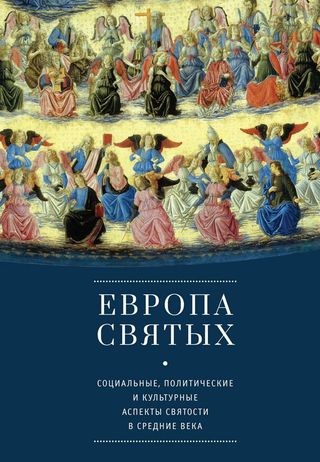
СПб.: Алетейя, 2018.
Евдокимова Е. С., Slovĕne 2026 Т. 15 № 1 С. 94–116
The article is devoted to a special type of monastic commemorations – family feed ("korm") commemorations within the walls of the Joseph-Volokolamsk Monastery. "Korm" is a commemoration that includes a special common meal of the monastery brethren in memory of a person. These commemorations were usually posthumous, although the pages of the contribution books also ...
Added: July 18, 2025
Евдокимова Е. С., Litvina A., Успенский Ф. Б., Вопросы ономастики 2025 № 3 С. 39–83
The study is devoted to the representation of name days in a poorly studied and largely unpublished corpus of sources – the supplies books of the Patriarchal Court. As will be shown in the article, these materials are a promising source for solving various onomastic problems. The pages of the supplies books recorded visits from ...
Added: July 18, 2025
Зенкова М. А., Электронный научно-образовательный журнал "История" 2025 Т. 16 № 2(148)
The author examines the practice of veneration of St. Clement of Rome within the Western and Eastern Christian churches, as well as in Iceland, where his cult was less widespread. Based on the image of St. Clement in Old Norse literature, it can be concluded that the saint holds a particular role in this society ...
Added: February 12, 2025
Litvina A., Uspenskij F., Древнейшие государства Восточной Европы 2024 С. 179–190
Статья посвящена атрибуции восьмиконечного креста-мощевика в серебряном золоченом окладе с чеканными и резными священными изображениями и орнаментами. Согласно вкладной надписи на кресте, он был пожертвован в суздальский Покровский монастырь в 1603/04 г., при этом характер растительного орнамента, мастерство чеканки и подбор драгоценных камней однозначно свидетельствуют о столичном происхождении этого литургического предмета. ...
Added: November 26, 2024
Потехина И. П., Средние века 2022 Т. 83 № 3 С. 228–234
The review aims to represent to the readers the monograph written by Vladimir Shishkin and Iskra Schwartz, dedicated to the history of Russian-French contacts from the beginning of Kievan Rus’ (10th-11th Centuries) to the end of the 16th century, when some similar manifestations of political crisis emerged in the life of both countries. Despite the ...
Added: March 2, 2024
Litvina A., Uspenskij F., В кн.: Порядок и смута. Государство, общество, человек на востоке и западе Европы в Средние века и раннее Новое время: К 85-летию Владислава Дмитриевича Назарова.: Аквилон, 2023. С. 264–275.
Данна работа посвящена именам представителей бюрократической элиты XVI -- первой половины XVII века. Обсуждается, в частности, наличие двух христианских имен в миру у А. Я. Щелкалова, И. Е. Цыплятева, Б. И. Суина, Ф. Н. Апраксина и Н. Н. Новокщенкова, рассматриваются принципы функционирования этих антропонимов, их роль в разных сферах светской и церковной жизни. ...
Added: December 2, 2023
Litvina A., Uspenskij F., Вестник сектора древнерусского искусства 2023 № 1 С. 89–94
This work, using as example the telling case of the naming of the member of the Golovin noble family, describes the general principles of the selection of two secular Christian names for the same person and discusses the possibility of the interdependence of these two an- throponyms. This work demonstrates to what extent the names ...
Added: December 2, 2023
Дмитриев М. В., Палеоросия. Древняя Русь: во времени, в личностях, в идеях 2023 № 4 С. 121–140
В статье проанализирован материал ряда релевантных русских памятников XVI в. (Никоновская летопись, послания новгородского архиепископа Феодосия, «Слово о Михаиле Черниговском» и «История о великом князе Московском» А. М. Курбского) в контексте дискурсов «Святой Руси», «Руси-Израиле», «Руси — православном царстве», «Руси — Третьем Риме») — ради выявления того, как конфессиональные традиции, пришедшие на Русь из Византии, взаимодействовали ...
Added: November 30, 2023
Budennaya E., Russian linguistics 2023 Vol. 47 P. 123–139
The paper discusses non-standard forms of Old East Slavic saints’ names, such as truncated forms like Vasilь and Dmitr instead of Vasilii and D(i)mitrii and variants like Jurьi, Mikula and Tudor instead of Georgii, Nikola and Fe(o)dor, respectively. Being previously treated as indications of somewhat lower rank in the social hierarchy, these forms sometimes refer to saints and highly ranking Church officials. The research into this non-standard usage of names is ...
Added: September 13, 2023
Dmitriev M., Chinese Journal of Slavic Studies 2022 Т. 2 № 2 С. 163–181
Статья откликается на проблему, поставленную недавно выдающимся славистом В.М. Живовым (Живов В. Два этапа дисциплинарной революции в России XVII и XVIII столетия // L’invention de la Sainte Russie. L’idée, les mots, les images / Sous la dir. de V. Berelowitch et O. Medvedkova (Cahiers du monde russe, 53/2-3, avril-septembre 2012). P. 349-374). В.М. Живов попробовал ...
Added: December 7, 2022
Abingdon: Routledge, 2023.
Holiness on the Move: Mobility and Space in Byzantine Hagiography explores the literary, religious, and social functions of monastic mobility in Byzantine hagiography, touching on aspects of space, narrative, and identity. The ten chapters included in this volume highlight the multifaceted and rich nature of travel narratives, exploring topics such as authorship and audience, narrative structure ...
Added: July 12, 2022
Litvina A., Uspenskij F., СПб.: Евразия, 2022.
День рождения и имя собственное — едва ли не самый очевидный зачин для рассказа о судьбе того или
иного исторического лица. Однако обратившись к эпохе, которую принято называть Смутным временем, мы вдруг обнаруживаем, что далеко не всегда эти имена и значимые даты нам известны, даже если речь идет о правителях, не один год занимавших московский престол. Филологическое расследование ...
Added: June 2, 2022
Litvina A., Uspenskij F., Scando-Slavica 2022 Т. 68 № 1 С. 157–174
In the medieval Russian anthroponymic system, a lay person could have several names simultaneously. The public name of a person was not always their baptismal forename. Also, recent research has shown that the full sets of
personal names of some of the Russian tsars and their relatives are still unknown to us, not to mention the names of the ...
Added: June 2, 2022
Litvina A., Uspenskij F., Русская речь 2021 № 6 С. 77–97
The paper dwells on various onomastic means that ensured family unity within a generation in Medieval Rus’, highlighting, fi rst and foremost, the unity between brothers. The important research tools are the history
of personal patronal saints cult and the fact that many Christians of the pre-Petrine time uses to have two names: a baptismal one, as well as ...
Added: December 22, 2021
Dmitriev M., В кн.: История: переводить, понимать, оценивать (к юбилею М.А. Юсима).: М.: Институт всеобщей истории РАН, 2021. С. 344–372.
Added: November 26, 2021
Dmitriev M., В кн.: Анатомия власти: государи и подданные в Европе в Средние века и Новое время.: М.: Издательский дом НИУ ВШЭ, 2021. С. 210–235.
Added: November 26, 2021
Litvina A., Uspenskij F., Slovĕne 2021 Т. 10 № 1 С. 94–112
The present paper offers a rethinking of inscriptions and images on the famous artifact known as “Prince Ivan Khvorostinin’s reliquary”. We are interested both in the texts inscribed directly on various parts of this objects and those potentially linked with some of its elements. Contrary to the widely accepted opinion, the article suggests seeing this ...
Added: October 28, 2021