• A
  • A
  • A
  • АБВ
  • АБВ
  • АБВ
  • A
  • A
  • A
  • A
  • A
Обычная версия сайта
  • RU
  • EN
  • HSE University
  • Publications
  • Book chapter
  • Russia’s Economic Restructuring for the Fast-Changing Future
  • RU
  • EN
Расширенный поиск
Высшая школа экономики
Национальный исследовательский университет
Priority areas
  • business informatics
  • economics
  • engineering science
  • humanitarian
  • IT and mathematics
  • law
  • management
  • mathematics
  • sociology
  • state and public administration
by year
  • 2027
  • 2026
  • 2025
  • 2024
  • 2023
  • 2022
  • 2021
  • 2020
  • 2019
  • 2018
  • 2017
  • 2016
  • 2015
  • 2014
  • 2013
  • 2012
  • 2011
  • 2010
  • 2009
  • 2008
  • 2007
  • 2006
  • 2005
  • 2004
  • 2003
  • 2002
  • 2001
  • 2000
  • 1999
  • 1998
  • 1997
  • 1996
  • 1995
  • 1994
  • 1993
  • 1992
  • 1991
  • 1990
  • 1989
  • 1988
  • 1987
  • 1986
  • 1985
  • 1984
  • 1983
  • 1982
  • 1981
  • 1980
  • 1979
  • 1978
  • 1977
  • 1976
  • 1975
  • 1974
  • 1973
  • 1972
  • 1971
  • 1970
  • 1969
  • 1968
  • 1967
  • 1966
  • 1965
  • 1964
  • 1963
  • 1958
  • More
Subject
News
August 13, 2026
‘Working with AI Solves a Wide Range of Engineering Problems
Artificial intelligence is a working tool based on a balanced combination of algorithms and engineering. Experts and doctoral students from the HSE Moscow Institute of Electronics and Mathematics explain how AI technologies can improve an application, device, or system, and what engineering tasks are solved in the process.
August 12, 2026
‘I Would Like My Research to Help Make the World a Calmer and Better Place
Whatever task Saraa Ali, Junior Research Fellow at the Laboratory of Methods for Big Data Analysis (LAMBDA) of the AI and Digital Science Institute (HSE Faculty of Computer Science), is working on, she thinks about how it can benefit people. She told the Young Scientists of HSE University project about her large family, diagnosing three-phase motors, and her dream of building a children’s home in her native country.
August 11, 2026
‘The Peak of Stupidity and ‘The Valley of Despair: HSE Economists Propose an Explanation for the Dunning–Kruger Effect
The Dunning–Kruger effect, which describes a sharp surge in self-confidence among beginners followed by an equally rapid decline as they gain experience, can be explained by the nature of the learning process and the acquisition of new knowledge. This conclusion was reached by Andrey Vorchik of the HSE Faculty of Economic Sciences together with independent researcher Murat Mamyshev. They developed a mathematical model of learning and demonstrated how subjective confidence is formed and changes as knowledge accumulates, as well as how teachers can reduce the ‘valley of despair’ experienced by learners.


Have you spotted a typo?
Highlight it, click Ctrl+Enter and send us a message. Thank you for your help!

Publications
  • Books
  • Articles
  • Chapters of books
  • Working papers
  • Report a publication
  • Research at HSE

?

Russia’s Economic Restructuring for the Fast-Changing Future

Ch. 4. P. 71–90.
Grigoryev L. M.

The future of the Russian economy depends on several major factors: national institutions for development, human capital, technological and financial resources, and external environment. As a country with long-term ambitions, Russia is prioritizing the prosperity of its citizens, strategic security, and reviving the arts and sciences. Russia’s economic restructuring is unique in its complexity following the triple transition in the early 1990s: from the USSR to the Russian Federation, from a planned economy and state property to a market economy and private property, and from the socialist ideology to democracy. As the continental superpower with a long history of domestic and international political rivalries and conflicts, Russia has struggled to reach the current level of development. The deconstruction of global governance, as it was structured following World War II, is causing concerns to Russian political elites. In the twenty-first century, the ability of the Russian economy to retain a prominent place in the world will depend on our human capital, territory, resources, political influence, arts, and sciences. Due to the modest size of the Russian GDP, Russia will have to adapt to the world with a bigger China, the USA, India, and the European Union. Russia will stay in a group of countries with similar GDP but very different levels of development, such as Brazil, Japan, Germany, and Indonesia.

Language: English
DOI
Text on another site
Keywords: Russian Economy

In book

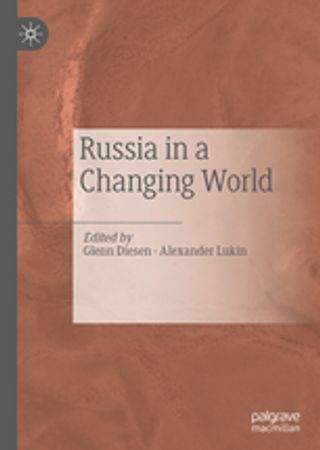
Russia in a Changing World
Diesen G. E., Lukin A., Karaganov S. A., Lukyanov F., Grigoryev L. M., Bratersky M., Makarov I. A., Likhacheva A., Kurdin A., Krivushin I. Singapore: Palgrave Macmillan, 2020.
Similar publications
Влияние роботизации на производительность промышленных предприятий в России
Fedyunina A., Gorodnyi N., Simachev Y. V., Российский журнал менеджмента 2023 Т. 21 № 1 С. 66–88
Goal: the aim of the paper is to assess the impact of industrial robot imports on the productivity of Russian enterprises in the manufacturing industry. Methodology: Panel regression with random effects and least squares methods are used to model the data. The sample includes 81794 enterprises in the Russian manufacturing industry that were active during ...
Added: May 14, 2023
“Reverse Gradualism”, Investment Collapse and Monetary Degradation In Russia In The 1990s
Rozmainsky I. V., Economic Herald of the Donbas 2014 No. 4(383) P. 5–11
In the 1990s The Russian transitional economy was characterized by many adverse economic processes, but the very important are two of these ones. The first one was the long and biggest fall in output and fixed capital investment. The second was monetary degradation which is increase of primitive mediums of exchange and means of payment ...
Added: October 9, 2015
Informal Institutional Arrangements and Tax Evasion in the Russian Economy
Radaev V., , in: Networks, Trust And Social Capital: Theoretical And Empirical Investigations From Europe.: Aldershot: Ashgate, 2005. P. 189–203.
Added: April 21, 2015
  • About
  • About
  • Key Figures & Facts
  • Sustainability at HSE University
  • Faculties & Departments
  • International Partnerships
  • Faculty & Staff
  • HSE Buildings
  • HSE University for Persons with Disabilities
  • Public Enquiries
  • Studies
  • Admissions
  • Programme Catalogue
  • Undergraduate
  • Graduate
  • Exchange Programmes
  • Summer University
  • Summer Schools
  • Semester in Moscow
  • Business Internship
  • Research
  • International Laboratories
  • Research Centres
  • Research Projects
  • Monitoring Studies
  • Conferences & Seminars
  • Academic Jobs
  • Yasin (April) International Academic Conference on Economic and Social Development
  • Media & Resources
  • Publications by staff
  • HSE Journals
  • Publishing House
  • iq.hse.ru: commentary by HSE experts
  • Library
  • Economic & Social Data Archive
  • Video
  • HSE Repository of Socio-Economic Information
  • HSE1993–2026
  • Contacts
  • Copyright
  • Privacy Policy
  • Site Map
Edit