• A
  • A
  • A
  • АБВ
  • АБВ
  • АБВ
  • A
  • A
  • A
  • A
  • A
Обычная версия сайта
  • RU
  • EN
  • HSE University
  • Publications
  • Book chapter
  • The Twenty-First-Century Singularity in the Big History Perspective: An Overview
  • RU
  • EN
Расширенный поиск
Высшая школа экономики
Национальный исследовательский университет
Priority areas
  • business informatics
  • economics
  • engineering science
  • humanitarian
  • IT and mathematics
  • law
  • management
  • mathematics
  • sociology
  • state and public administration
by year
  • 2028
  • 2027
  • 2026
  • 2025
  • 2024
  • 2023
  • 2022
  • 2021
  • 2020
  • 2019
  • 2018
  • 2017
  • 2016
  • 2015
  • 2014
  • 2013
  • 2012
  • 2011
  • 2010
  • 2009
  • 2008
  • 2007
  • 2006
  • 2005
  • 2004
  • 2003
  • 2002
  • 2001
  • 2000
  • 1999
  • 1998
  • 1997
  • 1996
  • 1995
  • 1994
  • 1993
  • 1992
  • 1991
  • 1990
  • 1989
  • 1988
  • 1987
  • 1986
  • 1985
  • 1984
  • 1983
  • 1982
  • 1981
  • 1980
  • 1979
  • 1978
  • 1977
  • 1976
  • 1975
  • 1974
  • 1973
  • 1972
  • 1971
  • 1970
  • 1969
  • 1968
  • 1967
  • 1966
  • 1965
  • 1964
  • 1963
  • 1958
  • More
Subject
News
September 11, 2026
How to Assess Students Knowledge in the Age of AI
A researcher at HSE University has proposed a flowchart to help lecturers decide how to assess students who use artificial intelligence. It shows where the use of AI should be restricted and where it can be incorporated into the learning process. The article has been published in IT Professional.
September 9, 2026
‘Balkan Hospitality Opens Doors: Studying Dialects on the Verge of Extinction
You cannot study spoken dialects from books. Instead, you need to go to a village, seek out its elders, and earn the trust of local residents before you can record hours of spontaneous stories. This is how Natalia Muravleva, Associate Professor at the Faculty of Humanities, conducts her research. Her internship in Serbia continued her long-standing study of dialects spoken by Macedonian settlers. In this interview, she discusses how diaspora cultural centres help researchers reach informants, why native speakers need to be interviewed only in their own language (otherwise, as she puts it, they may 'break'), and how a single field season helped her finalise her monograph. She also shares warm memories of autumn in Belgrade and of colleagues with whom grammar can be discussed in three languages at once.
September 9, 2026
Scientists Train Neural Network to Generate Process Plans from 3D Models
Researchers at the HSE FCS AI and Digital Science Institute have developed CAD2TechSpec, a framework that converts 3D models of mechanical parts into machining process plans—step-by-step instructions for machine tools. The solution aims to reduce the time required for the design and preparation of technical process documentation in mechanical engineering, aircraft manufacturing, and other high-tech industries. The study findings have been published in PeerJ Computer Science.


Have you spotted a typo?
Highlight it, click Ctrl+Enter and send us a message. Thank you for your help!

Publications
  • Books
  • Articles
  • Chapters of books
  • Working papers
  • Report a publication
  • Research at HSE

?

The Twenty-First-Century Singularity in the Big History Perspective: An Overview

Ch. 1. P. 1–18.
Panov A., LePoire D., Korotayev A.

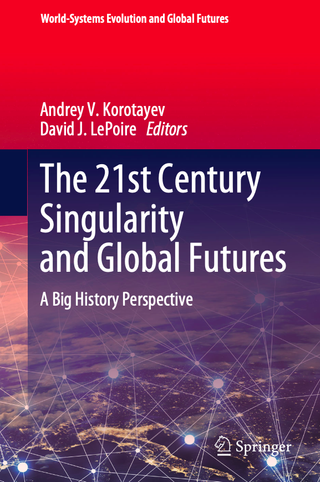
This introductory chapter discusses the overall place of the twenty-first-century Singularity within the overall Big History. It is shown that to place the accelerating trend of complexity in the context of Big History, we need to distinguish the two forms (arms) of megaevolution so far in the universe. The first arm of evolution is the decelerating development of physical matter and energy into galaxies, stars, and planets from the initial Big Bang. The second arm of evolution is the accelerating rate of complexity evolution in the form of life, humans, and civilizations, which is the main concern of this book. The book is organized to present these historical megatrends, models, interpretations, future scenarios, and more philosophical questions along with the realization and debate about their limitations and uncertainty.

Language: English
Full text
DOI
Text on another site
Keywords: singularitycivilizationBig Historymegaevolutionhistorical megatrends

In book

The 21st Century Singularity and Global Futures. A Big History Perspective
Switzerland: Springer, 2020.
Similar publications
Human Evolution in the Complexity Growth Perspective: Toward Periodization of the Big History Biosocial Era
Korotayev A., , in: Complexity in Universal Evolution. A Big History Perspective.: Springer, 2026. Ch. 13 P. 359–409.
We have undertaken an attempt to propose a periodization of the Big History Biosocial (Anthropogenesis) Era on the basis of the most recent scientific data. This periodization is complexity-based, that is, the boundaries of the identified epochs are marked with complexity jumps, that is, in our case, such phase transitions that result in significant increases ...
Added: August 10, 2026
Biological and Social Phases of Big History and Complexity Growth
Leonid Grinin, Alexander M., Korotayev A., , in: Complexity in Universal Evolution. A Big History Perspective.: Springer, 2026. Ch. 12 P. 283–355.
In the first half of this chapter, Grinin et al. survey general similarities and differences between biological and social macroevolution. They undertake a systematic comparison between biological and social evolution at different levels of analysis and in various aspects, formulating a considerable number of general principles and rules of evolution, and working to develop a ...
Added: August 10, 2026
Introduction to Complexity Theory for Big History
David J. L., Grinin L. E., Korotayev A., , in: Complexity in Universal Evolution. A Big History Perspective.: Springer, 2026. Ch. 2 P. 29–90.
This chapter explores the role of complexity dynamics in Big History through an integrative theoretical framework that spans physical, chemical, biological, social, cognitive, and civilizational domains. Building on foundational work in systemstheory,thermodynamics,andevolutionarytheory,thechapterarguesthat complexity can serve as a conceptual bridge across disciplines. By examining how complexity emerges, is sustained, and transforms across thresholds, as well as ...
Added: August 10, 2026
The Evolution of Complexity in the Stelliferous Era: Observations and Patterns
Korotayev A., LePoire D., , in: Complexity in Universal Evolution. A Big History Perspective.: Springer, 2026. Ch. 5 P. 151–171.
A previous study compared the symmetries of the cooling after the Big Bang and thedevelopment oflife, humans,and civilization on Earth. Asimple model ofthe relative rates of change depicts two cones joined at their bases representing the Big Bang expansion and the acceleration of complexity development on Earth through life evolution, human evolution, and civilization development. ...
Added: August 10, 2026
Complexity in Universal Evolution: A Big History Perspective—An Introduction
David J. L., Leonid Grinin, Korotayev A., , in: Complexity in Universal Evolution. A Big History Perspective.: Springer, 2026. Ch. 1 P. 1–25.
Complexity is widely acknowledged as a foundational and pivotal concept in Big History, offering a unifying lens through which to examine the emergence and development of systems—from particles and galaxies to life, civilizations, and beyond. Yet, despite its centrality, major gaps remain in how we define, measure, and interpret complexity across different phases and scales. ...
Added: August 10, 2026
Complexity in Universal Evolution. A Big History Perspective
David J. L., Leonid Grinin, Korotayev A., Springer, 2026.
Complexity is widely acknowledged as a foundational and pivotal concept in Big History, offering a unifying lens through which to examine the emergence and development of systems—from particles and galaxies to life, civilizations, and beyond. Yet, despite its centrality, major gaps remain in how we define, measure, and interpret complexity across different phases and scales. ...
Added: August 7, 2026
Война как предчувствие: историософские прогнозы В.И. Ламанского
Malinov A. V., Диалог со временем 2026 № 95 С. 151–166
The article examines V.I. Lamansky’s civilizational concept, in which he argued for the inevitability of a major (world) war in Europe. Lamansky’s reasoning was based on the belief in a fatal historical antagonism between two parts of Europe: The Romano-Germanic and the Greco-Slavic. The most detailed description of this world war is found in Lamansky’s ...
Added: July 7, 2026
“Clash of masculinities”? Gendering Russian-Western relations in popular geopolitics
Рябова Т. Б., , in: Russia as Civilization: Ideological Discourses in Politics, Media and Academia.: L.: Routledge, 2020. P. 115–141.
Tatiana Riabova analyzes textual and visual representations of the idea of “clash of civilizations” in Russian, Western European, and American online media focusing on gendered textual and visual discourses about Russia-Western relations. Drawing on theories of masculinity and popular geopolitics, she shows how gendered perceptions of the “other” are reshaped and reinforced in the Russian-Western ...
Added: March 29, 2026
Complexity in Big History. An Introductory Exploration
LePoire D., Grinin L. E., Korotayev A., Journal of Big History 2025 Vol. 8 No. 3 P. 98–139
Building on foundational work in systems theory, thermodynamics, and evolutionary theory, this paper argues that complexity can serve as a conceptual bridge across disciplines. It explores the role of complexity dynamics in Big History through an integrative theoretical framework that spans physical, chemical, geological, biological, social, cognitive, and civilizational domains. By examining how complexity emerges, ...
Added: November 1, 2025
Мир стоит на пороге эпохи технологической сингулярности. Как изменятся тренды базовых глобальных процессов и эволюция человечества
Akaev A., Ильин И. В., Korotayev A., Вестник Российской академии наук 2025 № 9 С. 3–15
The article examines the likelihood of creating artificial intelligence (AI) at the human level (“human intelligence level”, AGI) by 2027-2029 and the onset of the era of technological singularity, when a fundamental change in the mechanism of human evolution will occur. It is noted that this probability is close to one, since these dates surprisingly ...
Added: October 28, 2025
Изменение научно-технической активности в процессе жизненного цикла разных цивилизаций. Предварительный сравнительный анализ шести цивилизаций с древнейших времен до нового времени
Korotayev A., Гринин А. Л., Grinin L. E. et al., Философия и общество 2025 № 1 С. 5–41
This article aims to explore the relationship between the development of civilizations and the dynamics of scientific and technological progress. For this purpose, a preliminary study of the dynamics of scientific- technological activity during the life cycle of six civilizations of Antiquity and the Middle Ages (Mesopotamian, Ancient Egyptian, Ancient, Chinese, medieval European and Islamic). ...
Added: June 3, 2025
Conclusions: Exploring Big History Periodizations Across Cosmic and Biosocial Dimensions with Ideas for Further Research
LePoire D., Leonid Grinin, Korotayev A., , in: Navigating Complexity in Big History. Exploring Periodization Across Cosmic and Biosocial Dimensions.: Springer, 2025. P. 495–525.
This volume, “Navigating Complexity in Big History—Exploring Periodization Across Cosmic and Biosocial Dimensions” explores the aspects and proposals for periodization of Big History. This includes considering cross-cutting aspects of measuring complexity (e.g., energy, information, or a combination), considering different mechanisms of natural selection, developing a set of criteria to base the evaluation of frameworks, and ...
Added: May 12, 2025
Comparing and Contrasting Big History Singularity Trends of the Big Bang and Terrestrial Evolution
Korotayev A., , in: Navigating Complexity in Big History. Exploring Periodization Across Cosmic and Biosocial Dimensions.: Springer, 2025. P. 101–157.
The point that within the Big History the decelerating growth of complexity in the Universe observed after the Big Bang can be contrasted with the accelerating growth of complexity traced on our planet for four billion years after the emergence of life on the Earth has been already noticed on quite a number of occasions. ...
Added: May 12, 2025
Possible Methodological Ideas for Periodizing Big History
Leonid Grinin, Korotayev A., , in: Navigating Complexity in Big History. Exploring Periodization Across Cosmic and Biosocial Dimensions.: Springer, 2025. P. 49–71.
“The effort to understand the universe is one of the very few things which lifts human life a little above the level of farce and gives it some of the grace of tragedy”. These words of Nobel laureate Steven Weinberg undoubtedly deserve attention, although they dramatize the origins of interest in the problems of the Universe. ...
Added: May 12, 2025
Navigating Complexity in Big History—Exploring Periodization Across Cosmic and Biosocial Dimensions: An Introduction
LePoire D., Leonid Grinin, Andrey Korotayev, , in: Navigating Complexity in Big History. Exploring Periodization Across Cosmic and Biosocial Dimensions.: Springer, 2025. P. 1–27.
Not so many would argue with identifying complexity as a central concept in Big History and universal evolutionism. It is partly because, perhaps, today, many of us are convinced that not only our world but Universe itself is in a state of major change, and the awareness that we are living in a period of ...
Added: May 12, 2025
Navigating Complexity in Big History. Exploring Periodization Across Cosmic and Biosocial Dimensions
David J. L., L. Grinin, Korotayev A., Springer, 2025.
In the editors’ introduction (Chapter 1), the effort to periodize is placed within the historical context along with considerations from complexity science. Subsequent chapters explore various aspects of periodization and complexity by (a) identifying symmetrical cosmic and biosocial trends, (b) testing rigor and criteria for evaluating periodization, (c) attempting to integrate different approaches through multiple ...
Added: May 12, 2025
Rethinking medieval margins and marginality: edited by Ann E. Zimo, Tiffany D. Vann Sprecher, Kathryn Ryerson, Debra Blumenthal, London and New York, Routledge, 2020, 272 pp., $48.95 (paperback), ISBN 9780367439569
Asatryan G., Kalpakian J., Rethinking History 2022 Vol. 26 No. 1 P. 116–118
For a serious academic work, this book is very enjoyable and can be said to have appeal beyond its expected academic readership. It takes analytical categories used to understand the present and looks at how they were applied in the past and how Medieval people, primarily but not exclusively in Europe, understood them. Specifically, the ...
Added: February 22, 2025
Complexity Growth Patterns in the Stelliferous Era of Big History. Preliminary Observations
Korotayev A., LePoire D., Journal of Big History 2025 Vol. 8 No. 1 P. 1–12
A previous study compared the symmetries of the cooling after the Big Bang and the development of life, humans, and civilization on Earth. A simple model of the relative rates of change depicts two cones joined at their bases representing the Big Bang expansion and the acceleration of complexity development on earth through life evolution, ...
Added: January 28, 2025
Цивилизация: многозвучие смыслов. Memoria
М.: Центр гуманитарных инициатив, 2023.
В книгу, посвященную осмыслению феномена цивилизации, включены фундаментальные работы известных философов, внесших свой вклад в исследование проблемы, интерес к которой обусловлен актуализацией размышлений о судьбе цивилизации, культуры, общества в эпоху глобальных перемен. Этим объясняется внимание исследователей к обсуждению планетарного характера цивилизационных изменений, общей динамики мирового исторического процесса и места в нем России. Осевой проблемой, которая ...
Added: January 28, 2024
  • About
  • About
  • Key Figures & Facts
  • Sustainability at HSE University
  • Faculties & Departments
  • International Partnerships
  • Faculty & Staff
  • HSE Buildings
  • HSE University for Persons with Disabilities
  • Public Enquiries
  • Studies
  • Admissions
  • Programme Catalogue
  • Undergraduate
  • Graduate
  • Exchange Programmes
  • Summer University
  • Summer Schools
  • Semester in Moscow
  • Business Internship
  • Research
  • International Laboratories
  • Research Centres
  • Research Projects
  • Monitoring Studies
  • Conferences & Seminars
  • Academic Jobs
  • Yasin (April) International Academic Conference on Economic and Social Development
  • Media & Resources
  • Publications by staff
  • HSE Journals
  • Publishing House
  • iq.hse.ru: commentary by HSE experts
  • Library
  • Economic & Social Data Archive
  • Video
  • HSE Repository of Socio-Economic Information
  • HSE1993–2026
  • Contacts
  • Copyright
  • Privacy Policy
  • Site Map
Edit