• A
  • A
  • A
  • АБВ
  • АБВ
  • АБВ
  • A
  • A
  • A
  • A
  • A
Обычная версия сайта
  • RU
  • EN
  • HSE University
  • Publications
  • Books
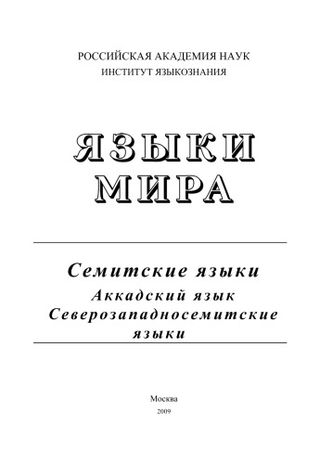
  • Языки мира: Семитские языки. Аккадский язык. Северозападносемитские языки
  • RU
  • EN
Расширенный поиск
Высшая школа экономики
Национальный исследовательский университет
Priority areas
  • business informatics
  • economics
  • engineering science
  • humanitarian
  • IT and mathematics
  • law
  • management
  • mathematics
  • sociology
  • state and public administration
by year
  • 2027
  • 2026
  • 2025
  • 2024
  • 2023
  • 2022
  • 2021
  • 2020
  • 2019
  • 2018
  • 2017
  • 2016
  • 2015
  • 2014
  • 2013
  • 2012
  • 2011
  • 2010
  • 2009
  • 2008
  • 2007
  • 2006
  • 2005
  • 2004
  • 2003
  • 2002
  • 2001
  • 2000
  • 1999
  • 1998
  • 1997
  • 1996
  • 1995
  • 1994
  • 1993
  • 1992
  • 1991
  • 1990
  • 1989
  • 1988
  • 1987
  • 1986
  • 1985
  • 1984
  • 1983
  • 1982
  • 1981
  • 1980
  • 1979
  • 1978
  • 1977
  • 1976
  • 1975
  • 1974
  • 1973
  • 1972
  • 1971
  • 1970
  • 1969
  • 1968
  • 1967
  • 1966
  • 1965
  • 1964
  • 1963
  • 1958
  • More
Subject
News
July 20, 2026
Scientists Create Open Dataset for Studying Concentration
A team of Russian researchers, including scientists from HSE University–St Petersburg, has developed the first open multimodal dataset containing recordings of brain activity, heart function, and video observations to help researchers understand what happens in the human brain during deep concentration. In the future, the dataset could accelerate the development of neural interfaces, rehabilitation technologies, and AI systems. The article has been published in Scientific Data.
July 20, 2026
‘Science Is Universal-It Knows No Borders
Fuad Aleskerov, Tenured Professor and Director of the International Centre of Decision Choice and Analysis at HSE University, together with his colleagues, has developed methods of network analysis in bibliometrics that have made it possible to identify patterns in the appearance and citation of publications in academic journals, as well as their influence on each other. When one or a number of studies are frequently cited by a wide range of journals, this is an indicator that the research is of high quality. By contrast, extensive cross-citation within a limited group of journals increases the likelihood of identifying a network of predatory publications.
July 20, 2026
Scientists Propose Method for More Efficient Resource Use in Machine Learning
An international group of researchers, including mathematicians from the AI and Digital Science Institute at the HSE Faculty of Computer Science, has provided a theoretical justification for a simple and computationally efficient method of estimating uncertainty in Stochastic Gradient Descent (SGD). The paper has been published on the scientific preprint server arXiv.org and presented at AISTATS 2026.


Have you spotted a typo?
Highlight it, click Ctrl+Enter and send us a message. Thank you for your help!

Publications
  • Books
  • Articles
  • Chapters of books
  • Working papers
  • Report a publication
  • Research at HSE

?

Языки мира: Семитские языки. Аккадский язык. Северозападносемитские языки

-, 2009.
Loesov S., Kogan L., Lyavdansky A., Markina E.
Under the general editorship: Kogan L., Loesov S.

This book continues the encyclopedic multi-volume series “Languages of the World”, which is being prepared at the Institute of Linguistics, Russian Academy of Sciences. This is the first part of the two-volume set dealing with Semitic languages. It comprises a general survey of the Semitic language family, as well as descriptions of individual Semitic languages: Akkadian (with separate articles on Old Assyrian and Sargonic) and the Northwest Semitic languages (Ugaritic, Phoenician, Ancient and Modern Hebrew, Imperial Aramaic, Jewish Palestinian Aramaic, Classical Syriac, Classical Mandaic, Neo-Aramaic of Maalula, Turoyo, and Modern Mandaic). Also included are general surveys of Aramaic and Canaanite, as well as a summary description of Modern Northeast Aramaic. Each essay follows the typologically oriented template maintained throughout the Languages of the World series. This volume concludes with several appendices: a concise history of Northwest Semitic alphabets (with samples) and a set of maps illustrating the ancient and modern spread of the Semitic languages. This volume is intended to be both a fundamental linguistic study and a reference source. It is addressed to a wide audience of linguists from various fields, historians, cultural anthropologists, teachers and students, and anyone interested in Semitic studies.
Chapters
Классический сирийский язык
Loesov S., В кн.: Языки мира: Семитские языки. Аккадский язык. Северозападносемитские языки.: Институт языкознания РАН, 2009. С. 562–625.
Классический сирийский язык (К.с.я.) — литературный язык арамеев-христиан Сирии и Месопотамии в I тыс. н. э., ныне мертвый. Его разговорной основой был восточноарамейский диалект г. Эдессы, современный г. Шанлиурфа (Урфа) на юговостоке Турции. Эдесса была построена при Селевкидах в конце IV в. до н. э. и названа в честь древней столицы Македонии. В конце II ...
Added: October 23, 2017
Имперский арамейский язык
Loesov S., В кн.: Языки мира: Семитские языки. Аккадский язык. Северозападносемитские языки.: Институт языкознания РАН, 2009.
Имперский арамейский язык (И.а.я.) — основной официальный язык персидской Ахеменидской державы, существование которой условно датируется 539–331 гг. до н. э. ...
Added: October 23, 2017
Арамейские языки
Loesov S., В кн.: Языки мира: Семитские языки. Аккадский язык. Северозападносемитские языки.: Институт языкознания РАН, 2009. С. 414–496.
Арамейскими языками (А.я.) называют языки, произошедшие от общего предка, праарамейского языка. С генеалогической точки зрения все известные А.я. относятся к одной из двух ветвей, западной либо восточной. А.я. и ханаанейские языки образуют две подгруппы северо-западной группы семитских языков. ...
Added: October 23, 2017
Древнееврейский язык
Loesov S., Kogan L., В кн.: Языки мира: Семитские языки. Аккадский язык. Северозападносемитские языки.: Институт языкознания РАН, 2009.
Added: October 23, 2017
Аккадский язык
Kogan L., Loesov S., В кн.: Языки мира: Семитские языки. Аккадский язык. Северозападносемитские языки.: Институт языкознания РАН, 2009. С. 113–178.
Added: October 23, 2017
Туройо
Kogan L., Loesov S., В кн.: Языки мира: Семитские языки. Аккадский язык. Северозападносемитские языки.: Институт языкознания РАН, 2009. С. 751–805.
Added: October 23, 2017
Language: Russian
Keywords: Semitic LanguagesСемитские языки
Языки мира: Семитские языки. Аккадский язык. Северозападносемитские языки
Similar publications
Сериальные конструкции с глаголом parək I в урмийских новоарамейских идиомах
Lyavdansky A., Acta Linguistica Petropolitana. Труды института лингвистических исследований 2023 Т. 19 № 1 С. 193–229
On the basis of field and corpus data, preliminary observations are made about the form and function of serial verb constructions (SVC) in the varieties of Christian Urmi Neo-Aramaic. Serial verb constructions are considered adopting “wide” understanding of this phenomenon, represented by the works of Plungyan, Aikhenvald and Andrason among many others. Big amount of data ...
Added: August 7, 2023
An Unpublished North West Semitic Inscription from the Collection of the Russian Archaeological Institute in Constantinople
Balakhvantsev A., Kogan L., Lyavdansky A. et al., Vestnik Drevnei Istorii 2022 Vol. 82 No. 4 P. 911–940
The authors publish a hitherto unknown squeeze made from a North West Semitic inscription. The squeeze originally belonged to the Russian Archeological Institute in Constantinople and is now hosted by the St. Petersburg Branch of the Archive of the Russian Academy of Sciences. The inscription, performed in relief, may have been made on a large ...
Added: December 24, 2022
Reflections on the Suffix Conjugations in Semitic
Loesov S., Journal of Semitic Studies 2022 Vol. 67 No. 1 P. 337–351
Suffix conjugations (SCs) of East and West Semitic may not be traced back to the same verb form in Proto-Semitic. Rather, they evolved separately, by way of a ‘common drift’ in the two branches of Semitic. This is demonstrated, in particular, by a crass contrast, both in forms and diathetic meanings, between the SCs of ...
Added: October 15, 2022
A History of the Passive in Pre-modern Aramaic: An Outline
Kalinin M., Loesov S., Journal of Semitic Studies 2022 Vol. 67 No. 2 P. 471–516
In Proto-Aramaic, the passive of transitive verbs belonging to all three principal stems—G, D and C—was formed internally. Some verbs of the G- and D-stems also possessed detransitive derivatives. Transitive verbs of the G-, D- and C-stems lost their internal passives early on, and the passives of G- and D-verbs were encoded by their respective ...
Added: October 15, 2022
Verbs of falling in Tigrinya
Bulakh M., Acta linguistica Petropolitana 2020 Vol. 16 No. 1 P. 677–720
The paper gives a survey of verbs of falling in Tigrinya (an Ethio-Semitic language spoken in Eritrea and northern Ethiopia). The employment of each verb related to the situation of falling down is illustrated with phrasal examples. The Tigrinya data is further compared with Geez, a closely related extinct language. A special subsection deals with ...
Added: December 25, 2020
A Corpus-Based Swadesh Word List for Literary Christian Urmi (New Alphabet Texts)
Lyavdansky A., , in: Studies in the Grammar and Lexicon of Neo-Aramaic.: Open Book Publishers, 2021. P. 415–442.
The aim of this paper is to present a basic word list for Christian Urmi Neo-Aramaic provided with etymologies and a discussion of problematic positions in the list. This study, which uses a variant of Swadesh list of 110 basic words, is the first research outcome after creating an electronic corpus of literary Christian Urmi based on the texts published in Soviet Union in 1929 - 1938 ...
Added: October 19, 2020
Studies in the Grammar and Lexicon of Neo-Aramaic
Open Book Publishers, 2021.
The Neo-Aramaic dialects are modern vernacular forms of Aramaic, which has a documented history in the Middle East of over 3,000 years. Due to upheavals in the Middle East over the last one hundred years, thousands of speakers of Neo-Aramaic dialects have been forced to migrate from their homes or have perished in massacres. As ...
Added: October 19, 2020
A Neo-Aramaic Version of a Kurdish Folktale
Häberl C., Kuzin N., Loesov S. et al., Journal of Semitic Studies 2020 Vol. 65 No. 2 P. 473–493
Versions of the folktale Zêrka Zêra (in Kurdish)/Stērka Zerá (in Ṭuroyo) circulate throughout southeastern Anatolia. The story belongs to a widely-disseminated tale type, the ‘Bear’s Wife’, which concerns a young woman who is abducted by a bear (or other wilderness creature) and is forced to spawn and rear his children before escaping or being rescued. ...
Added: September 4, 2020
Additions and Corrections to Wolf Leslau’s Comparative Dictionary of Ge‘ez (1987–2017)
Kogan L., Journal of the American Oriental Society. American Oriental Society 2019 Vol. 139 No. 4 P. 893–906
Thirty years after the appearance of Wolf Leslau’s Comparative Dictionary of Geʿez, the present study aims at correcting and updating some of the entries of this major tool of Semitic etymology. New data from Ugaritic, Akkadian, and especially Modern South Arabian are prominent among the additions (particularly the Soqotri lexical material acquired in the course of the many years ...
Added: February 20, 2020
The Basic Lexicon of Mlaḥsô: A Comparative Study
Barsky E., Kalinin M., Loesov S., AULA ORIENTALIS 2018 Vol. 36 P. 209–235
The paper provides a list of morphological innovations exclusively shared by Mlaḥsô and Ṭuroyo. These point to the existence of a proto-Ṭuroyo/Mlaḥsô, which was not an ancestor of any other modern Aramaic language known to us. A study of the basic lexicon of Mlaḥsô, in comparison with that of Ṭuroyo and NENA, supplies a lexical dimension to the ...
Added: October 28, 2018
Les perles de pierre et de métal dans les textes sumériens et akkadiens
Arkhipov I., , in: Chagar Bazar (Syrie) VI. Les tombes ordinaires de l’âge du Bronze ancien et moyen des chantiers D-F-H-I (1999-2011). Les objets.: P., Leuven, Walpole: Peeters Publishers, 2018. Ch. 3 P. 43–70.
The sixth report on the new excavations at Chagar Bazar contains the complete publication of the objects discovered in the graves that were described in the fourth volume. Particular attention was devoted to the archaeological study of 5105 beads, and this study was completed by the examination of the beads in the cuneiform documents (by ...
Added: April 26, 2018
Lexical Sondergut of Neo-Assyrian
Loesov S., Kalinin M., State Archives of Assyria Bulletin 2017 Vol. XXIII P. 1–46
This study addresses the words unique to the extant Neo-Assyrian corpus. All of them are listed in the paper, with etymological and philological notes wherever feasible or appropriate. Two foci of the inquiry are innovations in the basic lexicon of Neo-Assyrian and productive rules of word-formation in this language. ...
Added: January 31, 2018
Two-Hundred-Word Swadesh List for a Modern Aramaic variety (Turoyo)
Loesov S., Furman Y., Barsky E., AULA ORIENTALIS 2018 Vol. 36 No. 1 P. 75–110
The study aims at establishing the Turoyo exponents for the two-hundred word Swadesh list and providing their etymologies. It is based on a searchable corpus of Turoyo and fieldwork. Special attentionhas been paid to intra-Turoyo dialectal differences in the basic lexicon. The etymological results are,roughly, as follows: 72 per cent of words have Aramaic etymology, 13 per cent are Arabisms, and 8 per centare Kurdisms. ...
Added: January 30, 2018
Харари язык
Визирова Е., В кн.: Языки мира: Семитские языки. Эфиосемитские языки.: М.: Academia, 2013.
Лингвистическое описание языка харари. Статья "Харари язык" (стр. 406-509) является частью тома "Семитские языки. Эфиосемитские языки" многотомного энциклопедического издания "Языки мира", подготавливаемого Институтом языкознания РАН. Статья строится по типовой схеме, единой для всех статей данного издания, и содержит подробные общелингвистические, фонологические, морфонологические, семантико-грамматические и морфосинтаксические сведения о языке харари, а также парадигмы, описание лексики и ...
Added: October 23, 2017
Motifs of Soqotri Narratives: Towards a Comparative-Typological Analysis
Berezkin Y., Cherkashin D., Kogan L. et al., AULA ORIENTALIS 2016 Vol. 2 No. 34 P. 201–243
The article is an attempt at comparative analysis of motifs and plots of the oral literature of Soqotra (Gulf of Aden, Yemen). Both the early recordings made in the beginning of the 20th century by D.H. Muller and the recent ones, carried out by V. Naumkin and his team, are involved. For each story we ...
Added: October 23, 2017
Древнееврейский язык
Loesov S., Kogan L., В кн.: Языки мира: Семитские языки. Аккадский язык. Северозападносемитские языки.: Институт языкознания РАН, 2009.
Added: October 23, 2017
Имперский арамейский язык
Loesov S., В кн.: Языки мира: Семитские языки. Аккадский язык. Северозападносемитские языки.: Институт языкознания РАН, 2009.
Имперский арамейский язык (И.а.я.) — основной официальный язык персидской Ахеменидской державы, существование которой условно датируется 539–331 гг. до н. э. ...
Added: October 23, 2017
Классический сирийский язык
Loesov S., В кн.: Языки мира: Семитские языки. Аккадский язык. Северозападносемитские языки.: Институт языкознания РАН, 2009. С. 562–625.
Классический сирийский язык (К.с.я.) — литературный язык арамеев-христиан Сирии и Месопотамии в I тыс. н. э., ныне мертвый. Его разговорной основой был восточноарамейский диалект г. Эдессы, современный г. Шанлиурфа (Урфа) на юговостоке Турции. Эдесса была построена при Селевкидах в конце IV в. до н. э. и названа в честь древней столицы Македонии. В конце II ...
Added: October 23, 2017
A New Attempt at Reconstructing Proto-Aramaic (Part II)
Loesov S., , in: Proceedings of the 14th Italian Meeting of Afroasiatic Linguistics.: [б.и.], 2013. P. 91–106.
The paper is the second part of the author’s essay in the Proto-Aramaic reconstruc tion. In the first chapter of the present contribution, the writer tries to make plausible the idea according to which the Eastern Aramaic plural nominal ending -ē made its appearance in Proto-Eastern Aramaic and had been borrowed by this language from the Assyrian variety of ...
Added: October 23, 2017
Proceedings of the 14th Italian Meeting of Afroasiatic Linguistics
[б.и.], 2013.
Added: October 23, 2017
Archaism and innovation in the semitic languages : selected papers
Durham: CNERU, DTR, 2013.
Added: October 22, 2017
Three Etiological Stories from Soqotra in Their Near Eastern Setting
Naumkin V., Kogan L., Cherkashin D., Journal of Near Eastern studies 2015 Vol. 2 No. 74 P. 289–299
A remarkable discovery of a whole set of the purest specimens of etiological narratives of Soqotri oral literature that was made while preparing the text corpus for the second volume of our series (CSOL II). ...
Added: October 22, 2017
Soqotri Lexical Archive: the 2012 Season.
Naumkin V., Kogan L., Cherkashin D. et al., Zeitschrift der Deutschen Morgenlandischen Gesellschaft 2016 Vol. 1 No. 166 P. 57–80
This is the third part of our lexical archive, comprising "new" Soqotri words elicited during the 2012 fieldwork season on the island and in Moscow. ...
Added: October 22, 2017
  • About
  • About
  • Key Figures & Facts
  • Sustainability at HSE University
  • Faculties & Departments
  • International Partnerships
  • Faculty & Staff
  • HSE Buildings
  • HSE University for Persons with Disabilities
  • Public Enquiries
  • Studies
  • Admissions
  • Programme Catalogue
  • Undergraduate
  • Graduate
  • Exchange Programmes
  • Summer University
  • Summer Schools
  • Semester in Moscow
  • Business Internship
  • Research
  • International Laboratories
  • Research Centres
  • Research Projects
  • Monitoring Studies
  • Conferences & Seminars
  • Academic Jobs
  • Yasin (April) International Academic Conference on Economic and Social Development
  • Media & Resources
  • Publications by staff
  • HSE Journals
  • Publishing House
  • iq.hse.ru: commentary by HSE experts
  • Library
  • Economic & Social Data Archive
  • Video
  • HSE Repository of Socio-Economic Information
  • HSE1993–2026
  • Contacts
  • Copyright
  • Privacy Policy
  • Site Map
Edit