• A
  • A
  • A
  • АБВ
  • АБВ
  • АБВ
  • A
  • A
  • A
  • A
  • A
Обычная версия сайта
  • RU
  • EN
  • HSE University
  • Publications
  • Book chapter
  • A Corpus-Based Swadesh Word List for Literary Christian Urmi (New Alphabet Texts)
  • RU
  • EN
Расширенный поиск
Высшая школа экономики
Национальный исследовательский университет
Priority areas
  • business informatics
  • economics
  • engineering science
  • humanitarian
  • IT and mathematics
  • law
  • management
  • mathematics
  • sociology
  • state and public administration
by year
  • 2027
  • 2026
  • 2025
  • 2024
  • 2023
  • 2022
  • 2021
  • 2020
  • 2019
  • 2018
  • 2017
  • 2016
  • 2015
  • 2014
  • 2013
  • 2012
  • 2011
  • 2010
  • 2009
  • 2008
  • 2007
  • 2006
  • 2005
  • 2004
  • 2003
  • 2002
  • 2001
  • 2000
  • 1999
  • 1998
  • 1997
  • 1996
  • 1995
  • 1994
  • 1993
  • 1992
  • 1991
  • 1990
  • 1989
  • 1988
  • 1987
  • 1986
  • 1985
  • 1984
  • 1983
  • 1982
  • 1981
  • 1980
  • 1979
  • 1978
  • 1977
  • 1976
  • 1975
  • 1974
  • 1973
  • 1972
  • 1971
  • 1970
  • 1969
  • 1968
  • 1967
  • 1966
  • 1965
  • 1964
  • 1963
  • 1958
  • More
Subject
News
August 25, 2026
Scientists Develop Algorithm for More Reliable Processors in Data Centres
Researchers from HSE MIEM and Samara University have developed the LRF-3D algorithm to automatically bypass idle nodes in three-dimensional networks-on-chip. Thanks to its hierarchical architecture, the algorithm outperforms existing solutions in both speed and path accuracy, improving processor reliability for use in data centres, supercomputers, and AI computing. The source code and test results are publicly available.
August 24, 2026
Researchers Develop Method for Direct Generation of Regulatory DNA
Researchers at HSE University have developed a model for generating promoters and enhancers—DNA sequences that regulate gene activity. The model works directly with DNA nucleotides, without first transforming them into a continuous numerical representation. This solution could be useful for applications in synthetic biology and gene therapy. The study results were presented at the ICLR 2026 Workshop ‘Generative AI in Genomics (Gen^2): Barriers and Frontiers.’
August 21, 2026
Social Integration: At the Crossroads of Knowledge and Values
The International Laboratory for Social Integration Research (ILSIR) at HSE University studies the challenges faced by vulnerable groups and explores ways to help them participate fully in everyday life. To develop effective solutions, the laboratory’s researchers combine cutting-edge methods with practical fieldwork. In this interview with the HSE News Service, Laboratory Head Elena Iarskaia-Smirnova discusses the laboratory’s work.


Have you spotted a typo?
Highlight it, click Ctrl+Enter and send us a message. Thank you for your help!

Publications
  • Books
  • Articles
  • Chapters of books
  • Working papers
  • Report a publication
  • Research at HSE

?

A Corpus-Based Swadesh Word List for Literary Christian Urmi (New Alphabet Texts)

P. 415–442.
Lyavdansky A.

The aim of this paper is to present a basic word list for Christian Urmi Neo-Aramaic provided with etymologies and a discussion of problematic positions in the list. This study, which uses a variant of Swadesh list of 110 basic words, is the first research outcome after creating an electronic corpus of literary Christian Urmi based on the texts published in Soviet Union in 1929 - 1938 (Novij Alfavit). With some exponents being uncertain (having two possible variants), the statistical results demonstrate that from 85,5 % to 87,3 % of the exponents have reliable Aramaic etymology. The percentage of loanwords derived from Persian is 3,6 % (or 4,5 %), from Kurdish — 1,8 % (or 2,7 %), from Azeri Turkish — 0,9 %. Six exponents have no clear etymology (5,5 %).
Language: English
Full text
DOI
Text on another site
Keywords: Семитские языкиAramaic studiesарамейские языкиновоарамейские языкиNeoaramaic langaugesSemitic languagesSwadesh listсписки Сводеша

In book

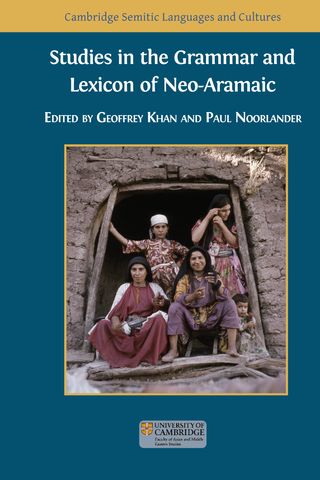
Studies in the Grammar and Lexicon of Neo-Aramaic
Open Book Publishers, 2021.
Similar publications
Quantifying lexical distances among Nudiz, Mahmudi, and Verin Dvin Urmi (North-Eastern Neo-Aramaic)
Shvedova E., Koryakov Y., Elizaveta Zabelina, Journal of Language Relationship 2025 Vol. 23 No. 3–4 P. 207–275
This study documents and analyzes lexical data from four Christian North-Eastern Neo-Aramaic varieties: Mahmudi, Nudiz, Verin Dvin Urmi, and Urmia Urmi, focusing on the previously undescribed Mahmudi and Nudiz. We provide correspondences from these lects for an extended 226-item basic vocabulary list collected for this study with etymologies, cognates from earlier Aramaic, and loanword sources. ...
Added: September 4, 2025
Neo-Aramaic Texts in the New Alphabet Published in the Soviet Union 1929–1938
Lyavdansky A., , in: A Handbook of Neo-Aramaic.: Leiden: Brill, 2026. Ch. 13 P. 365–384.
The purpose of this contribution is to present the corpus of Neo-Aramaic Texts in the New Alphabet in its entirety, summarize what has been done in the field, and demonstrate how the nascent digitized corpus of Christian Urmi in Latinized orthography can contribute to research into this idiom. To this end, several linguistic features are ...
Added: May 1, 2025
Проект словаря новоарамейских глаголов
Shvedova E., Вопросы лексикографии 2024 № 34 С. 42–61
A group of scholars from Saint Petersburg and Moscow is working on a Lexicon of the Neo-Aramaic verbs. The purpose of the lexicon is to systematise data on the structure of the verb systems of various North-Eastern Neo-Aramaic varieties. The dictionary now contains information on Christian Urmi, Nudez, Mahmudi and Bohtan idioms. The dictionary is ...
Added: January 22, 2025
Каузативные оппозиции в христианском урмийском новоарамейском
Shvedova E., Вестник РГГУ. Серия «Литературоведение. Языкознание. Культурология» 2024 Т. 26 № 5 С. 110–140
The article is devoted to causative verb alternation in Christian Urmi Neo-Aramaic. I have analyzed the formal types of 31 causal/noncausal verb pairs developed by M. Haspelmath (1993). Field data were collected during the fieldtrip to the village of Urmiya, Krasnodar Krai, Russia. I show that Haspelmath’s ordering of verb meanings according to the likelihood ...
Added: August 23, 2024
Ṭuroyo
Häberl C. G., Kashintseva K., Loesov S., , in: Language Diversity in Iran: New Texts and Perspectives from Non-Iranian Languages.: De Gruyter, 2024. Ch. 8 P. 285–358.
This survey offers a brief grammatical description of the Turoyo language spoken in the southeast of Turkey. Ṭuroyo is a largely unwritten Eastern Neo-Aramaic language, which derives its name from the Tur Abdin region. The Tur Abdin region, the ancient home of Ṭuroyo and the last remaining stronghold of Aramaic in the Republic of Türkiye, ...
Added: November 5, 2023
The Girl in the Ape’s House: A Folktale in a North-eastern Neo-aramaic Variety of Urmiya, Russia
Lyavdansky A., Kozhanov K., Ovsjannikova M., Journal of Semitic Studies 2024 Vol. 69 No. 1 P. 231–267
The article discusses dialectal and folkloristic features of an oral narrative in a North-Eastern Neo-Aramaic (NENA) variety recently recorded in the Southern Russian village of Urmiya. The dialect of the tale belongs to the NENA varieties originating in the easternmost regions of Turkey, which is corroborated by the tale’s speaker, who named its places of ...
Added: September 3, 2023
Сериальные конструкции с глаголом parək I в урмийских новоарамейских идиомах
Lyavdansky A., Acta Linguistica Petropolitana. Труды института лингвистических исследований 2023 Т. 19 № 1 С. 193–229
On the basis of field and corpus data, preliminary observations are made about the form and function of serial verb constructions (SVC) in the varieties of Christian Urmi Neo-Aramaic. Serial verb constructions are considered adopting “wide” understanding of this phenomenon, represented by the works of Plungyan, Aikhenvald and Andrason among many others. Big amount of data ...
Added: August 7, 2023
Каузативно-инхоативные пары в урмийском новоарамейском: типология и диахрония
Шведова Е. Е., В кн.: Восемнадцатая конференция по типологии и грамматике для молодых исследователей. Тезисы докладов (Санкт-Петербург, 25–27 ноября 2021 г.).: СПб.: ИЛИ РАН, 2021. С. 207–211.
Тезисы к докладу, появященному каузативно-инхоативным глагольным парам в христианском урмийском новоарамейском. Анализировались способы маркирования в 31 паре глаголов, предложенных в [Haspelmath 1993]. Сделаны предварительные выводы о влиянии на тип кодирования каузативной оппозиции в урмийском таких семантических параметров, как прототипичность ситуации, степень агентивности субъекта и степень переходности. ...
Added: January 25, 2023
Локус маркирования в атрибутивных посессивных конструкциях с частицей ət в урмийском новоарамейском
Russkih A., В кн.: Девятнадцатая конференция по типологии и грамматике для молодых исследователей: тезисы докладов.: СПб.: ИЛИ РАН, 2022. С. 123–126.
Настоящее исследование посвящено установлению локуса маркирования синтаксической связи в атрибутивных посессивных конструкциях с релятором ət в урмийском новоарамейском. Конструкция с релятором в урмийском новоарамейском является основным способом выражения как прототипических, так и ти- пологически периферийных значений посессивной зоны [Русских 2021]. В исследовании показано, что несмотря на то, что фонетически частица ət ассоциируется с вершиной посессивной конструкции, синтаксически она образует одну ...
Added: January 23, 2023
Mixed languages: Patterns of lexification of the сore vocabulary
Gridneva E., Acta linguistica Petropolitana 2022 Vol. 18 No. 3 P. 50–71
This paper is an analysis of mixed languages in terms of the sources of lexicalization of their core vocabulary. Data from the following mixed languages are considered: Michif, Medny Aleut, Media Lengua and Gurindji Kriol. Previous studies devoted to the typology of mixed languages from the combined perspective of structure and lexicon are also examined ...
Added: January 9, 2023
An Unpublished North West Semitic Inscription from the Collection of the Russian Archaeological Institute in Constantinople
Balakhvantsev A., Kogan L., Lyavdansky A. et al., Vestnik Drevnei Istorii 2022 Vol. 82 No. 4 P. 911–940
The authors publish a hitherto unknown squeeze made from a North West Semitic inscription. The squeeze originally belonged to the Russian Archeological Institute in Constantinople and is now hosted by the St. Petersburg Branch of the Archive of the Russian Academy of Sciences. The inscription, performed in relief, may have been made on a large ...
Added: December 24, 2022
Syriac Love Charms. Part II. The Prayer-Type
Cherkashina A., Lyavdansky A., Scrinium: Journal of Patrology and Critical Hagiography 2022 Vol. 18 No. 1 P. 22–48
The first part of the inquiry on Syriac love charms was devoted to the recipe-type charms. This article edits four more Syriac love charms, which are attributed to the so-called prayer-type. The special features of this type of Syriac love charms are addressed and compared with that of the recipe-type texts, edited in Part I. The ...
Added: December 17, 2022
Reflections on the Suffix Conjugations in Semitic
Loesov S., Journal of Semitic Studies 2022 Vol. 67 No. 1 P. 337–351
Suffix conjugations (SCs) of East and West Semitic may not be traced back to the same verb form in Proto-Semitic. Rather, they evolved separately, by way of a ‘common drift’ in the two branches of Semitic. This is demonstrated, in particular, by a crass contrast, both in forms and diathetic meanings, between the SCs of ...
Added: October 15, 2022
A History of the Passive in Pre-modern Aramaic: An Outline
Kalinin M., Loesov S., Journal of Semitic Studies 2022 Vol. 67 No. 2 P. 471–516
In Proto-Aramaic, the passive of transitive verbs belonging to all three principal stems—G, D and C—was formed internally. Some verbs of the G- and D-stems also possessed detransitive derivatives. Transitive verbs of the G-, D- and C-stems lost their internal passives early on, and the passives of G- and D-verbs were encoded by their respective ...
Added: October 15, 2022
Приименные посессивные конструкции в урмийском новоарамейском
Russkih A., В кн.: Восемнадцатая конференция по типологии и грамматике для молодых исследователей. Тезисы докладов (Санкт-Петербург, 25–27 ноября 2021 г.).: СПб.: ИЛИ РАН, 2021. С. 168–172.
Тезисы посвящены выражению приименной посессивности в урмийском новоарамейском. На основе данных, собранных в 2021 г. в с. Урмия (Краснодарский край), описываются возможные приименные посессивные конструкции и рассматриваются факторы, влияющие на выбор между ними. ...
Added: July 8, 2022
  • About
  • About
  • Key Figures & Facts
  • Sustainability at HSE University
  • Faculties & Departments
  • International Partnerships
  • Faculty & Staff
  • HSE Buildings
  • HSE University for Persons with Disabilities
  • Public Enquiries
  • Studies
  • Admissions
  • Programme Catalogue
  • Undergraduate
  • Graduate
  • Exchange Programmes
  • Summer University
  • Summer Schools
  • Semester in Moscow
  • Business Internship
  • Research
  • International Laboratories
  • Research Centres
  • Research Projects
  • Monitoring Studies
  • Conferences & Seminars
  • Academic Jobs
  • Yasin (April) International Academic Conference on Economic and Social Development
  • Media & Resources
  • Publications by staff
  • HSE Journals
  • Publishing House
  • iq.hse.ru: commentary by HSE experts
  • Library
  • Economic & Social Data Archive
  • Video
  • HSE Repository of Socio-Economic Information
  • HSE1993–2026
  • Contacts
  • Copyright
  • Privacy Policy
  • Site Map
Edit