• A
  • A
  • A
  • АБВ
  • АБВ
  • АБВ
  • A
  • A
  • A
  • A
  • A
Обычная версия сайта
  • RU
  • EN
  • HSE University
  • Publications
  • Books
  • Yiddish in the Cold War
  • RU
  • EN
Расширенный поиск
Высшая школа экономики
Национальный исследовательский университет
Priority areas
  • business informatics
  • economics
  • engineering science
  • humanitarian
  • IT and mathematics
  • law
  • management
  • mathematics
  • sociology
  • state and public administration
by year
  • 2027
  • 2026
  • 2025
  • 2024
  • 2023
  • 2022
  • 2021
  • 2020
  • 2019
  • 2018
  • 2017
  • 2016
  • 2015
  • 2014
  • 2013
  • 2012
  • 2011
  • 2010
  • 2009
  • 2008
  • 2007
  • 2006
  • 2005
  • 2004
  • 2003
  • 2002
  • 2001
  • 2000
  • 1999
  • 1998
  • 1997
  • 1996
  • 1995
  • 1994
  • 1993
  • 1992
  • 1991
  • 1990
  • 1989
  • 1988
  • 1987
  • 1986
  • 1985
  • 1984
  • 1983
  • 1982
  • 1981
  • 1980
  • 1979
  • 1978
  • 1977
  • 1976
  • 1975
  • 1974
  • 1973
  • 1972
  • 1971
  • 1970
  • 1969
  • 1968
  • 1967
  • 1966
  • 1965
  • 1964
  • 1963
  • 1958
  • More
Subject
News
May 15, 2026
Preserving Rationality in a Period of Turbulence
The HSE International Laboratory for Logic, Linguistics and Formal Philosophy studies logic and rationality in a transformed world characterised by a diversity of logical systems and rational agents. The laboratory supports and develops academic ties with Russian and international partners. The HSE News Service spoke with the head of the laboratory, Prof. Elena Dragalina-Chernaya, about its work.
May 15, 2026
‘All My Time Is Devoted to My Dissertation
Ilya Venediktov graduated from the Master’s programme at the HSE Tikhonov Moscow Institute of Electronics and Mathematics through the combined Master’s–PhD track and is currently studying at the HSE Doctoral School of Engineering Sciences. At present, he is undertaking a long-term research internship at the University of Science and Technology of China in Hefei, where he is preparing his dissertation. In this interview, he explains how an internship differs from an academic mobility programme, discusses his research topic, and describes the daily life of a Russian doctoral student in China.
May 15, 2026
‘What Matters Is Not What You Study, but Who You Study with
Katerina Koloskova began studying Arabic expecting to give it up after a year—now she cannot imagine her life without it. In an interview for the Young Scientists of HSE University project, she spoke about two translated books, an expedition to Socotra, and her love for Bethlehem.


Have you spotted a typo?
Highlight it, click Ctrl+Enter and send us a message. Thank you for your help!

Publications
  • Books
  • Articles
  • Chapters of books
  • Working papers
  • Report a publication
  • Research at HSE

?

Yiddish in the Cold War

Oxford : Legenda, 2008.
Estraikh G.

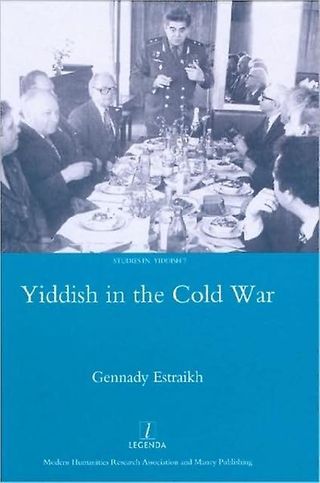
Yiddish-speaking groups of Communists played a visible role in many countries, most notably in the Soviet Union, United States, Poland, France, Canada, Argentina and Uruguay. The sacrificial role of the Red Army, and the Soviet Union as a whole, reinforced the Left movement in the post-Holocaust Jewish world. Apart from card-careering devotees, such groups attracted numerous sympathisers, including the artist Marc Chagall and the writer Sholem Asch. But the suppression of Yiddish culture in the Soviet Union radically changed the climate in Jewish left-wing circles. Former Communists and sympathisers turned away, while the attention of Yiddish commentators in the West turned to the conditions for Jewish cultural and religious life in the Soviet Union and Poland, Jewish emigration and the situation in the Middle East. Ideological confrontations between Communist Yiddish literati in the Soviet Union, United States, Canada, Poland, France and Israel are in the centre of Gennady Estraikhs pioneering study, Yiddish in the Cold War. This ground-breaking book recreates the intellectual environments of the Moscow literary journal Sovetish Heymland (the author was its managing editor in 1988-91), the New York newspaper Morgn-Frayhayt and the Warsaw newspaper Folks-Shtime.
Research target: History and Archeology
Priority areas: humanitarian
Language: English
Keywords: Cold WarYiddish
Yiddish in the Cold War
Similar publications
"Елена Валлийская": Нест из Дехейбарта
Loshkareva M. E., Шестакова Н. Ф., Новое прошлое 2026 № 1 С. 98–11
The article is devoted to the problem of constructing one of the important elements of the historical memory of Wales, the alleged abduction of Princess Nest. The myth surrounding Nest originated in the Middle Ages and, despite the rarity of female figures in historical chronicles, she emerged as a prominent heroine within the national narrative. ...
Added: May 14, 2026
Кто правил Новгородом в 1050-х (и 1020-х) годах?
Vinogradov A., Slovĕne 2025 Т. 14 № 2 С. 38–55
The article deals with the reconstruction of the political governance in Novgorod from the first half to mid-11th century, which was being interpreted very differently due to significant discrepancies in the sources. The Novgorod prince was usually the son of the Kiev one, but not necessarily the eldest (who could also occupy another see, e.g., ...
Added: May 11, 2026
Нововавилонская печать в контексте могильника сарматской эпохи у станицы Тбилисской
Bodrova M., Археология евразийских степей 2026 № 1 С. 287–292
The article examines a Neo-Babylonian seal discovered among the grave goods of a Sarmatian burial in Kurgan No. 3 near the village of Tbilisskaya (Pre-Caucasus region). Although the burial itself dates to the late 1st – early 2nd century CE, the seal’s iconography and carving technique indicate its origin in the Neo-Babylonian cultural sphere of the ...
Added: May 8, 2026
Pisac kao arhivist. Кnjiževna dela Ervina Šinka i Manesa Šperbera kao istorijski izvori
Gužvica S., Tokovi Istorije 2026 No. 1 P. 15–52
The paper analyzes the intellectual climate and political circumstances that shaped and heavily influenced the literary imagination and the semantic horizon of two novels—The Optimists: the Novel of a Revolution by Ervin Sinkó and Like a Tear in the Ocean: A Trilogy by Manès Sperber. Besides introductory remarks and conclusion, the paper’s structure is threefold, ...
Added: May 7, 2026
Кубанская стела (Musée des Beaux Arts Grenoble, Collection égyptienne, inv. 1937, 1969, 3565)
Крол А. А., Кузнецов Д. А., Ladynin I. A., Восток. Афро-азиатские общества: история и современность 2026 Т. 1 С. 244–261
The publication presents a new translation and commentary of the Quban Stela of Ramesses II (Musée des beaux-arts Grenoble, Collection égyptienne, inv. 1937, 1969, 3565). This monument dates to the beginning of his reign (ca. 1287 BC); it was found near the ruins of the fortress of Baki, close to the Nubian village of Kuban. The composers of the ...
Added: May 5, 2026
Некоторые аспекты интеграции Нубии в египетскую государственность эпохи ранней древности
Ladynin I. A., Дашкина А. Р., Проблемы истории, филологии, культуры 2026 № 1 (91) С. 24–37
The article examines two aspects of the integration of Nubia (with particular attention to Lower Nubia) into the statehood of ancient Egypt during early antiquity (up to the end of the 2nd millennium BC). During the First and Second Intermediate Periods, Nubia demonstrates the adoption of Egyptian traditions of royal power, incorporating its territory into ...
Added: May 5, 2026
Царь Рамсес и Бактрия. Об одном мотиве позднеегипетского историописания
Ladynin I. A., Вестник древней истории 2024 Т. 84 № 1 С. 5–26
The article analyses a set of Classical evidence reflecting the Egyptian conquest of Bactria or its attempt (Diod. I. 46–47; Tac. Ann. II. 60. 3; Strabo XVII. 1. 46), a statement of Manetho of Sebennytos on the vast conquests of king Sethos-Ramesses (I) (Manetho. Frg. 50 = Ios. C.Ap. I. 15. § 98–102), and the ...
Added: May 5, 2026
The Nome Polities in Egypt and Mesopotamia in the Fourth and Third Millennia BC: Reconstructions and Scholarly Models
Ladynin I. A., Немировский А. А., Social Evolution & History 2025 Vol. 24 No. 2 P. 162–167
The article deals with the problem of the state formation in the two key areas of the early civilizations, i.e. Egypt and Mesopotamia. In Egypt the stage of the so-called nome states was largely avoided, as the local polities had probably the nature of chiefdoms and the state emerged when they were integrated into larger ...
Added: May 5, 2026
«История повторяется»: образы XIX века в советской агитации 1941–1945 годов (по материалам журнала «Крокодил»)
Medakin S., Новое прошлое 2026 № 1 С. 129–147
The article deals with the peculiarities of the representation of history and culture of the XIX century on the pages of the magazine “Krokodil” in 1941–1945. It was the 19th century, excluding the events of the 20th century, that received the most coverage in “Krokodil” during this period — a little less than a third ...
Added: May 1, 2026
"Возможно, мы оба заблуждаемся...": доклад В.М. Лавровского об англо-советской конференции историков 1958 года
Zemlyakov M., Средние века 2026 № 87 (1) С. 168–175
The publication establishes a full text of a report made by Professor Vladimir M. Lavrovsky at Lomonosov Moscow State University (Faculty of History). This report focuses on the results of his scientific mission to the Anglo-Soviet Conference (London, September 1958). Lavrovsky describes in details the discussion on his own report and accentuates the advantages of ...
Added: April 29, 2026
Образ идеального князя-воина в некрологах древнерусского летописания (XI – начало XIII в.)
Прошин А. В., Vox Medii Aevi 2025 Т. 1 (12) С. 13–36
Поскольку древнерусским князьям приходилось постоянно принимать участие в походах и сражениях, идеал правителя должен был, несомненно, отражать представления о них как о воинах. Предполагаемая рядом исследователей первостепенная важность воинского образа князей, включающего их ратные и полководческие качества, однако, не находит подтверждения среди летописных некрологов (посмертных панегириков). Эти текст конструируют посмертный образ князя, отмечая его важнейшие качества ...
Added: April 29, 2026
Резиденция британского посланника Джеймса Гарриса в Санкт-Петербурге как инструмент дипломатической миссии (1777—1783 гг.)
Новикова А. Д., Электронный научно-образовательный журнал "История" 2026 Т. 17 № 2(160)
This article examines the residence of the British envoy James Harris in St. Petersburg (1777—1783) as an instrument of his diplomatic mission. Despite growing scholarly interest in informal diplomacy, the embassy house as a space for representation and everyday sociability has rarely been the subject of dedicated research. Drawing on a wide range of sources, ...
Added: April 29, 2026
Возможные причины военной экспедиции монголов в Северо-Восточную Русь и Мордовскую землю зимой 1239/1240 г
Гребенников Н. Ю., Ежегодник финно-угорских исследований 2025 Т. 19 № 4 С. 628–634
The article examines an inconspicuous episode that occurred during Batu's second campaign against Rus’, which is usually dated by researchers to 1239–1241. The author puts forward and substantiates the possible reasons that prompted the Mongol military leaders to send a second military expedition to North-Eastern Rus’ in the winter of 1239/1240, which also affected the ...
Added: April 27, 2026
Army, tax reforms, and well-being in eighteenth-century Russia
Mustafin A., Russian Journal of Economics 2026 No. 1 P. 137–152
This article examines archival records on crop yields and recruit numbers in eighteenth-century Russia, analyzing their dynamics and comparing them with data on recruits’ height as an indicator of changes in the standard of living. The study uses more than one hundred and ten archival sources, enabling the construction of time series. The resulting numbers ...
Added: April 26, 2026
Школьный литературный канон эмиграции 1918–1939 гг.
Strizhkova D., / Институт русской литературы (Пушкинский Дом) РАН. Серия B001 "Репозиторий открытых данных по русской литературе и фольклору". 2026.
В базе данных представлена роспись русскоязычных литературных произведений и отрывков, напечатанных в учебниках по словесности, хрестоматиях, книгах для чтения, сборниках стихотворений и рассказов, выходивших во Франции, Германии, Латвии, Эстонии, Болгарии, Сербии в период первой волны русской эмиграции с 1918 по 1939 гг. Датасет представляет интерес для исследователей школьного литературного канона, эмиграции и детского чтения ...
Added: April 22, 2026
Современная российская мультипликация как инструмент воспитания традиционных духовно-нравственных ценностей
Жигунов А. Ю., / Basic Research Programme. Серия HUM "Humanities". 2026. № 1.
The article attempts to describe the features of the educational potential of Russian animation programmes in aspect of the representation of traditional spiritual and moral values. Based on media and semiotic analysis, the method of cultural and historical interpretation, animated Russian projects created from 2000 to the 2025, which were translated on television channels or streaming ...
Added: April 19, 2026
“May There Always Be Sunshine!”: A Symbol of Childhood in Soviet and American Cold War Songs
Рябова Т. Б., Вестник Волгоградского государственного университета. Серия 4: История. Регионоведение. Международные отношения 2024 Vol. 29 No. 1 P. 16–25
Introduction. The article is the first to study the use of the symbol of childhood by the USSR and the USA songs for the representation of Cold War issues. Methods and materials. Based on the methodology of constructivism, the author analyzes the reasons for the politicization of the image of childhood and the role of ...
Added: January 28, 2026
The “Red Machine”: The Dehumanization of the Communist Enemy in American Cold War Cinema
Рябов О. В., Quaestio Rossica 2020 No. 2 P. 536–550
This article deals with the US Cold War cinematographic construction of the Soviet enemy. The researcher focuses on the means of dehumanising the communist enemy, external and internal, by equating it to a machine. The author applies Nick Haslam's dual model of dehumanization (2006), according to which dehumanization is visible in two main forms: animalistic, ...
Added: January 28, 2026
Gendering the American Enemy in Early Cold War Soviet Films (1946–1953)
Рябов О. В., Journal of Cold War Studies 2017 No. 1 P. 193–219
Analyzing Soviet films and film criticism from the late Stalin period, this article shows how Soviet cinematographers exploited gender discourse to produce Otherness. Cinematic representations of U.S. femininity, masculinity, love, sexuality, and marriage played an important role in constructing external and internal Enemies. Cinematography depicted the U.S. gender order as resulting from the unnatural social ...
Added: January 27, 2026
Регуманизация «чужих»: Эволюция репрезентаций «врага номер один» в американском кинематографе Холодной войны
Рябов О. В., Диалог со временем 2021 № 77 С. 277–290
The article dwells upon evolution of the ways in which the U.S. Cold War films represented the USSR: from dehumanization of the image of enemy in 1940-1950s to deconstruction of this image in 1960s. The author applies Nick Haslam's dual model of dehumanization, aс-cording to which dehumanization is visible in two forms: animalistic by associating ...
Added: January 27, 2026
Images of urban space in constructing the Cold War enemy: American skyscrapers in Soviet animation
Рябов О. В., Рябова Т. Б., Studies in Russian and Soviet Cinema 2021 No. 2 P. 122–138
This article deals with an analysis of the representation of American cities in Soviet animated films of the Cold War (1946–63). The space-oriented discourse of popular geopolitics was a resource for constructing the Cold War enemy. The authors point out that the images of skyscrapers served as the main signifier of Americanness in Soviet animation. ...
Added: January 27, 2026
Linguistic Means of Constructing the ‘Enemy Number One’ in the U.S. Cold War Cinema
Рябов О. В., Куликова М. Н., Вестник Российского университета дружбы народов. Серия: Теория языка. Семиотика. Семантика 2023 No. 3 P. 719–731
The study examines how the US Cold War cinema employed linguistic means to construct images of the USSR and American communists. The research relevance is determined by: the need to study the techniques of creating the enemy image as one of the crucial issues in international relations; and the importance of the topic amidst the ...
Added: January 27, 2026
“From America with Love”? Love stories and the “Iron Curtain” in the Soviet Thaw cinema
Рябов О. В., Имагология и компаративистика 2024 No. 1 P. 259–275
The article deals with an analysis of the Soviet Thaw films that contain love stories of USSR and USA citizens. Hollywood released a number of films that told the stories of love between representatives of the two hostile blocs; following the canon established in Ninotchka, they served as a part of the “struggle for hearts ...
Added: January 27, 2026
«Советская Родина» как концепт Холодной войны. Материнский символ страны в массовой песне
Рябов О. В., Рябова Т. Б., Женщина в российском обществе 2024 № 1 С. 4–22
The paper deals with the analysis of using the Motherland symbol by the Soviet popular songs in order to represent the Cold War issues. Using quantitative and qualitative content analysis, the authors examine more than 1500 Soviet songs (1946-1991); 350 of them employ this symbol. The article demonstrates that the “Soviet Motherland” served as one ...
Added: January 27, 2026
  • About
  • About
  • Key Figures & Facts
  • Sustainability at HSE University
  • Faculties & Departments
  • International Partnerships
  • Faculty & Staff
  • HSE Buildings
  • HSE University for Persons with Disabilities
  • Public Enquiries
  • Studies
  • Admissions
  • Programme Catalogue
  • Undergraduate
  • Graduate
  • Exchange Programmes
  • Summer University
  • Summer Schools
  • Semester in Moscow
  • Business Internship
  • Research
  • International Laboratories
  • Research Centres
  • Research Projects
  • Monitoring Studies
  • Conferences & Seminars
  • Academic Jobs
  • Yasin (April) International Academic Conference on Economic and Social Development
  • Media & Resources
  • Publications by staff
  • HSE Journals
  • Publishing House
  • iq.hse.ru: commentary by HSE experts
  • Library
  • Economic & Social Data Archive
  • Video
  • HSE Repository of Socio-Economic Information
  • HSE1993–2026
  • Contacts
  • Copyright
  • Privacy Policy
  • Site Map
Edit