• A
  • A
  • A
  • АБВ
  • АБВ
  • АБВ
  • A
  • A
  • A
  • A
  • A
Обычная версия сайта
  • RU
  • EN
  • HSE University
  • Publications
  • Book chapter
  • Giving in Russia: The difficult shaping of the new nonprofit regime
  • RU
  • EN
Расширенный поиск
Высшая школа экономики
Национальный исследовательский университет
Priority areas
  • business informatics
  • economics
  • engineering science
  • humanitarian
  • IT and mathematics
  • law
  • management
  • mathematics
  • sociology
  • state and public administration
by year
  • 2027
  • 2026
  • 2025
  • 2024
  • 2023
  • 2022
  • 2021
  • 2020
  • 2019
  • 2018
  • 2017
  • 2016
  • 2015
  • 2014
  • 2013
  • 2012
  • 2011
  • 2010
  • 2009
  • 2008
  • 2007
  • 2006
  • 2005
  • 2004
  • 2003
  • 2002
  • 2001
  • 2000
  • 1999
  • 1998
  • 1997
  • 1996
  • 1995
  • 1994
  • 1993
  • 1992
  • 1991
  • 1990
  • 1989
  • 1988
  • 1987
  • 1986
  • 1985
  • 1984
  • 1983
  • 1982
  • 1981
  • 1980
  • 1979
  • 1978
  • 1977
  • 1976
  • 1975
  • 1974
  • 1973
  • 1972
  • 1971
  • 1970
  • 1969
  • 1968
  • 1967
  • 1966
  • 1965
  • 1964
  • 1963
  • 1958
  • More
Subject
News
August 13, 2026
‘Working with AI Solves a Wide Range of Engineering Problems
Artificial intelligence is a working tool based on a balanced combination of algorithms and engineering. Experts and doctoral students from the HSE Moscow Institute of Electronics and Mathematics explain how AI technologies can improve an application, device, or system, and what engineering tasks are solved in the process.
August 12, 2026
‘I Would Like My Research to Help Make the World a Calmer and Better Place
Whatever task Saraa Ali, Junior Research Fellow at the Laboratory of Methods for Big Data Analysis (LAMBDA) of the AI and Digital Science Institute (HSE Faculty of Computer Science), is working on, she thinks about how it can benefit people. She told the Young Scientists of HSE University project about her large family, diagnosing three-phase motors, and her dream of building a children’s home in her native country.
August 11, 2026
‘The Peak of Stupidity and ‘The Valley of Despair: HSE Economists Propose an Explanation for the Dunning–Kruger Effect
The Dunning–Kruger effect, which describes a sharp surge in self-confidence among beginners followed by an equally rapid decline as they gain experience, can be explained by the nature of the learning process and the acquisition of new knowledge. This conclusion was reached by Andrey Vorchik of the HSE Faculty of Economic Sciences together with independent researcher Murat Mamyshev. They developed a mathematical model of learning and demonstrated how subjective confidence is formed and changes as knowledge accumulates, as well as how teachers can reduce the ‘valley of despair’ experienced by learners.


Have you spotted a typo?
Highlight it, click Ctrl+Enter and send us a message. Thank you for your help!

Publications
  • Books
  • Articles
  • Chapters of books
  • Working papers
  • Report a publication
  • Research at HSE

?

Giving in Russia: The difficult shaping of the new nonprofit regime

Ch. 13. P. 249–267.
Mersiyanova I. V., Jakobson L. I., Krasnopolskaya I.

This chapter presents main features of giving in modern Russia. This includes state of the third sector, of the governmental support of the civil society, citizens’ engagement into monetary donations and significant factors that influence it.

Russia is a country with a long-standing philanthropic tradition. Its philanthropic sector underwent an intensive process of institutionalization from the mid-19th century up to the revolution of 1917. The post-Communist transit after 70 years of a state monopoly for solving social problems spurred the formation of a new nonprofit sector, which supplemented the insufficient public sector to satisfy the needs of Russian citizens. The third sector in Russia is still modest in size and its relationship with the state is rather complicated. Nevertheless, the sector developed into an important actor in a public life. From the typological perspective of Salamon and Anheier (1998), Russia is characterized by the social-democratic nonprofit regime as judged by its current ratio of public expenditure funding sources. The state is the largest donor supporting the nonprofit sector, namely socially oriented NPOs. However it is still rather suspicious about human rights activities and third sector’s participation in politics. These factors obstruct third sector development, preventing NPOs from securing financial stability. Formal channels of monetary donations are relatively weak in Russia, majority of Russians are most trustful of giving money directly to the needy that to NPOs. Citizens are often poorly informed about NPOs and do not trust many of them. Basing on all-Russian mass-polls data about direction, amount, frequency of giving is provided as an evidence for this thesis. 
Language: English
Full text
DOI
Text on another site
Keywords: nonprofit organizationphilanthropyCharitable givingthird sector
Publication based on the results of:
Monitoring of civil society (2015)

In book

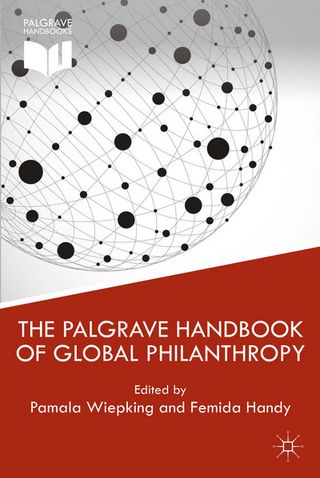
The Palgrave Handbook of Global Philanthropy
L.: Palgrave Macmillan, 2015.
Similar publications
Организация помощи детям в Пермской губернии в годы Первой мировой войны
Кайдышева Н. Н., Ученые записки НТГСПИ. Серия: История и филология 2021 № 4 С. 43–55
The present paper set out to determine the contribution of the state, society, private companies, and individuals to child welfare. The research was based on materials of social state and public charitable organisations, local government bodies, Russian Orthodox Church, central and local periodicals. The author of the present paper analysed the areas, forms and scope ...
Added: February 22, 2026
Участие кооперативов Пермской губернии в благотворительном движении в начале XX в. (до февраля 1917 г.)
Кайдышева Н. Н., Современная наука: актуальные проблемы теории и практики. Серия: Гуманитарные науки 2022 Т. 2 № 5 С. 16–21
The article is aimed at analyzingof the directions, forms, and scale of philanthropy of cooperative organizations.  As it is elaborated in the paper, the beginning of the XX century the level of charitable enterprise of cooperatives was small, and mainly in the field of education. The wartime circumstances increased the philanthropy of cooperatives, making cooperative ...
Added: February 22, 2026
Volunteering and philanthropy in Central Asia: Fusion of ancient local traditions and modern European values
Ivanov V., , in: ERNOP Conference Proceedings 2025.: European Research Network on Philanthropy, 2026. P. 90–95.
The historical development of volunteering and philanthropy in Kazakhstan, Kyrgyzstan, Tajikistan, Turkmenistan and Uzbekistan has been studied from ancient times to the present day. It was found that volunteering and charity in Central Asia have common historical roots. Nowdays in all countries surveyed, the state plays an active role in developing philanthropy and volunteering by introducing ...
Added: February 21, 2026
ERNOP Conference Proceedings 2025
European Research Network on Philanthropy, 2026.
ERNOP Conference Proceedings 2025 European Research Network on Philanthropy (ERNOP) Proceedings of contributions presented at the 12th ERNOP Conference 2025 "Philanthropy by the people, for the people? The roles, organisations and motivations of philanthropy in contemporary democracies and social structures" Heidelberg, 25–26 September 2025 First edition ...
Added: February 21, 2026
The globalized civil society in migration governance
Korneev O., , in: Handbook of Migration and Globalisation. Second Edition.: Cheltenham: Edward Elgar Publishing, 2024. Ch. 4 P. 58–73.
Focussing on the multi-faceted role of civil society in migration governance, this chapter traces the major developments and depicts the state of the art in this field addressing some of the important research lacunas. The chapter identifies three analytically distinct, albeit often inseparable in practice, dimensions of third sector actors’ roles in migration governance explored ...
Added: May 7, 2024
How the emotions evoked by homeless pets induce online charitable giving
Shepelenko A., Shepelenko P., Panidi K. et al., Journal of Philanthropy and Marketing 2024 Vol. 29 No. 2 Article e1842
In this study, we investigated the relationship between emotions and charitable behavior in the context of pet charities. In particular, we examined the role of pet characteristics such as age, health status, signs of homelessness, and the animal being in the presence of a human as factors in a potential donor’s emotional state (valence and ...
Added: March 4, 2024
The Global Philanthropy Environment Index 2022
Mersiyanova I. V., Ivanova N., Osili U. et al., Indianapolis: The Indiana University Lilly Family School of Philanthropy, 2022.
The 2022 Global Philanthropy Environment Index (GPEI) reveals that the philanthropic environment showed modest improvement at the global level, but not uniformly so. Country and regional reports suggest that a consistent and enabling regulatory environment, state collaboration, and strong philanthropic traditions and societal values are essential to nurture philanthropy ...
Added: December 1, 2023
The 2022 Global Philanthropy Environment Index Region Report: Central Asia and South Caucasus
Mersiyanova I. V., Ivanova N., Galstyan M. et al., Indianapolis: The Indiana University Lilly Family School of Philanthropy, 2022.
There have been no major changes observed in the philanthropic environment in Central Asia and South Caucasus since 2018. However, two major events in the region—the presidential elections in Belarus and the Nagorno-Karabakh war, an armed conflict between Armenia and Azerbaijan— affected the political environment in the given countries, thus affecting the philanthropy. Civil unrest ...
Added: December 1, 2023
Philanthropy in Russia and Central Asia
Jakobson L. I., Irina Mersianova, Natalya Ivanova, , in: International Encyclopedia of Civil Society.: Springer Nature Switzerland AG, 2020. P. 1–9.
Without Abstract ...
Added: July 3, 2023
Determinants of Individual Prosociality and of Collective Social Solidarity-Cohesion: A Literature Review
Smith D. H., Koninklijke Brill NV, 2019.
The foundations of volunteering, charitable giving, voluntary associations, voluntary agencies, and other aspects of the Voluntary Nonprofit Sector (VNPS) collectively and individual voluntary action lie in various aspects of human nature and human societies. These may be referred to variously as altruism, morality, ethics, virtue, kindness, generosity, cooperation, social solidarity, and prosociality. Such foundations of ...
Added: January 12, 2022
Функции государственных реестров НКО в развитии третьего сектора: Российский опыт
Larionov A., Вопросы государственного и муниципального управления 2021 № 4 С. 90–113
Development of the third sector in  Russia is  accompanied with its maintenance of  open-access state registries of  non-profit organizations. Compared to the NPO registries in other countries, those in Russia appeared 10–15 years later and became new tools for the development of the non-profit sector. The purpose of this article is  to categorize the functions of  NPO registries in  other countries, ...
Added: December 15, 2021
Global Civil Society in Uncertain Times: Strengthening Diversity and Sustainability
The International Society for Third-Sector Research, 2021.
Added: November 25, 2021
Global Philanthropy: Does Institutional Context Matter for Charitable Giving?
Wiepking P., Handy F., Sohyun P. et al., Nonprofit and Voluntary Sector Quarterly 2021 Vol. 50 No. 4 P. 697–728
In this article, we examine whether and how the institutional context matters when understanding individuals’ giving to philanthropic organizations. We posit that both the individuals’ propensity to give and the amounts given are higher in countries with a stronger institutional context for philanthropy. We examine key factors of formal and informal institutional contexts for philanthropy ...
Added: October 13, 2021
Nonprofit management context: Russia and the FSU
Jakobson L. I., Mersiyanova I. V., Ivanova N., , in: The Routledge Companion to Nonprofit Management.: L.: Routledge, 2020. Ch. 5 P. 60–73.
The Russian third sector has been developing now for about three decades or so. Over the last five to seven years, growth has accelerated due to public policies aimed at supporting nonprofit entities as service providers in the social sphere, as well as the population’s growing involvement in volunteering. While Russia’s third sector had been ...
Added: October 23, 2020
Благотворительность на пространстве СНГ в условиях COVID-19: региональная специфика
Sokolshchik L., В кн.: Аналитический бюллетень НИУ ВШЭ об экономических и социальных последствиях коронавируса в России и в миреВып. 1.: Национальный исследовательский университет "Высшая школа экономики", 2020. С. 101–104.
Одним их ключевых направлений благотворительной деятельности на пространстве СНГ стала помощь людям из групп риска и медицинским учреждениям. Благотворители стремятся предоставить людям из групп риска продукты питания, медицинские препараты, защитные маски и средства гигиены. Однако помощь оказывается не только в натуральной форме, благотворительные организации и филантропы осуществляют достаточно широкую непосредственную финансовую поддержку. Подобная практика получила ...
Added: September 5, 2020
Волонтерство и НКО в странах ближнего зарубежья в условиях COVID-19: тренды и практики
Sokolshchik L., В кн.: Аналитический бюллетень НИУ ВШЭ об экономических и социальных последствиях коронавируса в России и в миреВып. 1.: Национальный исследовательский университет "Высшая школа экономики", 2020. С. 145–148.
Пандемия стала серьезным фактором, стимулирующим трансформации некоммерческой сферы по ряду магистральных направлений, которые оказались характерны для большинства стран мира: от усиления цифровизации до роста волонтерского активизма и благотворительности. Страны ближнего зарубежья не являются исключением из общих закономерностей развития глобального третьего сектора в условиях эпидемиологической опасности. ...
Added: September 5, 2020
Некоммерческая сфера за рубежом в период пандемии: цифровизация и волонтерский активизм
Sokolshchik L., В кн.: Аналитический бюллетень НИУ ВШЭ об экономических и социальных последствиях коронавируса в России и в миреВып. 1.: Национальный исследовательский университет "Высшая школа экономики", 2020. С. 131–134.
Так называемое виртуальное волонтерство стало развиваться еще в начале 2000-х гг., когда Национальное управление по аэронавтике и исследованию космического пространства США (НАСА) запустило проект «Кликвокерс» по привлечению добровольцев к решению онлайн-задач. Однако в период пандемии подобная форма добровольчества стала особенно актуальна. Виртуальное волонтерство позволяет добровольцу оказывать помощь НКО и нуждающимся, не выходя из дома. К ...
Added: September 5, 2020
International Encyclopedia of Civil Society
Springer Nature Switzerland AG, 2020.
More than a decade after the concept for the first edition of the International Encyclopedia of Civil Society emerged, civil society remains as contested and strategically located a concept as it was then, and, therefore, a very fruitful and intellectually lively field of research that has prompted examination of a variety of new aspects.  Moreover, civil ...
Added: August 12, 2020
The Routledge Companion to Nonprofit Management
L.: Routledge, 2020.
Over the past three decades or so, the nonprofit, voluntary, or third sector has undergone a major transformation from a small cottage industry to a major economic force in virtually every part of the developed world as well as elsewhere around the globe. Nonprofit organizations are now major providers of public services working in close ...
Added: June 1, 2020
Зарубежный третий сектор в борьбе с пандемией: ключевые тенденции
Sokolshchik L., В кн.: Аналитический бюллетень НИУ ВШЭ об экономических и социальных последствиях коронавируса в России и в миреВып. 1.: Национальный исследовательский университет "Высшая школа экономики", 2020. С. 86–89.
С начала эпидемии Некоммерческие организации (НКО) стремятся приспособиться к стремительно меняющимся условиям деятельности, сдвигам в структуре спроса и предложения на социальные услуги, снижению уровня финансового и ресурсного обеспечения. Резкий переход к неординарной ситуации стал как вызовом для отдельных сегментов некоммерческой сферы, так и мотивом для ее перестройки. Однако несмотря на все сложности, с которыми сталкиваются ...
Added: May 15, 2020
Институциональная инерция в сфере социальной политики и условия её возникновения в России: обзор исследовательской литературы
Bugrovskii A., Вестник Пермского университета. Серия: Политология 2018 Т. 12 № 4 С. 51–61
The article provides a theoretical review of institutional inertia and the conditions for its emergence through the example of Russian social policy. Although the process of inertia is natural, research debates concerning its reasons are still ongoing. The review systematizes the approaches to the notion of institutional inertia and the conditions for its occurrence. In ...
Added: November 14, 2019
Взаимосвязь между участием в волонтерстве и благотворительными пожертвованиями: межпоколенческий контекст
Mersiyanova I. V., Ivanova N., Malakhov D., Социологические исследования 2019 № 10 С. 94–106
The rise of private donations, both in Russia and abroad, has become a leading factor in the formation of the nonprofits’ resource base. A considerable number of studies have looked into socio-demographic factors positively associated with charity, such as age, education and income level. This paper explicitly targets the association between parental volunteering and the ...
Added: September 25, 2019
Гражданское общество и межсекторное партнёрство в Омской области: состояние, проблемы и тенденции развития
Шамшура К. А., Вестник Омского университета. Серия: Исторические науки 2019 № 3 (21) С. 161–170
The article presents the findings of a study on civil society and the intersectoral partnership in Omsk region. The situation in the institutions of civil society, interaction of the government, businesses and non-governmental organizations are analyzed. The article specifies the factors that influence the situation in the civil society of Omsk region. The causes of the underdeveloped intersectoral ...
Added: August 11, 2019
The globalized third sector in the migration policy field
Korneev Oleg, Kluczewska K., , in: Handbook of Migration and Globalisation.: Cheltenham: Edward Elgar Publishing, 2018. Ch. 4 P. 54–68.
This chapter looks at the role of the globalised third sector in migration governance, and presents major theoretical and empirical contributions focusing on different aspects of the third sector’s, often ambiguous, role in migration politics and policy. It starts with a discussion on the third sector’s growing involvement in the migration field, then proceeds with ...
Added: March 6, 2019
  • About
  • About
  • Key Figures & Facts
  • Sustainability at HSE University
  • Faculties & Departments
  • International Partnerships
  • Faculty & Staff
  • HSE Buildings
  • HSE University for Persons with Disabilities
  • Public Enquiries
  • Studies
  • Admissions
  • Programme Catalogue
  • Undergraduate
  • Graduate
  • Exchange Programmes
  • Summer University
  • Summer Schools
  • Semester in Moscow
  • Business Internship
  • Research
  • International Laboratories
  • Research Centres
  • Research Projects
  • Monitoring Studies
  • Conferences & Seminars
  • Academic Jobs
  • Yasin (April) International Academic Conference on Economic and Social Development
  • Media & Resources
  • Publications by staff
  • HSE Journals
  • Publishing House
  • iq.hse.ru: commentary by HSE experts
  • Library
  • Economic & Social Data Archive
  • Video
  • HSE Repository of Socio-Economic Information
  • HSE1993–2026
  • Contacts
  • Copyright
  • Privacy Policy
  • Site Map
Edit