• A
  • A
  • A
  • АБВ
  • АБВ
  • АБВ
  • A
  • A
  • A
  • A
  • A
Обычная версия сайта
  • RU
  • EN
  • HSE University
  • Publications
  • Book chapter
  • An Ice Free Arctic Sea? The Science of Sea Ice and Its Interests
  • RU
  • EN
Расширенный поиск
Высшая школа экономики
Национальный исследовательский университет
Priority areas
  • business informatics
  • economics
  • engineering science
  • humanitarian
  • IT and mathematics
  • law
  • management
  • mathematics
  • sociology
  • state and public administration
by year
  • 2027
  • 2026
  • 2025
  • 2024
  • 2023
  • 2022
  • 2021
  • 2020
  • 2019
  • 2018
  • 2017
  • 2016
  • 2015
  • 2014
  • 2013
  • 2012
  • 2011
  • 2010
  • 2009
  • 2008
  • 2007
  • 2006
  • 2005
  • 2004
  • 2003
  • 2002
  • 2001
  • 2000
  • 1999
  • 1998
  • 1997
  • 1996
  • 1995
  • 1994
  • 1993
  • 1992
  • 1991
  • 1990
  • 1989
  • 1988
  • 1987
  • 1986
  • 1985
  • 1984
  • 1983
  • 1982
  • 1981
  • 1980
  • 1979
  • 1978
  • 1977
  • 1976
  • 1975
  • 1974
  • 1973
  • 1972
  • 1971
  • 1970
  • 1969
  • 1968
  • 1967
  • 1966
  • 1965
  • 1964
  • 1963
  • 1958
  • More
Subject
News
May 25, 2026
HSE Scientists Train Neural Network to 'Hear' Faults in Electric Motors
Researchers at the AI and Digital Science Institute of the HSE Faculty of Computer Science have developed a new method—the Signature-Guided Data Augmentation (SGDA) framework—that achieves 99% accuracy in motor fault detection and 86% accuracy in fault classification. The application of this approach can reduce industrial equipment repair costs, minimise downtime, and improve production safety. The study results have been published in Engineering Applications of Artificial Intelligence.
May 25, 2026
'The Humanities Serve as a Conscience'
Maria Mizernaia studies Soviet literature and the history of book publishing. In this interview for the HSE Young Scientists project, she discusses plans to publish a novel about besieged Leningrad, AI-provoked reflections on what it means to be human, and how novels can help satisfy our dopamine hunger.
May 25, 2026
Is It Possible to Predict a Citys Life Based on the Shape of Its Neighbourhoods?
Is it possible to predict, based on the configuration of streets and buildings, where a café will open or where traffic congestion will occur? Participants in the Spatial Analysis and Modelling of Urban Processes research and study group use open data and machine learning to identify universal patterns. Alexander Sheludkov and Eduard Somov discuss the purpose of comparing cities, the need for new forms of urban statistics, and how open data is transforming approaches to urban studies.


Have you spotted a typo?
Highlight it, click Ctrl+Enter and send us a message. Thank you for your help!

Publications
  • Books
  • Articles
  • Chapters of books
  • Working papers
  • Report a publication
  • Research at HSE

?

An Ice Free Arctic Sea? The Science of Sea Ice and Its Interests

Ch. 4. P. 70–92.
Sorlin S., Lajus J.

In this chapter we want to see what historical narratives can tell us in order to better understand our concerns with the vanishing ice as evidence of a current mega-transition. Was the 2007 minimum unique? When and why did science start to study Arctic sea ice? Have there been periods of an ice-free Arctic Sea in the past? And, if they did occur, how does it impact on interpretations of our present- time discourse on the possible emergence of anice- free Arctic Sea? Climate change may, in retrospect, have appeared an obvious companion idea, but this relationship between ice and climate was rarely put forward as a serious alternative for the immediate future on the human timescale of decades, generations, or even centuries. But when it finally was, comparatively late in the middle of the twentieth century, sea ice was part of the story. We start by visiting the idea of an ice-free Arctic in the past, then moving on to the scientific undertakings on sea -ice in the Soviet Union. Interwar efforts outside the Soviet Union were as only matched by Nordic researchers, with whom we deal with subsequently. Finally we discuss the Cold -War effortsand their military connections. That science is interest-driven is evident throughout the entire period. Sea- ice minima may comprise straightforward facts, but the underlying knowledge is the outcome of a complex science politics of circumpolar ice.

Language: English
Full text
Keywords: холодная войнаАрктикаистория наукиhistory of scienceCold WarArcticледice

In book

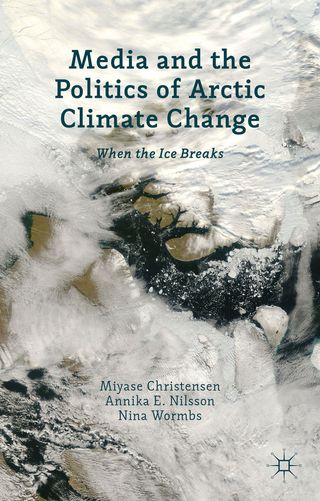
Media and the Politics of Arctic Climate Change: When the Ice Breaks
NY: Palgrave Macmillan, 2013.
Similar publications
A new mechanism of international cooperation in the Arctic region: co-creating the International Arctic Scientific Committee, 1986–1990
Marina M. Panikar, Beloshitskaya N., Polar Journal 2026
The article attempts to explore the process of formation of a new sphere of relations between the USSR and the countries of the Arctic region in the period from 1986 to 1990. The April Plenum of the Communist Party Central Committee in 1985 laid the groundwork for a profound transformation in both the domestic and ...
Added: May 15, 2026
«В царстве льда»: метафорическое моделирование концепта-идеологемы «Арктика» как способ интерпретации специфики региона
Жигунов А. Ю., В кн.: Медиаобраз региона в современной массовой коммуникации.: Вологда: Вологодский государственный университет, 2022. С. 288–296.
The article is devoted to the peculiarities of interpreting of the concept-ideologem "Arctic" in modern Russian media. The historical prerequisites for the formation of the perception of the Arctic by a mass Russian-speaking addressee as a native, home territory are formulated. The most frequent lexical representatives that characterize the region and allow to identify the ...
Added: April 19, 2026
Арктика в российских медиа: проблематика и тематические доминанты
Жигунов А. Ю., Terra Linguistica 2020 Т. 11 № 3 С. 97–107
The Arctic and its development issues become more and more important in the information agenda of the Russian and world media over the past years. The reasons for this increased attention to the region are the activities of main decision makers: authorities, army, business, nature defenders, international organizations, etc., aimed at expanding regional influence, improving ...
Added: April 19, 2026
Перспективы сотрудничества России и Китая в Арктике в условиях международной турбулентности, санкций и новой администрации Д. Трампа
Strelnikova I., Азия и Африка сегодня 2026 № 2 С. 5–15
Арктический регион не только привлекает внимание благодаря своим богатым ресурсам, но и становится новой ареной соперничества великих держав. В нынешних геополитических условиях две мировые державы – Россия и Китай – ищут новые точки роста и партнерства в Арктическом регионе. Цель статьи – изучение текущей ситуации, перспектив и возможностей сотрудничества между Россией и Китаем в Арктике ...
Added: April 4, 2026
От северного «изобилия» к сопротивлению кризисам: практики и стратегии выживания на Российском Севере в 1990-е годы
Klyueva V., Журнал фронтирных исследований 2024 Т. 9 № 4 С. 146–168
The paper focuses on the analysis of survival practices in northern Russian settlements that developed in the 1990s. Most of the northern settlements were in a state of decline: changes in the socio‑demographic composition and population size, transformation of the local economy, degradation of transport infrastructure, deterioration in the quality of life. The reason for the decline ...
Added: March 26, 2026
Нельзя концентрировать научную работу только в центре»: академическая наука на российском Севере
Klyueva V., Социология науки и технологий 2024 Т. 15 № 2 С. 26–44
The concept of Arctic urbanization, widely used in contemporary Northern Studies, implies that academic and higher education institutions create a competitive advantage for Arctic cities when located there. The focus of science in the Arctic is specific – it stems from the logic of industrial development of the area. The Branch of the USSR Academy ...
Added: March 26, 2026
‘And Here We’ll have a Science Town’: Akademgorodok of the Kola Scientific Center as a Form of Organization of the Scientific Space in the Soviet North
Klyueva V., Studia Historiae Scientiarum 2025 Vol. 24 P. 131–158
The natural and climatic conditions prevailing in the Russian Arctic have a profound impact on the development of industry and science: Traditional industries are inefficient here, and the process of dynamizing/revitalizing this area and adapting people and technologies to new realities requires specialized research. These circumstances have led some Northern and Arctic cities to develop ...
Added: March 26, 2026
Российско-индийское взаимодействие в Арктике в контексте политики США
Kharina O., Россия и Америка в XXI веке 2026 № 1 С. 0–0
В статье исследуется российско-индийское сотрудничество в Арктике в условиях геополитического соперничества и санкционного давления Запада. Цель работы – проанализировать стратегические интересы России и Индии, определить перспективы их взаимодействия в энергетике, инфраструктуре и транспортных коридорах, а также выявить основные вызовы. Выводы показывают, что сотрудничество обладает значительным потенциалом для экономического и технологического развития, однако его реализация осложняется ...
Added: March 20, 2026
Мировая Арктика: природные ресурсы, расселение населения, экономика
Фаузер В. В., Smirnov A., Арктика: экология и экономика 2018 № 3 С. 3–22
The article reviews the World Arctic and its constituent parts: Russian, North American and West European. The subject of the study is the peculiarities of population settlement and the development of the economy of Arctic administrative-territorial entities. The purpose of the article is to present the World Arctic from diff erent angles — the availability ...
Added: March 19, 2026
Население мировой Арктики: динамика численности и центры расселения
Smirnov A., Арктика и Север 2020 № 40 С. 270–290
The article presents an estimate of the Arctic population in 1900–2019 by country and macroregion, obtained using official statistics of eight Arctic States. Analysis of spatial and temporal data revealed the main patterns of the Arctic population formation. Calculations show the world’s Arctic population increased from 1.3 million in 1900 to 6.1 million in 1989, ...
Added: March 19, 2026
Человеческое развитие и перспективы формирования экономики знаний в российской Арктике
Smirnov A., Арктика: экология и экономика 2020 № 2 С. 18–30
The author proposes his own method for calculating the human development index at the municipal level, which allows taking into account the age structure of the deceased, the expected duration of education and the purchasing power of money, based on municipal statistics. The territories of the Arctic zone of Russia are differentiated by life expectancy, ...
Added: March 18, 2026
  • About
  • About
  • Key Figures & Facts
  • Sustainability at HSE University
  • Faculties & Departments
  • International Partnerships
  • Faculty & Staff
  • HSE Buildings
  • HSE University for Persons with Disabilities
  • Public Enquiries
  • Studies
  • Admissions
  • Programme Catalogue
  • Undergraduate
  • Graduate
  • Exchange Programmes
  • Summer University
  • Summer Schools
  • Semester in Moscow
  • Business Internship
  • Research
  • International Laboratories
  • Research Centres
  • Research Projects
  • Monitoring Studies
  • Conferences & Seminars
  • Academic Jobs
  • Yasin (April) International Academic Conference on Economic and Social Development
  • Media & Resources
  • Publications by staff
  • HSE Journals
  • Publishing House
  • iq.hse.ru: commentary by HSE experts
  • Library
  • Economic & Social Data Archive
  • Video
  • HSE Repository of Socio-Economic Information
  • HSE1993–2026
  • Contacts
  • Copyright
  • Privacy Policy
  • Site Map
Edit