?
«О солнце, о луна!»: к отражению фонетических процессов на стыке слов в древнекитайской письменности
С. 398–411.
Language:
Russian
In book
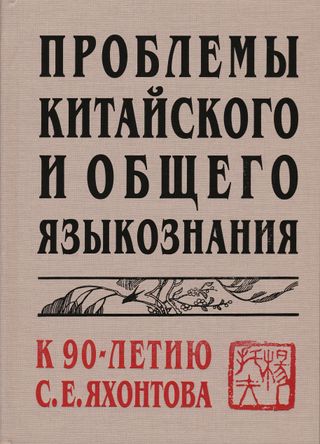
СПб.: Студия НП-Принт, 2016.
Stezhenskaya L., Восток. Афро-азиатские общества: история и современность 2023 № 2 С. 215–222
The paper examines the earliest European materials on the functions and practices of Chinese secret societies – traditional public organizations that have played a significant role in the history of China and continues to be a phenomenon of public life in China and abroad. By analogy with the “colonial school” of the studies on Chinese ...
Added: May 2, 2023
Барский К. М., Виноградов А. В., Гурулева Т. Л. et al., Проблемы Дальнего Востока 2022 № 1 С. 7–39
8 ноября 2021 журнал "Проблемы Дальнего Востока" провел круглый стол, посвященный 50-летию журнала, на тему "Китаеведение современной России: проблемы и перспективы развития". ...
Added: November 2, 2022
М.: Федеральное государственное бюджетное учреждение науки Институт Дальнего Востока Российской академии наук, 2021.
Peoples and Cultures of the Orient. Studies and Translations (since 2008) is an annual edition of the Sichuan University – IFES Joint Center for Study of Chinese and Russian Cultures. The journal promotes interdisciplinary studies in humanities, mainly in cultural history, philosophy, philology, linguistics and cross-cultural communication, in order to cover various aspects of Chinese ...
Added: October 30, 2022
Неклюдов С. Ю., Smirnov I., В кн.: Тексты магии и магия текстов.: М.: Издательский дом НИУ ВШЭ, 2022. С. 15–23.
Б.Л. Рифтин (1932-2012) - известный отечественный китаевед, доктор наук, академик РАН. Статья посвящена основным направлениям его научной деятельности, в частности вкладу в изучение китайских классических романов, китайской и монгольской устной сказовых традиций, китайской мифологии, мифологии аборигенов Тайваня, дунганского фольклора, китайского лубка и истории русского китаеведения ...
Added: October 18, 2022
Durymanova A., В кн.: Китайская лингвистика и синология : Тезисы докладов международной конференции. Москва, 3–5 октября 2019 г.: М.: Изд-во РГГУ, 2019. С. 67–70.
The paper deals with the problem of lexical categories in the Ancient Chinese language. The main questions are as follows: (1) do lexical categories exist? (2) if yes, how can they be distinguished? I analyzed several nouns from the treatise “Lunheng” (I A.D.) and analyzed their properties: quantity of predicative usage of nominal categories, lexeme ...
Added: August 18, 2022
Durymanova A., В кн.: Проблемы языка. Сборник научных статей по материалам Седьмой конференции-школы «Проблемы языка: взгляд молодых ученых» (11-13 апреля 2019 г.).: М.: Институт языкознания РАН, 2019. С. 90–103.
The paper deals with the problem of lexical categories in the Ancient Chinese language, specifically “Lunheng” language (I A.D.). The main questions are as follows: (1) do lexical categories exist? (2) if yes, could a nominal lexeme indicating a real physical object be used as a predicate? In this case, what are these words, how ...
Added: August 18, 2022
Durymanova A., Вестник Московского университета. Серия 13: Востоковедение 2022 Т. 13 № 1 С. 30–42
The paper deals with some syntactic features of the denominative verbs - huáng (* wāŋ) - ‘locust’ / ‘to su er from locust’, 疫 - yì (* wek) - ‘epidemic’ / ‘to su er from an epidemic’, - léi (* rhwəj) - ‘thunder’ (like a natural disaster) / ‘to thunder’. The article also proposes a ...
Added: August 18, 2022
Durymanova A., Вестник Московского университета. Серия 13: Востоковедение 2020 № 4 С. 53–67
This paper deals with the cross-categorical noun-verb shift on the material of ancient Chinese texts. In the ancient Chinese language, there are a number of nominal lexemes that can be used as a predicate. We are interested in the low-frequency predicative functions of nominal lexemes, specifically 皮 (pí – *bhaj) 'skin' / ' to tear ...
Added: April 5, 2022
Olga M. Mazo, , in: Tibet, Past and Present: Tibetan Studies I. PIATS 2000: Tibetan Studies: Proceedings of the Ninth Seminar of the International Association for Tibetan Studies, Leiden 2000Vol. 2. Issue 1.: Brill, 2002. P. 455–472.
The object of this study is the semantics of two suffixes: Tibetan -s and Old Chinese *-h. Both morphemes go back to the Sino-Tibetan suffix *-s and function as verb to noun converters. The results of the study suggest that the meanings of the two morphemes are almost identical.This, in turn, allows us to make further ...
Added: October 19, 2021
Лукьянов А. Е., Stezhenskaya L., Философские науки 2019 Т. 62 № 12 С. 122–133
A new Russian translation of Chinese treatise Mengzi from the Confucian philosophical corpus Si shu (Four Books) was long-awaited by sinologists. The author of the book is the famous Russian sinologist I.I. Semenenko, who has already published a series of works on the spiritual culture of China. The book contains a translation of the original ...
Added: March 30, 2020
М.: Изд-во РГГУ, 2019.
В сборник вошли материалы, представленные в виде докладов на международной конференции «Китайская лингвистика и синология». Сборник состоит из трех частей. Часть 1, лингвистические исследования, включает в себя материалы по теоретической грамматике, стилистике, прагматике, истории и диалектам китайского языка. Часть 2 посвящена вопросам преподавания китайского языка. Часть 3, синология, включает в себя материалы докладов по обществу ...
Added: October 28, 2019
Starostin G., Journal of Language Relationship 2019 Vol. 17 No. 2 P. 153–176
In this paper, I attempt to compare the relative rates of replacement of basic vocabulary items (from the 100-item Swadesh list) over four specific checkpoints in the history of the Chinese language: Early Old Chinese (as represented by documents such as The Book of Songs), Classic Old Chinese, Late Middle Chinese (represented by the language ...
Added: August 20, 2019
University of Glasgow, 2018.
The book of abstracts of the 22nd Biennal Conference of the European Association for Chinese Studies held in Glasgow, Scotland, on August 29-September 1, 2018. ...
Added: October 15, 2018
Starostin G., Вестник РГГУ. Серия "Востоковедение. Африканистика" 2012 Т. 20(100) № 12 С. 216–248
The paper constitutes the first part of an attempt to sum up some of the main current problems of interpretation and translation of ancient texts written in the Old Chinese language of the 1st millennium B.C. One of the major issues raised in this first part is that of the «naturalness» of Old Chinese, i.e. ...
Added: October 21, 2017