• A
  • A
  • A
  • АБВ
  • АБВ
  • АБВ
  • A
  • A
  • A
  • A
  • A
Обычная версия сайта
  • RU
  • EN
  • HSE University
  • Publications
  • Book chapter
  • Why Hitler Did Not Like the Jews: The Folklore Version of the Reasons behind the Holocaust
  • RU
  • EN
Расширенный поиск
Высшая школа экономики
Национальный исследовательский университет
Priority areas
  • business informatics
  • economics
  • engineering science
  • humanitarian
  • IT and mathematics
  • law
  • management
  • mathematics
  • sociology
  • state and public administration
by year
  • 2028
  • 2027
  • 2026
  • 2025
  • 2024
  • 2023
  • 2022
  • 2021
  • 2020
  • 2019
  • 2018
  • 2017
  • 2016
  • 2015
  • 2014
  • 2013
  • 2012
  • 2011
  • 2010
  • 2009
  • 2008
  • 2007
  • 2006
  • 2005
  • 2004
  • 2003
  • 2002
  • 2001
  • 2000
  • 1999
  • 1998
  • 1997
  • 1996
  • 1995
  • 1994
  • 1993
  • 1992
  • 1991
  • 1990
  • 1989
  • 1988
  • 1987
  • 1986
  • 1985
  • 1984
  • 1983
  • 1982
  • 1981
  • 1980
  • 1979
  • 1978
  • 1977
  • 1976
  • 1975
  • 1974
  • 1973
  • 1972
  • 1971
  • 1970
  • 1969
  • 1968
  • 1967
  • 1966
  • 1965
  • 1964
  • 1963
  • 1958
  • More
Subject
News
October 1, 2026
HSE Researchers Show How Congenital Motor Disorders Affect Brain Development
Researchers from HSE University’s Institute for Cognitive Neuroscience have synthesised the findings of their previous studies on brain development in children with obstetric brachial plexus palsy and arthrogryposis. Their analysis shows that impaired motor function in early childhood not only limits children’s motor experience but also affects memory, categorical thinking, and information processing. The study has been published in Frontiers in Psychology.
October 1, 2026
Window into the Body: Scientists Develop Neural Network to Detect Risk of 15 Diseases from Retinal Images
Russian universities, with the participation of HSE University, Sber, and Z-union, have developed a neural network that can simultaneously assess the risk of 15 types of pathology from retinal photographs, including not only eye diseases but also cardiovascular conditions. The AI system can help clinicians detect potentially concerning changes at an early stage, identify signs reflecting the condition of retinal blood vessels, and determine whether a patient may need further examination. The paper has been published in Frontiers in Medicine.
September 30, 2026
'We Did Not Limit the Time for Questions'
The International Laboratory for Supercomputer Atomistic Modelling and Multi-Scale Analysis at HSE University held a major conference on molecular dynamics. Participants had the opportunity to attend all the presentations, while speakers were given as much time as they needed to answer questions. The HSE News Service interviewed Grigory Smirnov, Head of the Laboratory, and Genri Norman, Chief Research Fellow, about the conference preparations and the discussions it generated.


Have you spotted a typo?
Highlight it, click Ctrl+Enter and send us a message. Thank you for your help!

Publications
  • Books
  • Articles
  • Chapters of books
  • Working papers
  • Report a publication
  • Research at HSE

?

Why Hitler Did Not Like the Jews: The Folklore Version of the Reasons behind the Holocaust

Ch. 4. P. 95–114.
Andrei B. Moroz
Translator: S. Schulman

Based on field data, the article discusses folkloric versions explaining Hitler's hatred of Jews. The texts in question were recorded mainly in the territories that were part of the Pale of Settlement, from older people who either themselves had contacts with Jews, mainly before the World War II, or heard a lot about them from their parents. The versions use one of three explanatory strategies: among the closest relatives of Hitler or his colleagues there was a Jew, who has greatly offended Hitler and for this reason he began to revenge on the entire people, or the hatred was caused by the national features of the Jews themselves, who are (according to the ethnic stereotypes of the Slavs) more intelligent, more cunning, lazier than the Germans and Slavs, and can also understand German. Finally, the Holocaust is explained by the Gospel events. In all three cases, the stories about the causes of the Holocaust use the traditional mechanisms of interpretation the surrounding world: ethno-confessional stereotypes, plot clichés of traditional quasi-historical folklore prose, combined with attempts at individual interpretation.

Language: English
Full text
Text on another site
Keywords: евреиJewsлегендыHolocaustустная историяfolkloreфольклорfolk religionнародная религиозностьlegendХолокост oral history
Publication based on the results of:
Inside and Beyond the Frontiers of Folklore: Tradition, Innovation, and Memory (2023)

In book

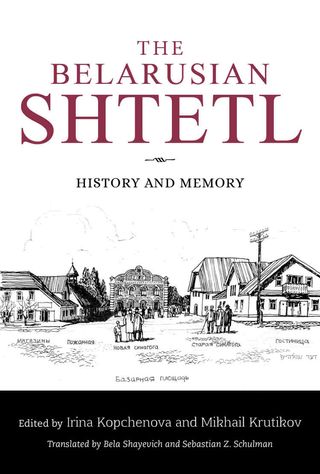
The belarusian shtetl. History and memory
Sorkina I., Zeltser A., Amosova S., Andrei B. Moroz, Bernstein J., Lurie M., Savina N., Mordukhvich M. Bloomington: Indiana University Press, 2023.
Similar publications
Гуманитарная наука в цифровую эпоху (случай британской устной истории)
Vakhrukova K., Петербургская социология сегодня 2025 № 30 С. 28–51
The digital age has radically changed the landscape of the humanities, introducing new methodologies, tools, and challenges. This has also been reflected in the field of oral history. This transformation has been particularly evident in the UK, where long-standing oral history archives and recent digitization projects have come together to redefine how scholars collect, preserve, ...
Added: October 1, 2026
Востоковедение.Этнография: материалы 63-й Международной научной студенческой конференции
Новосибирск: ИПЦ НГУ, 2025.
This edition represents the publications of the 63rd International Scientific Student Conference 2025 (ISSC-2025) theses in in oriental studies and ethnography. These Conference materials can be of interest for students, Ph.D. candidates, professors, scientists, and members of educational institutions. ...
Added: September 26, 2026
ПРОДАННЫЙ ПРАЗДНИК, УКРАДЕННАЯ ЧАСОВНЯ, ПРОИГРАННЫЙ ПРИХОД: ДЕРЕВЕНСКИЙ ПРАЗДНИК КАК СИМВОЛИЧЕСКИЙ КАПИТАЛ
Moroz A., Антропологический форум 2026 Т. 69 С. 296–324
Some rather unusual stories have been recorded from time to time in various Russian regions: about one village that sold its holiday to another, about the residents of one village who stole a chapel from another one and transported it to their own village, or how a rural priest gambled away part of his parish ...
Added: June 30, 2026
Историческая наука в контексте цивилизационного развития и международного сотрудничества
Каз.: Институт истории имени Шигабутдина Марджани Академии наук Республики Татарстан, 2026.
В сборнике представлены статьи участников Международной научной конфе ренции «Историческая наука в контексте цивилизационного развития и международ ного сотрудничества» (г. Казань, 16–17 июня 2026 г.), посвященной 30-летию Инсти тута истории им. Ш.Марджани АН РТ. Сборник охватывает широкий круг междис циплинарных проблем – от средневековой государственности до современности, включая советский период и Великую Отечественную войну, с ...
Added: June 20, 2026
Фольклор как объект правовой охраны: проблемы фиксации и развитие механизмов защиты в международном и российском праве
Войниканис Е. А., Monakhov V., Katkova M., Труды по интеллектуальной собственности 2026 Т. 57 № 2 С. 8–19
The article examines theoretical and legal problems arising in the protection of folklore as a component of intangible cultural heritage. Three core issues are identified: the tension between the fixation of folklore required for legal protection and its intrinsic variability; the conflict between copyright protection of performances and the cultural-legal protection of folkloric elements; and ...
Added: June 15, 2026
Репрезентация Холокоста в СМИ стран Центрально-Восточной и Северной Европы во втором десятилетии XXI века
Кровицкая А. В., Попов Д. И., Кравченко А. А. et al., Judaic-Slavic Journal 2024 № 11-12 С. 133–186
The collective research deals with the representation of the Holocaust memory in the media of Central-Eastern and Northern Europe in the second decade of the XXI century on the example of Germany, Austria, Poland, Lithuania, Latvia, Estonia, Sweden, Denmark, and Norway. Each of these states, the article argues, is characterized by its own distinct memory ...
Added: May 13, 2026
Holocaust “Sites of Memory” in the Urban Landscape of Moscow Created in the 1990s
Власов Е. Э., East European Jewish Affairs 2026
The present study answers the question of how Moscow's monuments and museums - "Sites of Memory" of the Holocaust – were conceived, negotiated, and materially realized in the 1990s, and analyzes how these memorials construct and sustain a post‑Soviet memory of Jews murdered by the Nazis. The theoretical framework encompasses conceptual apparatus from memory studies, ...
Added: May 10, 2026
По следам пленника ямы: конь Алпамыша, нить Ариадны и пояс Хлои
Braginskaya N., В кн.: Дороги и перекрестки. Сборник статей к 85-летию С.Ю. Неклюдова.: М.: Изд-во РГГУ, 2026. С. 175–188.
Статья из сборника в честь 85-летия выдающегося фольклориста Сергея Юрьевича Неклюдова, вдохновлена работой самого юбиляра, опубликовавшего работу о сюжетном комплексе "пленника ямы" дважды: в 1977г. и в 2016-м. Во второй раз он дополнил эпический материал, миф и фольклор Центральной и Средней Азии а также Сибири литературным материалом 19-20 вв., в том числе русской классикой ("Кавказский ...
Added: April 10, 2026
Три песни о самогонщиках и нарративизация самогоноварения в современной сельской культуре
Moroz A., В кн.: Дороги и перекрестки. Сборник статей к 85-летию С.Ю. Неклюдова.: М.: Изд-во РГГУ, 2026. С. 540–563.
This paper presents and analyzes three folk songs about moonshining that originated during the Soviet era. The songs are examined within the context of two discourses on moonshining: the official discourse, as presented in the Soviet press, particularly in satirical publications, and the oral peasant discourse, which developed in an environment where moonshining was not ...
Added: April 8, 2026
Дороги и перекрестки. Сборник статей к 85-летию С.Ю. Неклюдова
Moroz A., Воробьев В. А., Braginskaya N. et al., М.: Изд-во РГГУ, 2026.
We have titled this collection “Roads and Crossroads”, referring to the academic landscape and, above all, to Sergei Yuryevich’s own trajectory within it — the evolution of his scholarly thought, from his earliest publications of abstracts for presentations at the Tartu schools to the monographs of the 2010s and 2020s. The honoree’s scholarly paths form ...
Added: April 8, 2026
"Как Вы это называете?": сенситивность, сопротивление и рефлексивность в поле постконфликтной памяти Чечни
Goryushina E., ИНТЕРакция. ИНТЕРвью. ИНТЕРпретация 2026 Т. 1 № 1 С. 57–73
Статья основана на многолетнем опыте полевой работы в Чечне и посвящена методологическим и этическим вызовам исследования памяти о вооруженных конфликтах в условиях ее тотальной секьюритизации. Анализируя практику сбора корпуса из более чем 150 полуструктурированных интервью с бывшими комбатантами и очевидцами событий 1994–2009 годов, автор рассматривает специфику чеченского поля как сенситивного в тройном измерении: как зоны ...
Added: March 24, 2026
К социальной философии геноцидов
Arkhipov A., Социология власти 2023 Т. 35 № 1 С. 93–117
In the first part of this paper, the author proceeds to identify and clarify three categories that are distinctive for the social philosophy of genocides: aim, subject, and method. The clarification of these categories makes meaningful the social philosophy of genocides. This makes it possible to distinguish between the social philosophy of genocides — and ...
Added: March 21, 2026
Лексикографическая копилка
-, 2025.
Сборник научных статей включает материалы, имеющие научную ценность для дальнейших лингвистических, особенно лексикографических, работ. Исходя из своего названия сборник аккумулирует информацию не только об уже созданных лексикографических ресурсах, но и тех, которые находятся на стадии создании. Специально выделена для этой цели рубрика «Лексикографические проекты». Все статьи носят научно-исследовательский характер. Разнообразна языковая палитра, отраженная в данном ...
Added: February 23, 2026
  • About
  • About
  • Key Figures & Facts
  • Sustainability at HSE University
  • Faculties & Departments
  • International Partnerships
  • Faculty & Staff
  • HSE Buildings
  • HSE University for Persons with Disabilities
  • Public Enquiries
  • Studies
  • Admissions
  • Programme Catalogue
  • Undergraduate
  • Graduate
  • Exchange Programmes
  • Summer University
  • Summer Schools
  • Semester in Moscow
  • Business Internship
  • Research
  • International Laboratories
  • Research Centres
  • Research Projects
  • Monitoring Studies
  • Conferences & Seminars
  • Academic Jobs
  • Yasin (April) International Academic Conference on Economic and Social Development
  • Media & Resources
  • Publications by staff
  • HSE Journals
  • Publishing House
  • iq.hse.ru: commentary by HSE experts
  • Library
  • Economic & Social Data Archive
  • Video
  • HSE Repository of Socio-Economic Information
  • HSE1993–2026
  • Contacts
  • Copyright
  • Privacy Policy
  • Site Map
Edit