• A
  • A
  • A
  • АБВ
  • АБВ
  • АБВ
  • A
  • A
  • A
  • A
  • A
Обычная версия сайта
  • RU
  • EN
  • HSE University
  • Publications
  • Book chapter
  • Взаимодействие корпоративных и макроэкономических детерминант политики финансирования на развивающихся рынках капитала
  • RU
  • EN
Расширенный поиск
Высшая школа экономики
Национальный исследовательский университет
Priority areas
  • business informatics
  • economics
  • engineering science
  • humanitarian
  • IT and mathematics
  • law
  • management
  • mathematics
  • sociology
  • state and public administration
by year
  • 2027
  • 2026
  • 2025
  • 2024
  • 2023
  • 2022
  • 2021
  • 2020
  • 2019
  • 2018
  • 2017
  • 2016
  • 2015
  • 2014
  • 2013
  • 2012
  • 2011
  • 2010
  • 2009
  • 2008
  • 2007
  • 2006
  • 2005
  • 2004
  • 2003
  • 2002
  • 2001
  • 2000
  • 1999
  • 1998
  • 1997
  • 1996
  • 1995
  • 1994
  • 1993
  • 1992
  • 1991
  • 1990
  • 1989
  • 1988
  • 1987
  • 1986
  • 1985
  • 1984
  • 1983
  • 1982
  • 1981
  • 1980
  • 1979
  • 1978
  • 1977
  • 1976
  • 1975
  • 1974
  • 1973
  • 1972
  • 1971
  • 1970
  • 1969
  • 1968
  • 1967
  • 1966
  • 1965
  • 1964
  • 1963
  • 1958
  • More
Subject
News
August 18, 2026
HSE Scholar Presents Research on Postcards in Brazil and South Korea
Timur Khusyainov, Deputy Dean of theFaculty of Humanities atHSE University–Nizhny Novgorod, took part in two international conferences—the XVI World Congress of Rural Sociology in Porto Alegre, Brazil, and the 36th Annual Conference of the Alliance of Digital Humanities Organisations (DH2026) in Daejeon, South Korea. On his way to the conferences, the researcher also visited several other places, where he presented the experience of the Pochtovoe educational project.
August 18, 2026
Physicists Discover What Happens Inside a Stable Vortex
Large vortices with characteristic spiral arms are often observed in the atmosphere and the ocean. Physicists from HSE University have explained how these structures form and why they retain their shape. The researchers found that velocities at points located along the same vortex arc remain correlated even over long distances. At the same time, this correlation weakens rapidly with increasing distance from the vortex centre. These differences help explain the formation of spiral arms and may improve models of atmospheric and oceanic currents. The findings have been published in Physical Review Fluids.
August 17, 2026
‘I Dream of Simple Things
Anastasia Gergenreter specialises in applied statistics and econometrics. In this interview for the Young Scientists of HSE University project, she talked about why she studies addictive substance use, two very different Fishers, and the cherry blossom season at the Main Botanical Garden in Moscow.


Have you spotted a typo?
Highlight it, click Ctrl+Enter and send us a message. Thank you for your help!

Publications
  • Books
  • Articles
  • Chapters of books
  • Working papers
  • Report a publication
  • Research at HSE

?

Взаимодействие корпоративных и макроэкономических детерминант политики финансирования на развивающихся рынках капитала

С. 499–508.
Ivashkovskaya I., Kokoreva M. S., Kadurov A. A.

Capital Structure policy still puzzles researchers in developed and emerging markets. We contribute to the literature by examining capital structure policy of large companies in Central Europe and BRIC countries.

Our sample consists of 372 firms from 14 Central and Eastern European and BRIC countries for the period 2002-2009. We conduct separate analysis for both pre-crisis and post-credit crunch periods to emphasize the differences occurred in debt-to-equity choice policy in emerging policy.

Our research rests upon the dynamic trade-off model. According to the concept each company has its own target financial leverage to which it is trying to adjust is actual debt-to-equity ratio with a specific adjustment speed. This rate of adjustment depends on firm-specific, institutional and macroeconomic factors. Moreover the dynamics of a firm’s leverage could depend upon financial deficit of the firm and the cost of available financial sources. The former issue addresses the situation when the choice of financing mix should be made under the existence of information asymmetry, unclear ownership structure and positive transaction costs which could lead to the financing sources hierarchy formation. The latter topic relates to the concept stating that the management would try to take any opportunity of favorable market conditions to reduce the costs of financing.

Our model is designed to test the following hypotheses:

Hypothesis 1. Firms operating in BRIC and Eastern Europe have target financial leverages and positive speed of adjustment. The major determinants of target ratio in these countries are the traditional determinants derived for the developed markets (size, assets profitability, growth opportunities, tangibility of assets). 

Hypothesis 2. Existence of internal financial deficit ceases the significance of target financial leverage by decreasing the speed of adjustment.

Hypothesis 3. Market estimates of company’s value and lending rates influence the dynamics of capital structure and lead to the decrease of the target adjustment role (by decreasing the speed of adjustment)

Hypothesis 4. Credit market development and liquidity problems within the credit crunch period cease the role of target adjustment by decreasing the speed of adjustment.

Hypothesis 5. The speed of adjustment in BRIC and Eastern European companies positively depends on the following macroeconomic factors: inflation rate, the growth rate of the economy, the degree of financial market development. 

The results of our research show that the speed of adjustment of capital structure to the target level in BRIC and Central and Eastern European countries has reached the level of that of the developed countries. Further, this speed is time-varying, has a cross-firm variation and depends on macroeconomic factors, internal financing deficit and, less significantly, cost of financing.

The proposed decomposition of financial deficit revealed that the major role plays two elements: profit (through profitability) and capital expenditures. Operating cash flow significant grows within the credit crunch period emphasizing the crucial role of liquidity during the unstable period. Moreover the speed of adjustment is lower for the whole sample if compared to the pre-crisis period results. 

Market timing factors are significant for Central and Eastern European companies only, where a negative relationship of leverage and cost of debt was revealed. However the changes of market prices cannot explain the capital structure choice in our sample.

Macroeconomic variables (inflation, GDP per capita growth, financial market development) positively influence the speed of adjustment. Thus firms operating in BRIC and Central and Eastern Europe tend to adjust their capital structures to the target levels within the periods of economic growth, high inflation and in the systems with more developed financial markets.

Language: Russian
Full text
Keywords: BRICcapital structuretrade-off theorypecking order of financingemerging markets financeCentral and Eastern Europe
Publication based on the results of:
Research on the Corporate Financial Decisions of Russian Companies and Companies of other Emerging Capital Markets under Pressure of the Global Transformation of Capital Markets and the Formation of an Innovation Economy (2012)

In book

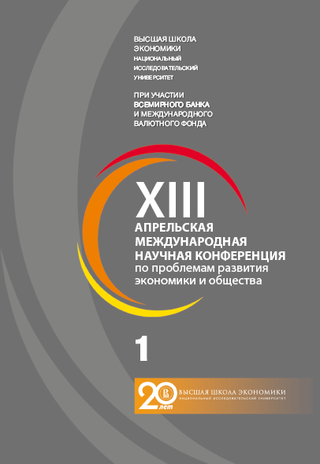
XIII Международная научная конференция по проблемам развития экономики и общества. В 4 кн. Кн. 1.
Кн. 1. , М.: Издательский дом НИУ ВШЭ, 2012.
Similar publications
Применимость моделей устойчивого роста для прогнозирования эффективности IPO компании
Войко Д. В., Voyko A. V., Афанасьева Е. Ю., Финансовый менеджмент 2025 № 8 С. 321–330
The purpose of this article is a comprehensive analysis of the applicability of Sustainable Growth Ratio models for predicting the effectiveness of IPO (IPO – Initial Public Offer) of Russian companies in modern conditions. Companies of various types of activity were selected as the object of research: medicine, pharmacology, IT business, transport services, wood processing ...
Added: December 9, 2025
Существуют ли различия в операционной эффективности компаний развивающихся стран с ESG-рейтингом и без него?
Ryabova E., Rossokhin V. V., Вопросы статистики 2023 Т. 30 № 5 С. 83–97
The issue of socially responsible behavior of companies is becoming more and more relevant at the present stage. At the same time, the actions undertaken by firms in the framework of socially responsible behavior most often go beyond the procedures set by the current legislation and require additional costs and funding. Positive effects are not ...
Added: October 29, 2023
The influence of ownership structure and board independence on the cost of debt in BRIC countries
Kopyrina O., Stepanova A. N., Economic Systems 2023 Vol. 47 No. 2 Article 101097
Agency theory predicts that the default premium on debt is determined by the intensity of agency conflicts since they affect the risk of debtholders. This effect is especially important in emerging countries with high ownership concentration and low protection of minority owners. This paper presents an empirical analysis of the influence of ownership structure and ...
Added: June 9, 2023
The New Strategy of High-Tech Companies – Hidden Sources of Growth
Kokoreva M. S., Stepanova A. N., Povkh K., Foresight and STI Governance 2023 Vol. 17 No. 1 P. 18–32
The recent increase in the share of zero-leverage firms is most pronounced in the Software and Services, Hardware Equipment, and Pharmaceutical and Biotechnical industries. The reasons for these industries’ conservative debt policies are not fully disclosed. How companies in technological sectors manage to perform well attracting no debt and losing debt tax shield benefits is ...
Added: April 14, 2023
Analysis of the debt burden in Russian economy sectors
Popova S., Дерюгина Е. Б., Карлова Н. А. et al., Russian Journal of Economics 2017 Vol. 3 No. 4 P. 379–410
Added: March 28, 2023
Мотивы и стратегии мажоритарных инвесторов: влияние на корпоративное управление
Kokoreva M. S., Stepanova A. N., Гайфеев Б. Р., Экономическая политика 2022 Т. 17 № 6 С. 68–89
Concentration of corporate ownership has increased worldwide during recent years, especially in the holdings of the largest investors. The paper examines this trend in order to understand how changes in the stakes of the largest shareholders affect corporate governance and performance. In order to take into account the different goals and motives among institutional investors, ...
Added: January 23, 2023
Diversity of Capitalism in Central and Eastern Europe Dependent Economies and Monetary Regimes
Nenovsky N., Magnin E., Switzerland: Palgrave Macmillan Cham, 2022.
This book explores the hypothesis of the emergence of a ‘dependent capitalism’ in Central and Eastern Europe. In a first theoretical part, this book presents the main approaches that structure the field of comparative capitalism and then examines this model shaped by the inflow of foreign capital. In an original way, it proposes to integrate ...
Added: October 4, 2022
Guest Editorial
Wieczorek-Kosmala M., Gurkov I. B., Steger T., Journal for East European Management Studies 2022 Vol. 22 No. Special P. 7–9
The emergence of the COVID-19 pandemic and the multidimensional impacts on organizational management it brings inspired us to call for papers for this special issue. In effect, the issue presents a collection of full-length articles and research notes devoted to the experience of enterprises during the first year of the COVID-19 pandemic in various East European countries (Poland, Hungary, the ...
Added: April 6, 2022
Boards of directors in BRIC countries: A review of empirical studies
Kirpishchikov D., Lopez Iturriaga F. J., Zavertiaeva M. A., Russian Management Journal 2021 Vol. 19 No. 2 P. 195–228
The paper is aimed to analyse the most recent and relevant research on boards of directors in BRIC. Existent reviews on the board of directors do not focus on BRIC and do not consider the specifics of their corporate governance model. Therefore, the current review fills this gap by analysing 111 research papers from Scopus/Web ...
Added: December 7, 2021
Labour market conditions and the corporate financing decision: A European analysis
Lopez Iturriaga F. J., Vega-Gutierrez P. L., Rodriguez-Sanz J. A., Research in International Business and Finance 2021 Vol. 58 Article 101431
This study examines the influence of labour market conditions on corporate capital structure in a sample of 2892 firms from France, Germany, Italy, Spain, and the UK. After considering the effect of unemployment and inflation, we analyse the impact of two market imperfections: employees’ rights and downward wage rigidity. Results indicate that financial leverage responds ...
Added: October 11, 2021
Company performance and optimal capital structure: evidence of transition economy (Russia)
Spitsin V., Vukovic D., Anokhin S. et al., Journal of Economic Studies 2021 Vol. 48 No. 2 P. 313–332
Purpose – The paper analyzes the effects of the capital structure on company performance (return on assets). The analysis is conducted in a large sample of high-tech manufacturing and service companies in the transition economy (Russian Federation). In addition to the aggregated analysis, separate investigations are conducted to scrutinize the impact of company age, size and location factors ...
Added: February 10, 2021
The Influence of Ownership Structure And Board Independence On The Cost Of Debt In BRIC Countries
Stepanova A. N., Kopyrina O., / NRU Higher School of Economics. Series FE "Financial Economics". 2019. No. 74/FE/2019.
This paper presents an empirical analysis of the influence of ownership structure and board independence on bond yield spread in BRIC countries, 2007-2016. The main finding of the study is the presence of significant country-specific effects of ownership structure on the cost of debt, and the absence of effects of board independence. According to our ...
Added: November 2, 2020
Capital Structure in Emerging Markets: Evidence from China
Будченко А., Nazarova V., Journal of Corporate Finance Research 2020 Vol. 14 No. 1 P. 7–19
Although corporate capital structure has been intriguing to scientists for a number of years, very little research has been conducted on the topic for companies in emerging markets. The purpose of this paper is to investigate the determinants of capital structure using a sample of 195 non-financial firms from emerging markets in 2012-2016. The inclusion of ...
Added: October 31, 2020
Green Growth And Innovation: Measuring Progress in Transition from Planned to Market Economies
Safonov G., Dorina A., Стеценко А. В. et al., Berlin: Friedrich Ebert Stiftung, 2020.
The economies of Central and Eastern Europe, Caucasus, and Central Asia (CEECCA) grew at a varying pace in 2000–2019, with an average rate of 6.5 percent per annum (GDP, PPP). This economic progress was accompanied by some positive changes in environmental performance, but not in all areas and not in all countries in the region. ...
Added: October 17, 2020
The influence of capital structure on the value of public companies in chemical industry
Bityukova A.V., Markovskaya E., Bruz V. et al., , in: E3S Web of Conferences Volume 135 (2019) Innovative Technologies in Environmental Science and Education (ITESE-2019)Т. 135 (2019).: EDP Sciences, 2019. P. 04059.
The study is about the relation between the financial leverage and the value of a firm in the chemical industry. Financial stability (low level of growth and financial health) is considered as a factor that can influence the relation. The panel data analysis of the sample of public chemical companies is used. Instrumental variables are ...
Added: December 6, 2019
Оценка оптимальности структуры капитала агропромышленного холдинга (на материалах агрохолдинга "Мираторг")
Lipatnikov V. S., Александров А. А., Вертакова Ю. В. et al., АПК: Экономика, управление 2019 № 10 С. 60–70
The world practice shows that the capital structure (proportion of own and debt capital) is important for company’s efficiency. Debt finance allows the company to invest in its growth more actively and with higher efficiency and to use the favorable situation on the market. The paper contains an analysis of the structure of the capital ...
Added: November 8, 2019
Historicizing the Asynchronous Modernity in the Global East
Marzec W., Zysiak A., Eurasian Geography and Economics 2020 P. 663–685
In this paper, we aim to forge potentially generalizable insights into “Eastern” urbanity and its confrontation with modernity. We radically historicize analytical categories such as modernity and take them as vernacular categories of practice utilized by actors in a given space and time. Grounding our theorizing in findings from a larger research project on modern ...
Added: July 8, 2019
Capital structure and business process management: evidence from ambidextrous organizations
Miglietta N., Battisti E., Carayannis E. et al., Business Process Management Journal 2018 Vol. 24 No. 5 P. 1255–1270
Purpose The purpose of this paper is to investigate the relationship between capital structure and business process management (BPM) within ambidextrous firms. In particular, referring to the listed companies in the Mercato Telematico Azionario (MTA) and Mercato degli Investment Vehicles (MIV) markets with large- and mid-sized capitalization, divided into ambidextrous and non-ambidextrous companies, the authors examined the capital structure to ...
Added: February 6, 2019
  • About
  • About
  • Key Figures & Facts
  • Sustainability at HSE University
  • Faculties & Departments
  • International Partnerships
  • Faculty & Staff
  • HSE Buildings
  • HSE University for Persons with Disabilities
  • Public Enquiries
  • Studies
  • Admissions
  • Programme Catalogue
  • Undergraduate
  • Graduate
  • Exchange Programmes
  • Summer University
  • Summer Schools
  • Semester in Moscow
  • Business Internship
  • Research
  • International Laboratories
  • Research Centres
  • Research Projects
  • Monitoring Studies
  • Conferences & Seminars
  • Academic Jobs
  • Yasin (April) International Academic Conference on Economic and Social Development
  • Media & Resources
  • Publications by staff
  • HSE Journals
  • Publishing House
  • iq.hse.ru: commentary by HSE experts
  • Library
  • Economic & Social Data Archive
  • Video
  • HSE Repository of Socio-Economic Information
  • HSE1993–2026
  • Contacts
  • Copyright
  • Privacy Policy
  • Site Map
Edit