• A
  • A
  • A
  • АБВ
  • АБВ
  • АБВ
  • A
  • A
  • A
  • A
  • A
Обычная версия сайта
  • RU
  • EN
  • HSE University
  • Publications
  • Book chapter
  • Раздел VIII. Южная и Юго-Восточная Африка
  • RU
  • EN
Расширенный поиск
Высшая школа экономики
Национальный исследовательский университет
Priority areas
  • business informatics
  • economics
  • engineering science
  • humanitarian
  • IT and mathematics
  • law
  • management
  • mathematics
  • sociology
  • state and public administration
by year
  • 2027
  • 2026
  • 2025
  • 2024
  • 2023
  • 2022
  • 2021
  • 2020
  • 2019
  • 2018
  • 2017
  • 2016
  • 2015
  • 2014
  • 2013
  • 2012
  • 2011
  • 2010
  • 2009
  • 2008
  • 2007
  • 2006
  • 2005
  • 2004
  • 2003
  • 2002
  • 2001
  • 2000
  • 1999
  • 1998
  • 1997
  • 1996
  • 1995
  • 1994
  • 1993
  • 1992
  • 1991
  • 1990
  • 1989
  • 1988
  • 1987
  • 1986
  • 1985
  • 1984
  • 1983
  • 1982
  • 1981
  • 1980
  • 1979
  • 1978
  • 1977
  • 1976
  • 1975
  • 1974
  • 1973
  • 1972
  • 1971
  • 1970
  • 1969
  • 1968
  • 1967
  • 1966
  • 1965
  • 1964
  • 1963
  • 1958
  • More
Subject
News
July 24, 2026
'Physics Is What the World Is Literally Built On'
Physicist Nina Dzhanayeva, recipient of a Vladimir Potanin Foundation scholarship, focuses her research on nanophotonics. In this interview for the HSE Young Scientists project, she discusses nanowells, scientific intuition, and how physics can help in making frangipane cream puffs.
July 20, 2026
Scientists Create Open Dataset for Studying Concentration
A team of Russian researchers, including scientists from HSE University–St Petersburg, has developed the first open multimodal dataset containing recordings of brain activity, heart function, and video observations to help researchers understand what happens in the human brain during deep concentration. In the future, the dataset could accelerate the development of neural interfaces, rehabilitation technologies, and AI systems. The article has been published in Scientific Data.
July 20, 2026
‘Science Is Universal-It Knows No Borders
Fuad Aleskerov, Tenured Professor and Director of the International Centre of Decision Choice and Analysis at HSE University, together with his colleagues, has developed methods of network analysis in bibliometrics that have made it possible to identify patterns in the appearance and citation of publications in academic journals, as well as their influence on each other. When one or a number of studies are frequently cited by a wide range of journals, this is an indicator that the research is of high quality. By contrast, extensive cross-citation within a limited group of journals increases the likelihood of identifying a network of predatory publications.


Have you spotted a typo?
Highlight it, click Ctrl+Enter and send us a message. Thank you for your help!

Publications
  • Books
  • Articles
  • Chapters of books
  • Working papers
  • Report a publication
  • Research at HSE

?

Раздел VIII. Южная и Юго-Восточная Африка

Гл. VIII. С. 822–962.
Voevodskiy A., Filatova I. I.
Language: Russian
Full text
Keywords: Cold Warистория Южной АфрикиХолодная войнасоветско-африканские отношенияHistory of Southern AfricaSoviet-African relations

In book

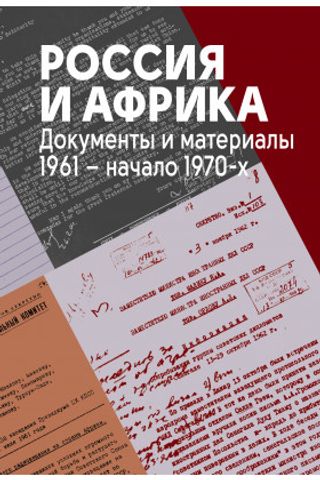
Россия и Африка. Документы и материалы. 1961 – начало 1970-х
М.: Политическая энциклопедия, 2021.
Similar publications
The Microphone as a Medium of Authenticity in Soviet Estrada Song
Nikonov A., Technology and Language 2026 Vol. 7 No. 2 P. 104–117
This article focuses on the notion of authenticity as a characteristic of a specific vocal technique that has its own specificity in relation to Estrada song. The significance of vocal authenticity in the Soviet context is shaped by cultural, technological, and ideological factors functioning within specific historical circumstances. As a case study, the article examines ...
Added: June 28, 2026
A new mechanism of international cooperation in the Arctic region: co-creating the International Arctic Scientific Committee, 1986–1990
Marina M. Panikar, Beloshitskaya N., Polar Journal 2026 Vol. 16 No. 1 P. 145–161
The article attempts to explore the process of formation of a new sphere of relations between the USSR and the countries of the Arctic region in the period from 1986 to 1990. The April Plenum of the Communist Party Central Committee in 1985 laid the groundwork for a profound transformation in both the domestic and ...
Added: May 15, 2026
“May There Always Be Sunshine!”: A Symbol of Childhood in Soviet and American Cold War Songs
Рябова Т. Б., Вестник Волгоградского государственного университета. Серия 4: История. Регионоведение. Международные отношения 2024 Vol. 29 No. 1 P. 16–25
Introduction. The article is the first to study the use of the symbol of childhood by the USSR and the USA songs for the representation of Cold War issues. Methods and materials. Based on the methodology of constructivism, the author analyzes the reasons for the politicization of the image of childhood and the role of ...
Added: January 28, 2026
The “Red Machine”: The Dehumanization of the Communist Enemy in American Cold War Cinema
Рябов О. В., Quaestio Rossica 2020 No. 2 P. 536–550
This article deals with the US Cold War cinematographic construction of the Soviet enemy. The researcher focuses on the means of dehumanising the communist enemy, external and internal, by equating it to a machine. The author applies Nick Haslam's dual model of dehumanization (2006), according to which dehumanization is visible in two main forms: animalistic, ...
Added: January 28, 2026
Gendering the American Enemy in Early Cold War Soviet Films (1946–1953)
Рябов О. В., Journal of Cold War Studies 2017 No. 1 P. 193–219
Analyzing Soviet films and film criticism from the late Stalin period, this article shows how Soviet cinematographers exploited gender discourse to produce Otherness. Cinematic representations of U.S. femininity, masculinity, love, sexuality, and marriage played an important role in constructing external and internal Enemies. Cinematography depicted the U.S. gender order as resulting from the unnatural social ...
Added: January 27, 2026
Регуманизация «чужих»: Эволюция репрезентаций «врага номер один» в американском кинематографе Холодной войны
Рябов О. В., Диалог со временем 2021 № 77 С. 277–290
The article dwells upon evolution of the ways in which the U.S. Cold War films represented the USSR: from dehumanization of the image of enemy in 1940-1950s to deconstruction of this image in 1960s. The author applies Nick Haslam's dual model of dehumanization, aс-cording to which dehumanization is visible in two forms: animalistic by associating ...
Added: January 27, 2026
Images of urban space in constructing the Cold War enemy: American skyscrapers in Soviet animation
Рябов О. В., Рябова Т. Б., Studies in Russian and Soviet Cinema 2021 No. 2 P. 122–138
This article deals with an analysis of the representation of American cities in Soviet animated films of the Cold War (1946–63). The space-oriented discourse of popular geopolitics was a resource for constructing the Cold War enemy. The authors point out that the images of skyscrapers served as the main signifier of Americanness in Soviet animation. ...
Added: January 27, 2026
Linguistic Means of Constructing the ‘Enemy Number One’ in the U.S. Cold War Cinema
Рябов О. В., Куликова М. Н., Вестник Российского университета дружбы народов. Серия: Теория языка. Семиотика. Семантика 2023 No. 3 P. 719–731
The study examines how the US Cold War cinema employed linguistic means to construct images of the USSR and American communists. The research relevance is determined by: the need to study the techniques of creating the enemy image as one of the crucial issues in international relations; and the importance of the topic amidst the ...
Added: January 27, 2026
“From America with Love”? Love stories and the “Iron Curtain” in the Soviet Thaw cinema
Рябов О. В., Имагология и компаративистика 2024 No. 1 P. 259–275
The article deals with an analysis of the Soviet Thaw films that contain love stories of USSR and USA citizens. Hollywood released a number of films that told the stories of love between representatives of the two hostile blocs; following the canon established in Ninotchka, they served as a part of the “struggle for hearts ...
Added: January 27, 2026
«Советская Родина» как концепт Холодной войны. Материнский символ страны в массовой песне
Рябов О. В., Рябова Т. Б., Женщина в российском обществе 2024 № 1 С. 4–22
The paper deals with the analysis of using the Motherland symbol by the Soviet popular songs in order to represent the Cold War issues. Using quantitative and qualitative content analysis, the authors examine more than 1500 Soviet songs (1946-1991); 350 of them employ this symbol. The article demonstrates that the “Soviet Motherland” served as one ...
Added: January 27, 2026
The Enemy with Human Face? Rehumanization of the Images of Americans in the Soviet Thaw Cinema
Рябов О. В., Вестник Волгоградского государственного университета. Серия 4: История. Регионоведение. Международные отношения 2024 P. 6–15
Introduction. The article focuses on the changes that happened in the portrayal of U.S. characters in Soviet Thaw cinema. The contribution of the article in the field of cultural Cold War is threefold: for the first time, it studies the American characters' images through the prism of the concept of rehumanization; establishes common and particular ...
Added: January 27, 2026
«Баба с отбойным молотком»: Женский труд в СССР в дискурсе американского антикоммунизма периода Холодной войны
Рябов О. В., Рябова Т. Б., Женщина в российском обществе 2025 № 4 С. 115–126
The article analyzes representations of Soviet women’s labor in the discourse of American anti-communism during the Cold War. The sources for the study are the works of American anti-communist ideologues, propaganda books, and issues (more than 200 in total) of The American Legion Magazine , Freedom’s Facts , Life , and Look , founded in ...
Added: January 27, 2026
«Красная угроза», колониализм и мученичество: дискурс виктимизации в иранских СМИ в отношении событий переворота 1953 г. в Иране
Alontsev M., Титова В. С., Восток. Афро-азиатские общества: история и современность 2025 № 4 С. 176–187
This article examines the discourse of victimization and collective trauma in Iranian media during the early 1950s, particularly in relation to the Coup of August 19, 1953. This event is crucial in modern Iranian history, profoundly impacting the relationship between the government and society, as well as shaping contemporary Iran's foreign policy. The coup, supported ...
Added: November 10, 2025
  • About
  • About
  • Key Figures & Facts
  • Sustainability at HSE University
  • Faculties & Departments
  • International Partnerships
  • Faculty & Staff
  • HSE Buildings
  • HSE University for Persons with Disabilities
  • Public Enquiries
  • Studies
  • Admissions
  • Programme Catalogue
  • Undergraduate
  • Graduate
  • Exchange Programmes
  • Summer University
  • Summer Schools
  • Semester in Moscow
  • Business Internship
  • Research
  • International Laboratories
  • Research Centres
  • Research Projects
  • Monitoring Studies
  • Conferences & Seminars
  • Academic Jobs
  • Yasin (April) International Academic Conference on Economic and Social Development
  • Media & Resources
  • Publications by staff
  • HSE Journals
  • Publishing House
  • iq.hse.ru: commentary by HSE experts
  • Library
  • Economic & Social Data Archive
  • Video
  • HSE Repository of Socio-Economic Information
  • HSE1993–2026
  • Contacts
  • Copyright
  • Privacy Policy
  • Site Map
Edit