?
Indo-Iranian
Ch. 5. P. 205–213.
Kulikov L.
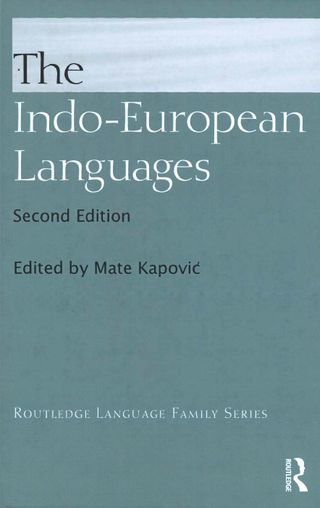
THis is a short overview of the linguistic features of the Indo-Iranian branch of the Indo-European language family, with a representative bibliography.
Indo-Iranian languages (another, outdated and quite misleading term is “Aryan”), which form a major branch of the Indo-European language family, are spoken by more than a billion of speakers occupying an immense territory from the Caucasus and southeastern Anatolia in the West to Northeast India and Bengal in the East and the Maldive Islands in the South. This grouping includes the Indo-Aryan, Iranian, Nūristānī (in earlier scholarship also called Kāfir), and Dardic branches.
Petrushchenkova L., Ученые записи Новгородское государственного университета, Россия, Новгород 2026 № 1 (60) С. 208–2016
Сегодня, когда в жизни современного общества все более значимую роль начинает играть рынок ценных бумаг, становится необходимым изучение его терминологии, которая взаимодействует с лексикой общелитературного языка, тем самым оказывая на него определенное влияние. В данной статье рассматриваются возникновение и развитие некоторых терминов французского рынка ценных бумаг на разных этапах его становления, а также анализируется влияние ...
Added: September 7, 2026
Kharlamova D. S., Русский язык в научном освещении 2024 № 2 (48) С. 129–149
В статье исследуется история возникновения и эволюции идиомы от корки до корки. Мы использовали словарные данные и материалы НКРЯ и Google Books, чтобы установить примерное время появления данного выражения, а также предложить возможные объяснения его происхождения. Развитие конструкции от корки до корки связано с расширением ее сочетаемости: на этом пути можно выделить несколько этапов, которые ...
Added: August 6, 2026
Maisak T., Transactions of the Philological Society 2026 Vol. 124 No. 2 P. 386–427
This paper presents a first typological study of a particular type of imperative interjections, namely interjections with the meaning ‘here, take it!’ used by a speaker when they ask the addressee to take something from the speaker's hands (often combined with a gesture of giving). The sample of languages is both geographically and genealogically restricted ...
Added: July 9, 2026
Kirina M., В кн.: Русская грамматика: полипарадигмальность как методологический принцип современных научных исследований : материалы IX Международного научного симпозиума.: Издательство ИГУ, 2025. С. 270–275.
В статье представлены результаты пилотного исследования, направленного на описание дистрибуции частей речи в синхронии и диахронии на материале русской прозы малой формы. Рассматриваются изменения морфологического состава художественных текстов (на уровне грамматических классов) на протяжении XX века в соответствии с 9 историко-культурными периодами. Материалом исследования выступает выборка из 943 рассказов суммарным объемом более 3 млн. словоупотреблений. ...
Added: February 28, 2026
Kassian A., Starostin G., Humanities and Social Sciences Communications 2025 Vol. 12 Article 682
In this paper, we present a brief critical analysis of the data, methodology, and results of the most recent publication on the computational phylogeny of the Indo-European family (Heggarty et al. 2023), comparing them to previous efforts in this area carried out by (roughly) the same team of scholars (informally designated as the “New Zealand ...
Added: June 9, 2025
База данных “diachronicon” и ее возможности для исследования семантических переходов в русском языке
Budennaya E., Баркова Л. А., Дугричилов А. М. et al., В кн.: Семантические переходы в языках мира.: МАКС Пресс, 2024. Гл. 2 С. 18–27.
Added: May 29, 2025
Дугричилов А. М., В кн.: Проблемы языка: Сборник научных статей по материалам Десятой конференции-школы "Проблемы языка: взгляд молодых ученых".: М.: Институт языкознания РАН, 2024..
One of the many meanings of the instrumental case in Russian is temporal, such as: dny-om (‘afternoon-SG.INST’) ‘in the afternoon’, vecher-om (‘evening-SG.INST’) ‘in the evening’, and so on. The article will present the diachronic development of the adverbial vremen-ami (‘time-PL.INST’ ‘from time to time’) in the context of singular and plural forms of instrumental temporal ...
Added: April 16, 2025
Панова А. В., Budennaya E., Русский язык в научном освещении 2024 № 2(48) С. 150–184
In the article the evolution of semantics and combinability of the construction čas ot času ‘hour from hour’ is considered using the framework of diachronic construction grammar. This construction belongs to a more general schema X ot ‘X-a ‘X from X-a’ with the meaning of time (den’ oto dnja ‘day from day’, god ot goda ...
Added: October 30, 2024
Budennaya E., Litvintseva K., Yakovleva A., Русский язык в научном освещении 2024 № 2(48) С. 31–69
This paper presents a diachronic corpus study of constructions of the X znaet ‘X knows’ type. Such constructions have a long-written history, so revealing the peculiarities of their constructionalization process is of great importance also for the theory of idiomatization. First, we focus on the semantics and compatibility of the construction with the anchor Bog ...
Added: October 30, 2024
Filatov K., Вопросы языкознания 2024 № 6 С. 32–57
Despite the fact that Andic languages (Avar-Andic < East-Caucasian) are widely recognised as agglutinating, their verbal systems barely demonstrate any agglutinating properties. The most important characteristic of these systems is the incomplete orthogonality of grammatical categories, and the related property of semantic non-additivity or morphological idiomaticity. In terms of morphotactic structure, different Andic systems can ...
Added: October 15, 2024
Степанянц М. Г., Известия РАН. Серия литературы и языка 2023 Т. 82 № 1 С. 94–101
Эта работа посвящена источникам возникновения адверсативных (противительных) показателей в языках мира. Мы предлагаем типологическую классификацию значений, к которым, по-видимому, восходят единицы со значениями ‘но’, ‘однако’, ‘but’, ‘however’, ‘nevertheless’ или ‘whereas’. В неё входят следующие источники, не включённые в предшествующие классификации, к которым мы обращались (или требовавшие уточнения): нерешительное замещение (‘скорее’), фокализация (‘именно’), единый исход (‘как ...
Added: October 14, 2024
Н. Новгород: НГЛУ им. Н.А. Добролюбова, 2024.
В настоящем издании представлены в виде научных статей материалы докладов, прозвучавших на пленарных и секционных заседаниях VIII международного симпозиума по русской грамматике (2024 г., Нижний Новгород). Спектр поднимаемых в статьях вопросов широкий: авторы обращаются к исторической грамматике и грамматике современного русского языка, рассматривают грамматику как систему и анализируют асистемные проявления грамматических процессов, исследуют норму и ...
Added: October 10, 2024
Михайлова Т. А., Volkonskaya M. A., Индоевропейское языкознание и классическая филология 2024 Т. 28 № 2 С. 1136–1151
The paper discusses the semantic and historical-cultural motivations for the gradual loss of the Indo-European designation of man, husband (*u̯ǐro-), which took place independently and in parallel in the Romance and Germanic languages, as well as its partial replacement with the lexeme having a general meaning 'human being.' The loss of Lat. vir during the ...
Added: July 2, 2024
Савчук С. О., Архангельский Т. А., Bonch-Osmolovskaya A. A. et al., Вопросы языкознания 2024 № 2 С. 7–34
The paper provides an overview of the results of the fundamental reconstruction and modernization project of the National Corpus of the Russian Language platform, carried out from 2020 to 2023. The focus of the paper is on the new opportunities that are opening up for linguists and a wider audience. This includes improving the representativeness ...
Added: March 21, 2024
Natalia N. Logvinova, SLAVIA časopis pro slovanskou filologii 2023 Vol. 92 No. 4 P. 492–503
The article investigates the causal use of preposition через in Russian in the course of the 18th–20th centuries. Based on the data of Russian National Corpus, I show that causal usage of через was more widespread in the 18th century and has gradually disappeared to date, being occasionally met in the texts of the 20th ...
Added: March 17, 2024
Itkin I., Journal of Language Relationship 2022 No. 20/3-4 P. 177–180
In 2022 A. Huard and R. Chen independently established that words meaning ʽspleenʼ and ʽliverʼ can be reliably identified in Tocharian B. These words, spalce (Acc spalc*) ʽspleenʼ and yakär* ʽliverʼ, go back to Indo-European. In this article, we show that the names of both of these organs can be identified with the same degree ...
Added: February 17, 2024
Budennaya E., Litvintseva K., Yakovleva A., Jazykovedny Casopis 2023 Vol. 74 No. 1 P. 19–31
The constructions with the anchor [Noun-Nom Verb (meaning ‘to know’)] are very productive in Russian. In this article we show that variables such as Bog ‘God’, čert ‘devil’ and xer/xren ‘X/horseradish’ have some common patterns, as well as some shifts with exclusive patterns in semantics and constructionalization. ...
Added: September 28, 2023
Budennaya E., Bazhukov M., Баркова Л. А. et al., В кн.: Компьютерная лингвистика и интеллектуальные технологии. По материалам ежегодной международной конференции «Диалог». Вып. 22. Дополнительный томВып. 22: Дополнительный том.: [б.и.], 2023. С. 1041–1051.
Added: September 14, 2023
Dmitriev I., Современный ученый 2023 № 4
The article is devoted to the analysis of lexicographical sources, which describe the meaning of the verb vzdumat’. The aim of this work is to analyze the microdichronic shifts in the verb lexicon on the example of this lexeme. Lermontov's novel «A Hero of Our Time» is the research object, which is determined by the closeness ...
Added: May 4, 2023
Kulikov L., , in: Quand le syntagme nominal prend ses marques: Du prédicat à l’argument: Hommage à Marleen Van Peteghem.: Editions et Presses Universitaires de Reims, 2022. P. 191–216.
This article deals with the history of oppositions of transitivity and the evolution of the system of labile verbs (verbs which admit changes in transitivity without formal change of the verb, cf. La clé tourna dans la serrure ~ Pierre tourna la clé dans la serrure). It focuses on the evolution of labile verb systems ...
Added: November 27, 2022
Grünthal R., Heyd V., Holopainen S. et al., Diachronica 2022 P. 1–35
The widespread Uralic family offers several advantages for tracing prehistory: a firm absolute chronological anchor point in an ancient contact episode with well-dated Indo-Iranian; other points of intersection or diagnostic non-intersection with early Indo-European (the Late Proto-Indo-European-speaking Yamnaya culture of the western steppe, the Afanasievo culture of the upper Yenisei, and the Fatyanovo culture of ...
Added: May 1, 2022
Ногина А. Д., Постникова А. Е., В кн.: Малые языки в большой лингвистикеВып. 3.: М.: Буки Веди, 2021. С. 129–142.
В данной статье приведен анализ показателя -d’iŋA в быстринском диалекте эвенского языка. Его особенность состоит в его многофункциональности: он употребляется в составе форм причастий будущего времени, финитного будущего, а также императива, оптатива и прохибитива, используется для выражения деонтической модальности. Кроме того, его парадигма неоднородна: для второго лица используется форма на -ŋA, для первого и третьего ...
Added: December 23, 2021
Itkin I., Малышев С. В., Peyrot M., Tocharian and Indo-European studies 2020 Vol. 20 P. 107–112
In this article, we posit a new Tocharian A noun "si" 'tail' and discuss its Indo-European etymology. ...
Added: October 26, 2021