• A
  • A
  • A
  • АБВ
  • АБВ
  • АБВ
  • A
  • A
  • A
  • A
  • A
Обычная версия сайта
  • RU
  • EN
  • HSE University
  • Publications
  • Book chapter
  • Demographics of Youth in Russia
  • RU
  • EN
Расширенный поиск
Высшая школа экономики
Национальный исследовательский университет
Priority areas
  • business informatics
  • economics
  • engineering science
  • humanitarian
  • IT and mathematics
  • law
  • management
  • mathematics
  • sociology
  • state and public administration
by year
  • 2027
  • 2026
  • 2025
  • 2024
  • 2023
  • 2022
  • 2021
  • 2020
  • 2019
  • 2018
  • 2017
  • 2016
  • 2015
  • 2014
  • 2013
  • 2012
  • 2011
  • 2010
  • 2009
  • 2008
  • 2007
  • 2006
  • 2005
  • 2004
  • 2003
  • 2002
  • 2001
  • 2000
  • 1999
  • 1998
  • 1997
  • 1996
  • 1995
  • 1994
  • 1993
  • 1992
  • 1991
  • 1990
  • 1989
  • 1988
  • 1987
  • 1986
  • 1985
  • 1984
  • 1983
  • 1982
  • 1981
  • 1980
  • 1979
  • 1978
  • 1977
  • 1976
  • 1975
  • 1974
  • 1973
  • 1972
  • 1971
  • 1970
  • 1969
  • 1968
  • 1967
  • 1966
  • 1965
  • 1964
  • 1963
  • 1958
  • More
Subject
News
May 25, 2026
HSE Scientists Train Neural Network to 'Hear' Faults in Electric Motors
Researchers at the AI and Digital Science Institute of the HSE Faculty of Computer Science have developed a new method—the Signature-Guided Data Augmentation (SGDA) framework—that achieves 99% accuracy in motor fault detection and 86% accuracy in fault classification. The application of this approach can reduce industrial equipment repair costs, minimise downtime, and improve production safety. The study results have been published in Engineering Applications of Artificial Intelligence.
May 25, 2026
'The Humanities Serve as a Conscience'
Maria Mizernaia studies Soviet literature and the history of book publishing. In this interview for the HSE Young Scientists project, she discusses plans to publish a novel about besieged Leningrad, AI-provoked reflections on what it means to be human, and how novels can help satisfy our dopamine hunger.
May 25, 2026
Is It Possible to Predict a Citys Life Based on the Shape of Its Neighbourhoods?
Is it possible to predict, based on the configuration of streets and buildings, where a café will open or where traffic congestion will occur? Participants in the Spatial Analysis and Modelling of Urban Processes research and study group use open data and machine learning to identify universal patterns. Alexander Sheludkov and Eduard Somov discuss the purpose of comparing cities, the need for new forms of urban statistics, and how open data is transforming approaches to urban studies.


Have you spotted a typo?
Highlight it, click Ctrl+Enter and send us a message. Thank you for your help!

Publications
  • Books
  • Articles
  • Chapters of books
  • Working papers
  • Report a publication
  • Research at HSE

?

Demographics of Youth in Russia

Ch. 7. P. 123–143.
Zakharov S. V., Mitrofanova E.

The life course is becoming more flexible and more amenable to personal adjustment for contemporary youth. The process and timing of entering adulthood is expanding due to longer education and the search for oneself. Young people in contemporary Russia do not rush to acquire social statuses that were once so desirable in Soviet times, i.e. that of a parent, employee, and family person. Today, prestige is based on acquiring a good education and career, processes on which they are betting (Blum et al., 2009: 158–159).

Young people also have very specific demands for quality: quality of life, quality of intimate relations, and quality of parenting. All of this has motivated young people to ceaselessly look for an appropriate job, home, partner, and to invest in their children, preferring quality to quantity.

Efficient family-planning tools have separated marital, reproductive, and sexual behavior, transforming these into three different spheres of self-fulfillment. All of these stages, now stretched out through time, reflect individual needs and perspectives. The increasing dispersal of timing of marital relations and childbearing reveals that young people are postponing important demographic events further and further.

 Russians have only recently acquired the opportunity to efficiently manage the most prolific period of their lives — youth. They attempt to start planning their lives as early as possible and to construct it sequentially in a personally tailored way.

Language: English
Full text
DOI
Keywords: демографиямолодежьБРИКСdemographyyouth BRICS
Publication based on the results of:
Recent demographic trends in Russia and their consideration in socioeconomic forecasting (2013)

In book

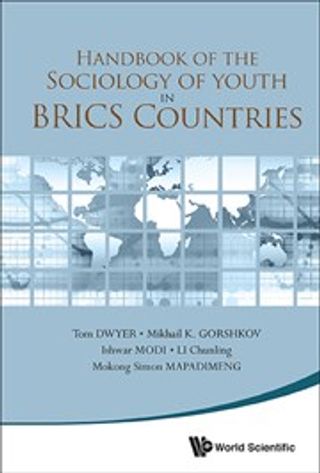
Handbook of the Sociology of Youth in BRICS Countries
World Scientific, 2018.
Similar publications
Африканский вектор БРИКС
Panin N., В кн.: Перспективы и задачи российско-африканского сотрудничества.: М.: Фонд развития и поддержки Международного дискуссионного клуба «Валдай», 2024. С. 19–22.
Африканская повестка стала неотъемлемой частью каждой декларации, принимаемой БРИКС по итогам саммитов. Несмотря на некоторые изменения в смысловых акцентах, фокус на Африку во многом уникален, поскольку такого внимания в документах объединения не получает ни один регион. ...
Added: April 19, 2026
Роль международных организаций во внешней политике Нигерии после перехода к гражданскому правлению (1999-2025)
Panin N., Сравнительная политика 2025 Т. 16 № 2 С. 185–215
В статье рассматривается сотрудничество с международными организациями как самостоятельный вектор внешней политики Нигерии с учетом основных задач, которые Абуджа стремится решить участием в ООН, Содружестве наций, Движении неприсоединения, ОПЕК, ФАО, а также ОИС на современном этапе (с 1999 г.). Кроме того, анализируется изменение позиции Нигерии в отношении ключевых неформальных институтов (БРИКС и G20) после прихода ...
Added: April 19, 2026
Фактор БРИКС в дипломатии ЮАР
Panin N., Пути к миру и безопасности 2023 Т. 65 № 2 С. 91–101
The article examines the practical aspects of the Republic of South Africa’s (RSA’s) participation of in the work of BRICS as one of the key formats of modern network diplomacy. The study is based on data on the economic aspects of South Africa’s participation in BRICS. Pretoria’s political steps are also analyzed, with a focus ...
Added: April 19, 2026
Анализ зарубежного опыта стран БРИКС в сфере оценки и учета бюджетных обязательств в проектах государственно-частного партнерства
Biryuk D., В кн.: Государственное и муниципальное управление: актуальные проблемы и современные тренды.: СПб.: Санкт-Петербургский университет технологий управления и экономики, 2026. С. 95–99.
This article presents a comparative analysis of the practices of BRICS countries in assessing and accounting for budgetary obligations arising from concession and public-private partnership (PPP) projects. The selection of BRICS nations is justified by their status as major emerging economies actively employing PPPs for infrastructure financing and facing similar challenges in fiscal risk management. ...
Added: April 16, 2026
Формирование архитектуры дедолларизации в странах БРИКС
Романова В. А., Podrugina A., Современная мировая экономика 2025 Т. 3 № 4 С. 8–24
Формирование архитектуры дедолларизации в странах БРИКС становится одним из ключевых направлений их экономической и финансовой кооперации. В статье рассматриваются институциональные и инфраструктурные меры, направленные на расширение использования национальных валют в торговле, развитии платежных систем и цифровых валют центральных банков (ЦВЦБ), а также на укрепление национальных финансовых рынков. Анализируется прогресс стран БРИКС в контексте мировых тенденций ...
Added: March 31, 2026
ARTIFICIAL INTELIGENCE FOR INCLUSION: A PUBLIC BRICS FINANCIAL AI PLATFORM
Yudina M., Ярыгина И., Четти К. et al., Finance: Theory and Practice 2026 Vol. 30 No. 1 P. 103–119
The paper is a result of a comprehensive and systematic approach to reviewing the growing opportunities for BRICS countries in introducing artificial intelligence into a mutual financial platform. The subject of the study is the AI as a factor of BRICS cooperation and its growth in finance. The purpose of the study is to identify measures that stimulate the ...
Added: March 31, 2026
Социальное происхождение и содержание труда на старте карьеры выпускников российских вузов
Nikitin M., Lukina A., Социологические исследования 2026 № 4 С. 43–57
The article examines the relationship between family socio-economic status and the content of work performed by university graduates in Russia at the beginning of their professional careers. While most studies of educational inequality focus on income or employment outcomes, this study shifts attention to the characteristics of the work performed as an indicator of job ...
Added: March 29, 2026
Механизм формирования отношения молодежи к труду: сетевые связи и восприятие институтов
Poplavskaya A., Социологическое обозрение 2026 № 1 С. 85–111
One of the acute issues of contemporary Russian reality is understanding the youth and their ambivalent attitude to work. Based on a series of empirical studies examining Russian university students` work values, the author concludes that the main dilemma of future professionals lies in the choice between personally beneficial (presumably highly paid and prestigious) and ...
Added: March 24, 2026
Стратегическая коммуникация через научные инициативы: развитие индийской повестки в области ИИ в БРИКС
Kharina O., В кн.: Труды международной сетевой научно-практической конференции «Генеративный искусственный интеллект в отраслях экономики и социальной сфере: pro&contra 2025» (Москва, Томск, Уфа, 1–4 октября 2025 г.).: М.: КДУ, 2026. С. 29–30.
В работе рассматривается формирование индийской повестки в области искусственного интеллекта (ИИ) в рамках объединения БРИКС как инструмента стратегической коммуникации. Подчеркивается, что для Индии приоритетным направлением становится использование научных инициатив и исследовательских сетей в целях укрепления международного имиджа и цифрового суверенитета. Анализируются ключевые документы, проекты и форматы сотрудничества, включая работу BRICS AI Study Group, а также ...
Added: March 20, 2026
Население мировой Арктики: динамика численности и центры расселения
Smirnov A., Арктика и Север 2020 № 40 С. 270–290
The article presents an estimate of the Arctic population in 1900–2019 by country and macroregion, obtained using official statistics of eight Arctic States. Analysis of spatial and temporal data revealed the main patterns of the Arctic population formation. Calculations show the world’s Arctic population increased from 1.3 million in 1900 to 6.1 million in 1989, ...
Added: March 19, 2026
Прогнозирование миграционных процессов методами цифровой демографии
Smirnov A., Экономика региона 2022 Т. 18 № 1 С. 133–145
The nature and intensity of migration processes are constantly changing. Demographic statistics are not suitable for obtaining up-to-date information and making timely decisions in the field of demographic and social policy. Thus, digital demography is becoming increasingly important, as this area of population research uses new methods and data sources resulting from the Internet expansion ...
Added: March 18, 2026
«Цифровой двойник» населения Арктики в демографических исследованиях и управлении развитием территорий
Smirnov A., Арктика и Север 2023 № 53 С. 260–272
The article considers “digital twins” of the population as a tool for socio-demographic research and territorial management. The experience of creating digital twins of the population and interactive websites devoted to demographic issues is systematized. A methodology for creating a digital twin of the Arctic population is proposed, based on three methodological principles: consideration of ...
Added: March 18, 2026
Демография российской Арктики в цифровую эпоху
Smirnov A., М.: Экон-Информ, 2023.
В монографии демографические проблемы российской Арктики рассматриваются в контексте формирования цифрового общества. Новые цифровые технологии и источники данных позволяют анализировать демографическую ситуацию и тенденции с более высокой степенью детализации. С помощью предложенной теоретической модели цифрового общества раскрываются особенности цифровизации в Арктической зоне. Применительно к демографическим исследованиям осмыслены такие категории, как «цифровое общество», «цифровая демография», «виртуальное ...
Added: March 18, 2026
Формы креативности молодежи на Северном Кавказе: кейсы Нальчика и Пятигорска
Kuziner E., Chernysheva N., Социологические исследования 2026 № 2 С. 99–110
The article examines the forms of creativity available to young people in two cities of the North Caucasus – Nalchik and Pyatigorsk – against the background of a persistent tension between territorial branding for tourism and the preservation of local authenticity. The theoretical framework draws upon debates on the “creative city” (S. Sassen, S. Zukin, ...
Added: March 17, 2026
  • About
  • About
  • Key Figures & Facts
  • Sustainability at HSE University
  • Faculties & Departments
  • International Partnerships
  • Faculty & Staff
  • HSE Buildings
  • HSE University for Persons with Disabilities
  • Public Enquiries
  • Studies
  • Admissions
  • Programme Catalogue
  • Undergraduate
  • Graduate
  • Exchange Programmes
  • Summer University
  • Summer Schools
  • Semester in Moscow
  • Business Internship
  • Research
  • International Laboratories
  • Research Centres
  • Research Projects
  • Monitoring Studies
  • Conferences & Seminars
  • Academic Jobs
  • Yasin (April) International Academic Conference on Economic and Social Development
  • Media & Resources
  • Publications by staff
  • HSE Journals
  • Publishing House
  • iq.hse.ru: commentary by HSE experts
  • Library
  • Economic & Social Data Archive
  • Video
  • HSE Repository of Socio-Economic Information
  • HSE1993–2026
  • Contacts
  • Copyright
  • Privacy Policy
  • Site Map
Edit