?
Арамейская версия сюжета Сисиниевой легенды
С. 29–62.
In book
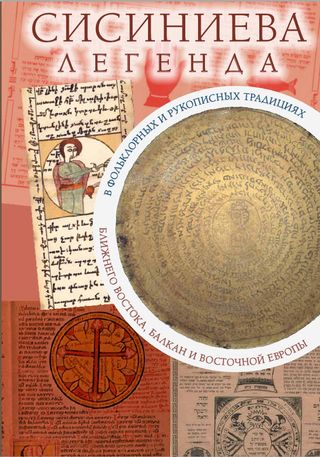
М.: Индрик, 2017.
Bochkor A., Вестник Санкт-Петербургского университета. Серия 12: Социология 2025 Т. 18 № 2 С. 229–241
The present study aims to explore the complex relationship between magic and religion in contemporary Russian society. Sociological studies acknowledge the challenge in differentiat-ing between the two spheres and uses a variety of approaches to define the boundary between magic and religion. However, the Russian Orthodox Church views magic as a distinct practice from religion ...
Added: February 12, 2026
Alexandrova E. V., Лаврентьева Н. В., В кн.: In Umbra. Демонология как семиотическая система. Альманах № 12Вып. 12.: М.: Издательский центр Российского государственного гуманитарного университета, 2025. С. 31–84.
Нож — частый атрибут демонов — в Египте наряду с огнём выступал одной из базовых метафор опасностей иного мира, что выражается в синонимичности таких регионов как «Озеро Ножей» и «Озеро Пламени» [Altenmüller 1966]. Мы рассмотрим использование этой метафоры в конструировании образов обитателей иного мира. Как в изобразительном, так и в текстовом (имена) аспекте они зачастую ...
Added: September 13, 2025
Пузанов Д. В., Ученые записки Казанского университета. Серия: Гуманитарные науки 2021 Т. 163 № 6 С. 168–178
Оружие в представлении северных германцев имело способность самостоятельно воздействовать на окружающий мир. Этот факт исследователи интерпретируют как свидетельство того, что норманны считали оружие близким к категории живых существ. В работе показано, что многие акторные характеристики оружия в верованиях северных германцев удачнее всего объясняются через концепт «биографии» предметов, в то время как конструкция «частично одушевленного» оружия ...
Added: June 10, 2025
Lyavdansky A., , in: A Handbook of Neo-Aramaic.: Leiden: Brill, 2026. Ch. 13 P. 365–384.
The purpose of this contribution is to present the corpus of Neo-Aramaic Texts in the New Alphabet in its entirety, summarize what has been done in the field, and demonstrate how the nascent digitized corpus of Christian Urmi in Latinized orthography can contribute to research into this idiom. To this end, several linguistic features are ...
Added: May 1, 2025
Leiden: Brill, 2026.
The Handbook of Neo-Aramaic aims to provide an introduction to, and details of the complex world of Neo-Aramaic. This large family of endangered Neo-Semitic languages is (or until recently was spoken by Jewish, Christian and Mandaean minorities in parts of the Middle East. Most members of these communities now live in various diasporas.
Following a series ...
Added: May 1, 2025
Cherkashina A., Lyavdansky A., Rashid D., , in: From Moscow to Baghdad: Studies on Middle Eastern Christianity in Memory of Nikolai Seleznyov.: Brill, 2026. P. 389–455.
This article explores examples of influence from the Arabic magical traditions, both Christian and Muslim, that can be found in modern Syriac magical manuscripts. The following aspects of Arabic influence are discussed: visual elements (diagonal writing, kharaktēres, pseudo-Arabic script), terminology, texts containing Arabic formulae, magical practices, angels and demons (Gabriel and Michael, Tebʿā), and magic ...
Added: May 1, 2025
Gippius A., Russian Linguistics 2024 Т. 48 Статья 22
The author suggests a new interpretation of the inscription on a brick from the Dormition Cathedral of the Kiev Cave Monastery dated to the time of the construction of the cathedral (1073–1077). The previously proposed interpretations are rejected for linguistic reasons and because all of them were based on an incorrect assessment of the physical ...
Added: November 21, 2024
Minov S., , in: La religion populaire des chrétiens de tradition syriaque (Études syriaques 19).: P.: Librairie orientaliste Paule Geuthner S. A., 2024. P. 431–447.
The publication provides a comprehensive bibliography on popular religion, including magic and divination, among Syriac Christians. ...
Added: November 19, 2024
Minov S., , in: La religion populaire des chrétiens de tradition syriaque (Études syriaques 19).: P.: Librairie orientaliste Paule Geuthner S. A., 2024. P. 307–348.
In what follows, I provide a description of the contours of the magical discourse in relation to popular religion, as evidenced in the corpus of textual sources produced by Syriac Christians. Initially, I offer a brief excursus into the vocabulary and taxonomy of magic and divination in Syriac. This is followed by the main section, ...
Added: November 19, 2024
Minov S., , in: La religion populaire des chrétiens de tradition syriaque (Études syriaques 19).: P.: Librairie orientaliste Paule Geuthner S. A., 2024. P. 247–272.
This contribution offers a preliminary survey of the diverse contexts and means through which veneration of saints among Syriac Christians interacted with the lives of ordinary believers, influencing their religious practices and worldviews, and, in turn, undergoing changes as a result of their agency. However, given the scarcity of regional and period-specific studies on the ...
Added: November 19, 2024
Кашинцева К. В., , in: From Moscow to Baghdad: Studies on Middle Eastern Christianity in Memory of Nikolai Seleznyov.: Brill, 2026.
This article explores the marking of adnominal possession in the Turoyo language. The language employs two sets of possessive suffixes (see Table 1 below) the distribution of which has been somewhat unclear. On the one hand, it has been suggested that these sets could be used interchangeably with nouns denoting body parts, kinship terms, and inherent ...
Added: November 1, 2024
Brill, 2026.
Added: November 1, 2024
Anna Bromirskaya, Grishin N., Häberl C. et al., Journal of Semitic Studies 2025 Vol. 70 No. 1 P. 67–86
Older residents of the Modern Western Aramaic-speaking village of Maaloula are keenly aware of the progressive impoverishment of their lexicon as the younger generations come to maturity without direct knowledge of traditional ways of life and material culture. In this short Modern Western Aramaic text, two such residents discuss both the localities in which these ...
Added: November 1, 2024