• A
  • A
  • A
  • АБВ
  • АБВ
  • АБВ
  • A
  • A
  • A
  • A
  • A
Обычная версия сайта
  • RU
  • EN
  • HSE University
  • Publications
  • Books
  • "Доктор Живаго" как исторический роман
  • RU
  • EN
Расширенный поиск
Высшая школа экономики
Национальный исследовательский университет
Priority areas
  • business informatics
  • economics
  • engineering science
  • humanitarian
  • IT and mathematics
  • law
  • management
  • mathematics
  • sociology
  • state and public administration
by year
  • 2027
  • 2026
  • 2025
  • 2024
  • 2023
  • 2022
  • 2021
  • 2020
  • 2019
  • 2018
  • 2017
  • 2016
  • 2015
  • 2014
  • 2013
  • 2012
  • 2011
  • 2010
  • 2009
  • 2008
  • 2007
  • 2006
  • 2005
  • 2004
  • 2003
  • 2002
  • 2001
  • 2000
  • 1999
  • 1998
  • 1997
  • 1996
  • 1995
  • 1994
  • 1993
  • 1992
  • 1991
  • 1990
  • 1989
  • 1988
  • 1987
  • 1986
  • 1985
  • 1984
  • 1983
  • 1982
  • 1981
  • 1980
  • 1979
  • 1978
  • 1977
  • 1976
  • 1975
  • 1974
  • 1973
  • 1972
  • 1971
  • 1970
  • 1969
  • 1968
  • 1967
  • 1966
  • 1965
  • 1964
  • 1963
  • 1958
  • More
Subject
News
May 25, 2026
HSE Scientists Train Neural Network to 'Hear' Faults in Electric Motors
Researchers at the AI and Digital Science Institute of the HSE Faculty of Computer Science have developed a new method—the Signature-Guided Data Augmentation (SGDA) framework—that achieves 99% accuracy in motor fault detection and 86% accuracy in fault classification. The application of this approach can reduce industrial equipment repair costs, minimise downtime, and improve production safety. The study results have been published in Engineering Applications of Artificial Intelligence.
May 25, 2026
'The Humanities Serve as a Conscience'
Maria Mizernaia studies Soviet literature and the history of book publishing. In this interview for the HSE Young Scientists project, she discusses plans to publish a novel about besieged Leningrad, AI-provoked reflections on what it means to be human, and how novels can help satisfy our dopamine hunger.
May 25, 2026
Is It Possible to Predict a Citys Life Based on the Shape of Its Neighbourhoods?
Is it possible to predict, based on the configuration of streets and buildings, where a café will open or where traffic congestion will occur? Participants in the Spatial Analysis and Modelling of Urban Processes research and study group use open data and machine learning to identify universal patterns. Alexander Sheludkov and Eduard Somov discuss the purpose of comparing cities, the need for new forms of urban statistics, and how open data is transforming approaches to urban studies.


Have you spotted a typo?
Highlight it, click Ctrl+Enter and send us a message. Thank you for your help!

Publications
  • Books
  • Articles
  • Chapters of books
  • Working papers
  • Report a publication
  • Research at HSE

?

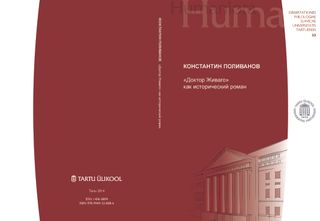
"Доктор Живаго" как исторический роман

Вып. 33. Tartu : University of Tartu Press, 2015.
Polivanov K. M.

The novel Doctor Zhivago, first published in 1957, immediately provoked critical debates that continue to this day, and has been the subject of numerous scholarly studies (C. Barnes, B. Gasparov, P. A. Jensen, A. Lavrov. M. Aucouturier, O. Raevsky-Hughes, I. Smirnov, L. Fleishman, Iu. Shcheglov, A. Khan, and many others). On one hand, Boris Pasternak’s positions (founded on his religious historiosophy) with regard to the events, people and situation that he depicts have formed one of the central topics of critical and scholarly contention. On the other hand, it is the specificity of the novel’s poetics and most centrally of its generic identity, the laws of its organization of novelistic time and problems of the prototypes of its central characters, that have served as objects of debate. It is our contention, however, that the choice of genre (that we have defined as being that of “a historical novel of a new type”) was fundamental for Pasternak and determined the entirety of the novel’s poetics. As we will demonstrate, the author was continuing the tradition of Walter Scott, which had been rejected by other contemporary Soviet authors who described the history of the twentieth century. In taking up work on the novel, Pasternak emphasized many times that he desired to present an image of the course of history of the first half of the twentieth century—the “forty- five-year era,” as he named this period several times in his letters. This dissertation describes the author’s search for a means for the artistic embodiment of contemporary events and his final choice of the “Walter Scott tradition” of historical novel for Doctor Zhivago. In this connection the work includes marked reflections of C. Dickens’ Tale of Two Cities, Pushkin’s The Captain’s Daughter and Dubrovsky, and L. Tolstoi’s War and Peace, as well as sharp polemics with historical works of prose fiction by Pasternak’s contemporaries and with the highly ideologically charged Soviet historiography. Separate consideration will be given to the specific events, situations and names that Pasternak considered it necessary to include in his narrative, presenting in this way his own version of a hierarchy of characteristic phenomena of these decades. The dissertation demonstrates that in Doctor Zhivago history is presented simultaneously as a force, organizing the actions of people and forming their characters and world-views, and also as a chain of events to be understood and made meaningful by the protagonists, and finally as an ineluctable law of human existence that has been reestablished by the force of artistic creation—by the poetry of Iurii Zhivago. At the very foundation of the Zhivago’s poetry lay the ideas of his uncle—the philosopher Vedeniapin, who defines history as an element of the Christian comprehension of the world. The central place of these characters in the novel defines the nature of Pasternak’s techniques with prototypes, by which he embeds into his characters the views, characteristics and fates of various of his contemporaries (A. Bely, A. Blok, D. Samarin, the author himself, and others). We also propose explanation of the work’s many anachronisms, which become a means for communication of the laws of the post-revolutionary period (1917-1943)—a period that “fell” out of history. At the same time we will show how historical time is reestablished in the Epilogue that completes the novel and in the “Poems of Doctor Zhivago.” This dissertation may be characterized as interdisciplinary. In it, the methods of literary- historical and intertextual analysis are applied. The text is examined in relation to social, cultural and historical phenomena of Russia during the first half of the twentieth century.
Research target: Philology and Linguistics
Language: Russian
Full text
Text on another site
Keywords: исторический роман«Доктор Живаго»Boris PasternakБ. Л. Пастернакhistorical novelDoctor Zhivagoрусская литература ХХ века20th century Russian literature
Publication based on the results of:
Функция литературной традиции и принципы изображения событий ХХ века в цикле «Болезнь» и в романе «Доктор Живаго» Бориса Пастернака (2015)
"Доктор Живаго" как исторический роман
Similar publications
Litera
NOTA BENE, 2025.
he article is devoted to the description of a voice message in order to introduce a definition of this communicative phenomenon. Despite the contradictory nature of this phenomenon, its popularity has been growing since 2013 to the present day. However, a voice message still does not have a clear definition, as it has specific characteristics ...
Added: May 27, 2026
Лингвистический анализ рекламы парфюма в англоязычном и русскоязычном дискурсах
Gabrielova E., Шевякова Ю. С., Вестник Удмуртского университета 2026 Vol. 36 No. 2 P. 344–354
In today's globalized world, the effectiveness of sales and the success of products largely rely on well-crafted advertising texts. Influenced by this factor and the growing competition, advertising continuously evolves, incorporating various linguistic, psychological, and cross-cultural techniques. This study focuses on the linguistic and stylistic analysis of perfume advertising texts within English and Russian discourses, ...
Added: May 25, 2026
On the Curse Formula in Wʿzb’s Inscription (RIÉ 192 B, ll. 5–9)
Bulakh M., Aethiopica 2025 Vol. 28 P. 39–52
The article deals with the curse formula belonging to the sixth-century inscription by an Aksumite king Wʿzb (RIÉ 192 B, ll. 5–9). After summarizing the extant interpretations, the author proposes a new reading and interpretation, arguing that the text under scrutiny follows the same pattern and employs the same rhetoric devices as the curse formulas ...
Added: May 23, 2026
Practicamos el Subjuntivo
Bocharov Y., M.: -, 2025.
This textbook is designed for students improving their Spanish proficiency at levels B1-B2. It consists of five topics and a selection of texts to reinforce them. The first topic covers the morphology of the four tenses (present, perfect, imperfect, subjunctive perfect) and exercises on the formation of forms. The remaining topics are devoted to exploring ...
Added: May 23, 2026
Эстетика аудиовизуальной журналистики. Учебное пособие. 2-е издание
Novikova A., Бережная М. А., Кирия И. В., КноРус, 2026.
The aesthetics of journalism is substantiated as a necessary component in the professional training of specialists in audiovisual media. The factors and trends of historical and current changes in the aesthetics of journalism are presented, and the aesthetic practices of audiovisual journalism are characterized in terms of their social functioning. Criteria for aesthetic evaluation are ...
Added: May 22, 2026
Juxtapositional vs. possessive-like encoding in Russian specificational constructions
Logvinova N., Russian linguistics 2026 Vol. 50 Article 11
This paper presents the first in-depth corpus-based study of a previously overlooked syntactic variation in Russian: the competition between juxtapositional (Nominative) and possessive-like (Genitive) encoding of the second noun (the term) in specificational constructions (e.g., ponjatie čest’ (notion.NOM honor.NOM) vs. ponjatie česti (notion.NOMhonor.GEN) ‘the notion of honor’). While typological research has established cross-linguistic preferences for one encoding strategy over another, intralinguistic variation ...
Added: May 18, 2026
FOCUS ON VOCABULARY Экономика материальных и нематериальных активов: корпусный словарь и ИИ-упражнения по английскому языку
Gorina O. G., Kucherenko S., Larisa K. et al., St. Petersburg: Asterion, 2026.
This textbook is an integrated teaching and learning resource for English for Specific Purposes (ESP) in the field of economics of tangible and intangible assets. Its design employs (i) modern corpus linguistics methods, including frequency analysis and keyword extraction based on authentic texts reflecting current trends in professional discourse, and (ii) artificial intelligence technologies for ...
Added: May 16, 2026
КОГНИТИВНО-АССОЦИАТИВНОЕ ПОЛЕ ОНИМОВ САНКТ-ПЕТЕРБУРГА И ВЕНЫ
Зелинская Ю. Ю., Когнитивные исследования языка 2025 № 4(65) С. 180–186
The article focuses on the study of the onym as a cognitive stimulus that facilitates the decoding of the language of urban space across two ethnic groups. The research is grounded in the analysis of results from an onomastic associative experiment, aimed at identifying the dominant types of associative responses to anthroponyms, oikodonyms, hodonyms, and ...
Added: May 16, 2026
Лично-числовая асимметрия: согласование пассивных миративов в казымском диалекте хантыйского языка
Starchenko A., Toldova S., Типология морфосинтаксических параметров 2023 Т. 6 № 1 С. 130–148
The study focuses on a previously unrecorded model of split agreement in the mirative paradigm in Kazym Khanty. Split agreement is found when comparing active and passive mirative constructions, as well as in a limited set of uses of non-finite forms. In the passive voice, unlike the active voice, the 3rd person is unmarked and the ...
Added: May 14, 2026
Глаголы перемещения веществ в славянских языках
Fedorov D., Jezikoslovni Zapiski 2026 Т. 32 № 1 С. 23–52
This article describes verbs denoting motion of liquid and dry substances in Slavic langu­ages. The research explores how Slavic languages lexicalize different situations within the semantic field of substance motion and identifies the parameters that drive this lexicalization (e.g., type of substance, intensity and quantization of flow, and causation). Adjacent gram­matical phenomena such as argument ...
Added: May 13, 2026
Образ женщины сквозь года: диахронический анализ репрезентации женщин в российской агитационной рекламе
Gabrielova E., Максименко О. И., Социальные и гуманитарные науки на Дальнем Востоке 2026 Т. 23 № 1 С. 241–249
The article presents a diachronic analysis of the representation of women in Russian advertising, based on agitation posters from 1917-1990 and social and motivational advertising materials from 2000-2020. The aim of the study is to identify the evolution of verbal and visual strategies for constructing the image of women in the changing socio-political and cultural ...
Added: May 13, 2026
Proceedings of the 9th Student Research Workshop associated with the International Conference Recent Advances in Natural Language Processing
Velichkov B., Nikolova-Koleva I., Slavcheva M., Shumen: INCOMA Ltd, 2025.
The RANLP 2025 Student Research Workshop (RANLPStud’2025) is a special track of the established international conference Recent Advances in Natural Language Processing (RANLP’2025). The RANLPStud is being organised for the 9th time and this year is running in parallel with the other tracks of the main RANLP 2025 conference. The target of RANLPStud’25 is to be a ...
Added: May 12, 2026
Обращение к форме автобиографии как способ репрезентации истории в романах Р. Грейвза «Я, Клавдий», «Божественный Клавдий»
Перевезенцева А. Ю., В кн.: Биографизм в зарубежной литературе: Материалы Международной научной конференции XXXVII Пуришевские чтения.: М.: МПГУ, 2026. С. 189–197.
В статье рассматривается специфика организации повествования в исторических романах английского писателя ХХ века Роберта Грейвза «Я, Клавдий» и «Божественный Клавдий», посвященных событиям истории Древнего Рима рубежа I в. до н.э. – I в. н.э. Романы написаны от лица императора Клавдия в форме автобиографии, обращенной к очень отдаленным потомкам. Благодаря такому подходу в дилогии наблюдается синтез объективного и субъективного начала. При этом образ ...
Added: May 11, 2026
«Плоский мир» Т. Пратчетта глазами русскоязычного фандома
Кульков А. Н., Tsvetkova M. V., Вестник Томского государственного университета. Филология 2026 № 100 С. 158–173
Впервые делается попытка рассмотреть особенности фанфикшн как акта продуктивной рецепции, возникшего на основе цикла романов Терри Пратчетта о Плоском мире в России. Проведенный анализ показывает, что прежде всего авторы фанфиков стремятся передать стилистику и комическое начало оригинального цикла Пратчетта, вне зависимости от жанра и формата создаваемых ими произведений. Фикрайтеры наиболее часто обращаются к таким форматам, ...
Added: May 10, 2026
Писац као архивист. Књижевна дела Ервина Шинка и Манеса Шпербера као историјски извори
Gužvica S., Tokovi Istorije 2026 No. 1 P. 15–52
The paper analyzes the intellectual climate and political circumstances that shaped and heavily influenced the literary imagination and the semantic horizon of two novels—The Optimists: the Novel of a Revolution by Ervin Sinkó and Like a Tear in the Ocean: A Trilogy by Manès Sperber. Besides introductory remarks and conclusion, the paper’s structure is threefold, ...
Added: May 7, 2026
Семантический ореол сакрального в четырехстопном амфибрахии: механизмы культурной памяти в поэзии Ольги Седаковой
Максимов И. В., Новый филологический вестник 2025 Т. 73 № 2 С. 187–196
The majority of studies on the metrical aspects of Olga Sedakova’s poetry focus on the formal elements of versification, rarely exploring the substantive possibilities of the chosen metres. This paper fills this gap by analyzing the unified narrative of the four-foot amphibrach, tracing its development in Russian poetry from V.A. Zhukovsky to O.A. Sedakova. At ...
Added: May 5, 2026
И еще раз о Веденяпине в «Докторе Живаго» Б. Л. Пастернака
Polivanov K. M., Русская литература 2025 № 4 С. 192–196
The article highlights one of the sources of the ideas of immortality and art, culture and history, Antiquity and modernity in B. L. Pasternak’s Doctor Zhivago. The analysis shows that as the writer worked on the novel, his ideas might have been influenced by his communications with his cousin O. M. Freydenberg, his long-term correspondent and congenial spirit. ...
Added: January 10, 2026
Воспоминания А. Ахматовой «Об Александре Блоке»: от личной легенды к трагедии эпохи
Chaban A., Русская литература 2026
The article is devoted to the reconstruction of Akhmatova's work on the text of the memoir essay "On Aleksndra Blok" (based on the material of "Notebooks" and some RGALI funds) and the analysis of the text, which suggests that by the beginning of the 1960s. this text and the poet's work as a whole had ...
Added: November 22, 2025
Как феноменология глупости объясняет графоманию? Размышление с иллюстрациями из стихов Виктора Бокова
Костомарова К. П., Uspensky P., Новое литературное обозрение 2025 № 3 С. 301–319
The article makes an attempt to expand the theoretical understanding of graphomania. The traditional approach defines it on the basis of two main criteria: the number of low-quality texts and self-perception of the author as a genius. These characteristics are insufficient for an accurate and profound analysis of the phenomenon. The article analyses the poetic ...
Added: September 25, 2025
«Марбург»: обращение Бориса Пастернака к поэтике Игоря Северянина
Левина М. Д., Шаги/Steps 2025 Т. 11 № 3 С. 225–237
In many of Boris Pasternak’s early poems, the influence of Igor Severyanin (I. V. Lotarev) can be detected. Even their contemporaries noted that Pasternak used themes, motifs and stylistic features of the older poet. Nevertheless, as is known, Pasternak very often rewrote his poems. While reworking early texts, Pasternak tried to partially free them from ...
Added: September 10, 2025
«Что значит быть евреем?..»: Б. Л. Пастернак и «еврейский вопрос»
Kunitsyn G., Русская литература 2025 № 3 С. 192–204
Статья посвящена «еврейскому вопросу» в жизни и творчестве Б. Пастернака. На основе анализа эпистолярных и художественных свидетельств делается предположение о специфической амбивалентной роли еврейского происхождения в автомифологии поэта. С одной стороны, ощущение исключенности из окружающего христианского универсума встраивается в представления Пастернака об искусстве и роли художника как одно из требующих творческого преодоления препятствий физического, детерминированного ...
Added: September 2, 2025
ЭВОЛЮЦИЯ АВТОРСКОГО МИФА В РОМАНАХ РОБЕРТА ГРЕЙВСА «ЗОЛОТОЕ РУНО» И «ЦАРЬ ИИСУС»
Перевезенцева А. Ю., В кн.: Национальные коды в европейской литературе ХIХ–XXI веков: Коллективная монография.: Издательство Нижегородского государственного университета им. Н.И. Лобачевского, 2016. С. 582–593.
The aim of this article is to analyze the evolution of myth-making oeuvre of Robert Graves, an English writer and scientist, the development of authorial concept of universal myth prevailing in the forties of the XX century. For this purpose the biographical, culture-historical, structural-descriptive, historical-genetic methods of study were used. The groundwork of the historical ...
Added: March 27, 2025
Пятисложные безударные интервалы в поэзии Б. Л. Пастернака
Polivanova D., Русская литература 2024 № 2 С. 217–226
This article analyses all the occurrences of unstressed pentasyllabic intervals in Boris Pasternak’s lyric poetry. Such intervals appear in trisyllabic meters when a single unstressed syllable is in ictic position, or when two sequential unstressed icti appear in an iambic or trochaic line. The abundance of such rhythmic phenomena is typical for Pasternak’s poetry. An ...
Added: January 15, 2025
  • About
  • About
  • Key Figures & Facts
  • Sustainability at HSE University
  • Faculties & Departments
  • International Partnerships
  • Faculty & Staff
  • HSE Buildings
  • HSE University for Persons with Disabilities
  • Public Enquiries
  • Studies
  • Admissions
  • Programme Catalogue
  • Undergraduate
  • Graduate
  • Exchange Programmes
  • Summer University
  • Summer Schools
  • Semester in Moscow
  • Business Internship
  • Research
  • International Laboratories
  • Research Centres
  • Research Projects
  • Monitoring Studies
  • Conferences & Seminars
  • Academic Jobs
  • Yasin (April) International Academic Conference on Economic and Social Development
  • Media & Resources
  • Publications by staff
  • HSE Journals
  • Publishing House
  • iq.hse.ru: commentary by HSE experts
  • Library
  • Economic & Social Data Archive
  • Video
  • HSE Repository of Socio-Economic Information
  • HSE1993–2026
  • Contacts
  • Copyright
  • Privacy Policy
  • Site Map
Edit