• A
  • A
  • A
  • АБВ
  • АБВ
  • АБВ
  • A
  • A
  • A
  • A
  • A
Обычная версия сайта
  • RU
  • EN
  • HSE University
  • Publications
  • Book chapter
  • S&T Priorities for BRICS Countries: In Search of a Win-Win Strategy
  • RU
  • EN
Расширенный поиск
Высшая школа экономики
Национальный исследовательский университет
Priority areas
  • business informatics
  • economics
  • engineering science
  • humanitarian
  • IT and mathematics
  • law
  • management
  • mathematics
  • sociology
  • state and public administration
by year
  • 2027
  • 2026
  • 2025
  • 2024
  • 2023
  • 2022
  • 2021
  • 2020
  • 2019
  • 2018
  • 2017
  • 2016
  • 2015
  • 2014
  • 2013
  • 2012
  • 2011
  • 2010
  • 2009
  • 2008
  • 2007
  • 2006
  • 2005
  • 2004
  • 2003
  • 2002
  • 2001
  • 2000
  • 1999
  • 1998
  • 1997
  • 1996
  • 1995
  • 1994
  • 1993
  • 1992
  • 1991
  • 1990
  • 1989
  • 1988
  • 1987
  • 1986
  • 1985
  • 1984
  • 1983
  • 1982
  • 1981
  • 1980
  • 1979
  • 1978
  • 1977
  • 1976
  • 1975
  • 1974
  • 1973
  • 1972
  • 1971
  • 1970
  • 1969
  • 1968
  • 1967
  • 1966
  • 1965
  • 1964
  • 1963
  • 1958
  • More
Subject
News
August 13, 2026
‘Working with AI Solves a Wide Range of Engineering Problems
Artificial intelligence is a working tool based on a balanced combination of algorithms and engineering. Experts and doctoral students from the HSE Moscow Institute of Electronics and Mathematics explain how AI technologies can improve an application, device, or system, and what engineering tasks are solved in the process.
August 12, 2026
‘I Would Like My Research to Help Make the World a Calmer and Better Place
Whatever task Saraa Ali, Junior Research Fellow at the Laboratory of Methods for Big Data Analysis (LAMBDA) of the AI and Digital Science Institute (HSE Faculty of Computer Science), is working on, she thinks about how it can benefit people. She told the Young Scientists of HSE University project about her large family, diagnosing three-phase motors, and her dream of building a children’s home in her native country.
August 11, 2026
‘The Peak of Stupidity and ‘The Valley of Despair: HSE Economists Propose an Explanation for the Dunning–Kruger Effect
The Dunning–Kruger effect, which describes a sharp surge in self-confidence among beginners followed by an equally rapid decline as they gain experience, can be explained by the nature of the learning process and the acquisition of new knowledge. This conclusion was reached by Andrey Vorchik of the HSE Faculty of Economic Sciences together with independent researcher Murat Mamyshev. They developed a mathematical model of learning and demonstrated how subjective confidence is formed and changes as knowledge accumulates, as well as how teachers can reduce the ‘valley of despair’ experienced by learners.


Have you spotted a typo?
Highlight it, click Ctrl+Enter and send us a message. Thank you for your help!

Publications
  • Books
  • Articles
  • Chapters of books
  • Working papers
  • Report a publication
  • Research at HSE

?

S&T Priorities for BRICS Countries: In Search of a Win-Win Strategy

Ch. 2. P. 31–65.
Sokolov A., Shashnov S. A., Kotsemir M. N., Grebenyuk A. Y.

Most of the developed and developing nations, including BRICS countries, have been devoting considerable attention to S&T priority setting for quite a while now, since such priorities serve as a basis for their science, technology, and innovation (STI) policies (OECD in Priority setting for public research: challenges and opportunities. OECD Publishing, Paris, 2010; BILAT-USA in Analysis of S&T priorities in public research in Europe and the USA, 2010; Gassler et al in Priorities in science & technology policy—an international comparison. Project report commissioned by the Austrian Council for Research and Technology Development, 2004; Gokhberg et al in Deploying foresight for policy and strategy makers: creating opportunities through public policies and corporate strategies in science, technology and innovation. Springer International Publishing Switzerland, Netherlands, 2016; Grebenyuk et al in Priority setting in the EU countries and the Russian Federation: The best practices, M.: National Research University Higher School of Economics, 2016; Cagnin in Foresight-Russ 8(2):46–55, 2014; Kuwahara et al in Foresight in Japan. The Handbook of Technology Foresight Concepts and Practice. 2008; Li in Research priorities and priority-setting in China. Vinnova Analysis, Vinnova, 2009; Pouris and Raphasha in Foresight STI Gov 9(3):66–79, 2015). Relevant efforts are mainly focused on solving strategic socio-economic problems, and making efficient use of national competitive advantages (OECD in Meeting global challenges through better governance. International Co-operation in Science, Technology and Innovation, OECD Publishing, Paris, 2012; European Forum on Forward Looking Activities in How to design a European foresight process that contributes to a European challenge driven R&I strategy process, European Forum on Forward Looking Activities, Policy Brief No. 2, 2015; Meissner et al. in Science, technology and innovation policy for the future. Potentials and limits of foresight studies. Springer, New York, Dordrecht, London, Heidelberg, 2013; Poznyak and Shashnov in Foresight-Russ 5(2):48–56, 2011; Sokolov and Chulok in Futures 80:17–32, 2016). S&T priorities are currently being set through a comprehensive assessment of their possible contribution to achieving sustainable socio-economic development, and strengthening the country’s competitiveness.
Language: English
Full text
DOI
Text on another site
Keywords: BRICSBRICS countriesS&T prioritiespriorities for STI cooperationwin-win strategy

In book

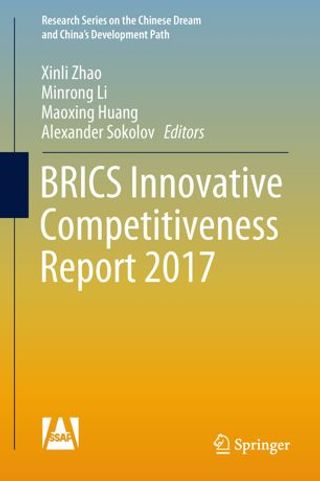
BRICS Innovative Competitiveness Report 2017
Singapore: Springer, 2018.
Similar publications
BRICS Cooperation Progress According to the BTTC Indicator System 2025/2026
M.: BRICS Expert Council – Russia, 2026.
The world experienced another turbulent year in 2025. It may well go down in future history textbooks as an inflection point in the evolution of the international order. The West, which for centuries has been universally seen as the mainstay of the global order, has shown increasing signs of implosion. It is being afflicted by ...
Added: August 12, 2026
ЕС – БРИКС: политэкономические аспекты взаимодействия
Izotov V., В кн.: Европейский союз в мировой экономике: фактор БРИКС.: Федеральное государственное бюджетное учреждение науки Институт Европы Российской академии наук, 2026. С. 115–133.
Одна из важнейших линий мировой экономики – отношения БРИКС и ЕС. Это не просто двусторонняя страновая повестка для Брюсселя, но важнейшая линия сотрудничества и конкуренции одновременно, формирующая планетарную политэкономическую динамику на десятилетия вперёд. Теоретические исследования здесь очень важны. И это не дескриптивные работы или академические «дискуссии ради дискуссий». От правильной классификации отношений ЕС – БРИКС, ...
Added: July 30, 2026
От фермы к фьючерсам: конкуренция, финансиализация и цифровизация в глобальных цепочках создания стоимости зерна. Экспертно-аналитический доклад
Ivanov A., Kotova D., Bovt S. et al., М.: Издательский дом НИУ ВШЭ, 2026.
This report presents the first comprehensive competition analysis of global grain value chains. It examines the market power of ABCD+ traders (ADM, Bunge, Cargill, Louis Dreyfus, et al.), financialization of grain trade, and the anticompetitive effects of digitalization. The report offers recommendations for BRICS competition authorities, including design principles for a BRICS Grain Exchange. ...
Added: June 22, 2026
Дискурсивная поляризация аналитических центров Бразилии, Китая, Индии и ЮАР относительно Группы двадцати и БРИКС
Voitov S., Анализ и прогноз. Журнал ИМЭМО РАН 2026 № 1 С. 70–82
The article explores the discursive differences among think tanks from Brazil, China, India, and South Africa regarding two key informal forums of global governance — BRICS and the Group of Twenty (G20). The decision to take think tanks from these countries is justified by their participation in both forums, which enables to assess how their ...
Added: June 22, 2026
Theorizing BRICS
Alexander Sergunin, , in: International Trade and Economic Development in BRICS.: Singapore: Springer, 2026. Ch. 1 P. 1–18.
This study examines how the main IR and IPE theories interpret the BRICS phenomenon. The goal is not only to evaluate the advantages and disadvantages of these theories, but also to identify their heuristic potential for studying such a complex phenomenon as the BRICS. ...
Added: June 8, 2026
International Trade and Economic Development in BRICS
Sergunin A. A., Singapore: Springer, 2026.
The central thesis of this work is that the long-term viability and coherence of BRICS will be determined not by the mere fact of its economic aggregation, but by its capacity to manage the profound tensions between its centripetal objectives and its centrifugal internal dynamics. ...
Added: June 8, 2026
Сектор НКО в России
Klimov I., В кн.: Некоммерческие организации в странах БРИКС: структура сектора и особенности развития.: BRICS Expert Council-Russia, 2026. Гл. 10 С. 193–228.
The text systematizes research, data, and analytics on the Russian nonprofit sector. The economic characteristics and their dynamics, the structure of sector financing, the specifics of interaction with the state, priority areas of activity, participation in the implementation of public policy and involvement in national projects and programs are given. It also describes the difficulties ...
Added: June 5, 2026
The non-profit sector in the BRICS countries: current structure and development trends. Executive Summary
Klimov I., Chepeleva M., Gavrilov K. et al., Civil BRICS Council, 2026.
This research study was conducted at the initiative of the Civil BRICS Council for the purpose of performing a systemic analysis of the non-profit sector (hereinafter, the ‘NPO sector’), encompassing both non-profit organizations (NPOs) and non-governmental organizations (NGOs), in each of the constituent member countries of BRICS. Since February 2025, BRICS has consisted of 10 member states: Brazil, China, ...
Added: June 5, 2026
Анализ зарубежного опыта стран БРИКС в сфере оценки и учета бюджетных обязательств в проектах государственно-частного партнерства
Biryuk D., В кн.: Государственное и муниципальное управление: актуальные проблемы и современные тренды.: СПб.: Санкт-Петербургский университет технологий управления и экономики, 2026. С. 95–99.
This article presents a comparative analysis of the practices of BRICS countries in assessing and accounting for budgetary obligations arising from concession and public-private partnership (PPP) projects. The selection of BRICS nations is justified by their status as major emerging economies actively employing PPPs for infrastructure financing and facing similar challenges in fiscal risk management. ...
Added: April 16, 2026
Критерии определения малых городов в странах БРИКС
Molodtsova V., Мокренский Д. Н., Artsybasheva K. et al., Городские исследования и практики 2026 Т. 11 № 1 С. 10–29
In the global trend towards urbanization, small towns play an essential role in ensuring balanced spatial development, serving as a link between rural and highly urbanized areas. The BRICS countries, comprising almost half of the world’s population and a significant portion of global GDP, have demonstrated a variety of approaches to working with small towns. ...
Added: March 23, 2026
Подходы к разработке типологии малых городов в контексте актуальных для России практик стран БРИКС
Познанская С. А., Molodtsova V., Мокренский Д. Н. et al., Городские исследования и практики 2026 Т. 11 № 1 С. 30–44
This article summarizes and systematizes the best international practices in the socio-economic development of small towns in BRICS countries and their applicability to the development of small towns in Russia. A typology of small towns in BRICS countries is presented, with a particular focus on four countries: China, Brazil, India, and South Africa. Small town ...
Added: March 23, 2026
BRICS and walls: A grey incidence analysis of scientific collaboration barriers in BRICS countries
Vicentin D. C., Salati Marcondes de Moraes G. H., Brandão Fischer B. et al., Technovation 2026 Vol. 150 Article 103438
International scientific collaboration among BRICS countries has intensified in recent years, particularly in the field of science, technology, and innovation (STI). Yet, the underlying cultural and institutional dynamics shaping these partnerships remain underexplored, features that are key to understanding collaborative practices among such a heterogeneous group of countries. We address this gap by investigating how ...
Added: March 11, 2026
Sociology of Inequalities in BRICS Countries
Amin N., Basu C., Castro B. et al., Palgrave Macmillan, 2026.
This book brings together original insights from diverse researchers across BRICS nations, offering a multidimensional analysis of recurring socio-economic, cultural, and political challenges. Through a comparative lens, it explores key themes such as identity formation, racialized discrimination, shifting consumption patterns, subaltern counter-publics, social engineering, indigenous knowledge systems, technological advancements, employment dynamics, and the impact of ...
Added: February 11, 2026
Цифровая повестка и интересы стран БРИКС как потенциал для сотрудничества в Арктике
Strelnikova I., Вестник Томского государственного университета 2026 № 522 С. 130–143
The Arctic, becoming the so-called bifurcation point of international relations, is of interest today not only for Arctic but also for non-Arctic countries, as well as for Russian and foreign researchers, as a new system of international relations is being formed in the region. Being in a situation of limited opportunities and sanctions pressure, Russia ...
Added: February 9, 2026
Роль международно-правового регулирования местного самоуправления в странах БРИКС
Larichev A., Журнал российского права 2025 Т. 29 № 11 С. 164–177
In addition to national norms that define the functioning of local selfgovernment in the state, there are principles and standards established in international agreements to which this state is a party. The aim of the research is to examine the systems of international norms applicable to local self-government issues in the BRICS countries and to ...
Added: February 4, 2026
Новое измерение международного сотрудничества в рамках БРИКС: международно-правовой подход
Boklan D., Московский журнал международного права 2025 No. 4 P. 24–34
INTRODUCTION. This article discusses how such principle of international law as principle of cooperation develops within the BRICS. The choice of this topic is based on the fact that today we are facing crisis of classical international organizations, such as the United Nations and the World Trade Organization on the one hand and on the ...
Added: January 22, 2026
Институциональные формы кооперативного федерализма в зарубежных странах (на примере федеративных государств - членов БРИКС)
Mazaev V. D., Кузнецов И. Н., Журнал зарубежного законодательства и сравнительного правоведения 2025 Т. 21 № 6 С. 13–24
When studying Russian federalism, the problem of dissonance inevitably arises between the constitutionally established model of cooperative federalism and the actual constitutional practice of interaction between the center and the regions. At the same time, recent constitutional and legal transformations in the Russian Federation indicate the formation of a steady trend towards strengthening cooperation between ...
Added: December 25, 2025
Patentability of Computer Program Algorithms in the G20 States
Матвеев А. Г., Martyanova Е., BRICS Law Journal 2022 P. 144–173
Ubiquitous computerization and digitalization are contributing to the unprecedented growth of the software market. Computer programs are protected as subject of copyright law in international law and domestic legal systems. However, copyright law does not protect the interests of the copyright holder from borrowing ideas and algorithms which often have agreat commercial value. This circumstance ...
Added: December 24, 2025
Computer Information Crimes and Other Cybercrimes: Comparative Legal Analysis of the Legislation of the BRICS Countries
Pushkarev V. V., Solomatina A., BRICS Law Journal 2025 Vol. 12 No. 4 P. 167–190
Modern society has witnessed the rapid pace at which the digital transformation is taking place in all public spheres without any exception. In parallel, there are obvious and dangerous processes of crime digitalization, with unprecedented growth rate of crimes committed using information and telecommunication technologies. With the development of information technology and the expansion of ...
Added: December 9, 2025
  • About
  • About
  • Key Figures & Facts
  • Sustainability at HSE University
  • Faculties & Departments
  • International Partnerships
  • Faculty & Staff
  • HSE Buildings
  • HSE University for Persons with Disabilities
  • Public Enquiries
  • Studies
  • Admissions
  • Programme Catalogue
  • Undergraduate
  • Graduate
  • Exchange Programmes
  • Summer University
  • Summer Schools
  • Semester in Moscow
  • Business Internship
  • Research
  • International Laboratories
  • Research Centres
  • Research Projects
  • Monitoring Studies
  • Conferences & Seminars
  • Academic Jobs
  • Yasin (April) International Academic Conference on Economic and Social Development
  • Media & Resources
  • Publications by staff
  • HSE Journals
  • Publishing House
  • iq.hse.ru: commentary by HSE experts
  • Library
  • Economic & Social Data Archive
  • Video
  • HSE Repository of Socio-Economic Information
  • HSE1993–2026
  • Contacts
  • Copyright
  • Privacy Policy
  • Site Map
Edit