• A
  • A
  • A
  • АБВ
  • АБВ
  • АБВ
  • A
  • A
  • A
  • A
  • A
Обычная версия сайта
  • RU
  • EN
  • HSE University
  • Publications
  • Books
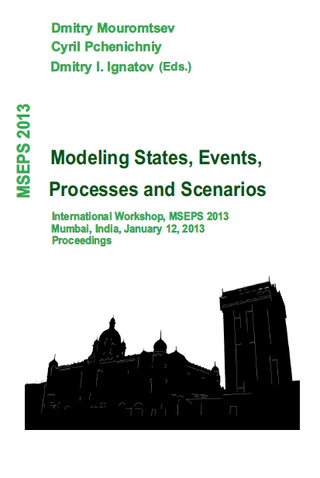
  • MSEPS 2013 -- Modeling States, Events, Processes and Scenarios, The proceedings
  • RU
  • EN
Расширенный поиск
Высшая школа экономики
Национальный исследовательский университет
Priority areas
  • business informatics
  • economics
  • engineering science
  • humanitarian
  • IT and mathematics
  • law
  • management
  • mathematics
  • sociology
  • state and public administration
by year
  • 2027
  • 2026
  • 2025
  • 2024
  • 2023
  • 2022
  • 2021
  • 2020
  • 2019
  • 2018
  • 2017
  • 2016
  • 2015
  • 2014
  • 2013
  • 2012
  • 2011
  • 2010
  • 2009
  • 2008
  • 2007
  • 2006
  • 2005
  • 2004
  • 2003
  • 2002
  • 2001
  • 2000
  • 1999
  • 1998
  • 1997
  • 1996
  • 1995
  • 1994
  • 1993
  • 1992
  • 1991
  • 1990
  • 1989
  • 1988
  • 1987
  • 1986
  • 1985
  • 1984
  • 1983
  • 1982
  • 1981
  • 1980
  • 1979
  • 1978
  • 1977
  • 1976
  • 1975
  • 1974
  • 1973
  • 1972
  • 1971
  • 1970
  • 1969
  • 1968
  • 1967
  • 1966
  • 1965
  • 1964
  • 1963
  • 1958
  • More
Subject
News
August 25, 2026
Scientists Develop Algorithm for More Reliable Processors in Data Centres
Researchers from HSE MIEM and Samara University have developed the LRF-3D algorithm to automatically bypass idle nodes in three-dimensional networks-on-chip. Thanks to its hierarchical architecture, the algorithm outperforms existing solutions in both speed and path accuracy, improving processor reliability for use in data centres, supercomputers, and AI computing. The source code and test results are publicly available.
August 24, 2026
Researchers Develop Method for Direct Generation of Regulatory DNA
Researchers at HSE University have developed a model for generating promoters and enhancers—DNA sequences that regulate gene activity. The model works directly with DNA nucleotides, without first transforming them into a continuous numerical representation. This solution could be useful for applications in synthetic biology and gene therapy. The study results were presented at the ICLR 2026 Workshop ‘Generative AI in Genomics (Gen^2): Barriers and Frontiers.’
August 21, 2026
Social Integration: At the Crossroads of Knowledge and Values
The International Laboratory for Social Integration Research (ILSIR) at HSE University studies the challenges faced by vulnerable groups and explores ways to help them participate fully in everyday life. To develop effective solutions, the laboratory’s researchers combine cutting-edge methods with practical fieldwork. In this interview with the HSE News Service, Laboratory Head Elena Iarskaia-Smirnova discusses the laboratory’s work.


Have you spotted a typo?
Highlight it, click Ctrl+Enter and send us a message. Thank you for your help!

Publications
  • Books
  • Articles
  • Chapters of books
  • Working papers
  • Report a publication
  • Research at HSE

?

MSEPS 2013 -- Modeling States, Events, Processes and Scenarios, The proceedings

M. : HSE, 2013.
Academic editor: Д. И. Муромцев, К. Пшеничный, Ignatov D. I.

Human reasoning uses to distinguish things that do change and things do not. The latter are commonly expressed in the reasoning as objects, which may represent classes or instances, and classes being further divided into concept types and relation types. These became the main issue of knowledge engineering and have been well tractable by computer. The former kind of things, meanwhile, inevitably evokes consideration not only of a ``thing-that-changes'' but also of ``change-of-a-thing'' and thus claims that the change itself be another entity that needs to be comprehended and handled. This special entity, being treated from different perspectives as event, (changeable) state, transformation, process, scenario and the like, remains a controversial philosophical, linguistic and scientific entity and has gained notably less systematic attention by knowledge engineers than non-changing things.   In particular, there is no clarity in how to express the change in knowledge engineering -– as some specific concept or relation type, as a statement, or proposition, in which subject is related to predicate(s), or in another way. There seems to be an agreement among the scientists that time has to be related, explicitly or implicitly, to everything we regard as change -– but the way it should be related, and whether this should be exactly the time or some generic property or condition, is also an issue of debate.   To bring together the researchers who study representation of change in knowledge engineering both in fundamental and applied aspects, a workshop on Modeling States, Events, Processes and Scenarios (MSEPS 2013) was run on 12 January, 2013, in the framework of the 20th International Conference on Conceptual Structures (ICCS 2013) in Mumbai, India. Seven submissions were selected for presentation that cover major approaches to representation of the change and address such diverse domains of knowledge as biology, geology, oceanography, physics, chemistry and also some multidisciplinary contexts.   Concept maps of biological and other transformations were presented by Meena Kharatmal and Nagarjuna Gadiradju. Their approach stems from conceptual graphs of Sowa and represents the vision of change as a particular type of concept or, likely, relation, defined by meaning rather than by formal properties.   The work of Prima Gustiene and Remigijus Gustas follows a congenial approach but develops a different notation for representation of the change based on specified actor dependencies in application to business issues concerning privacy-related data.   Nataly Zhukova, Oksana Smirnova and Dmitry Ignatov explore the structure of oceanographic data in concern of opportunity of their representation by event ontologies and conceptual graphs. Vladimir Anokhin and Biju Longhinos examine another Earth science, geotectonics, and demonstrate that its long-lasting methodological problems urge application of knowledge engineering methods, primarily engineering of knowledge about events and processes. They suggest a draft of application strategy of knowledge engineering in geotectonics and claim for a joint interdisciplinary effort in this direction.   Doji Lokku and Anuradha Alladi introduce a concept of ``purposefulness'' for any human action and suggest a modeling approach based on it in the systems theory context. In this approach, intellectual means for reaching a purpose are regarded either as structure of a system, in which the purpose is achieved, or as a process that takes place in this system. These means are exposed to different concerns of knowledge, which may be either favorable or not to achieving the purpose. The resulting framework perhaps can be described in a conceptual-graph-related way but is also obviously interpretable as a statement-based pattern, more or less resembling the event bush (Pshenichny et al., 2009).   This binds all the aforementioned works with the last two contributions, which represent an approach based on understanding of the change as a succession of events (including at least one event), the latter being expressed as a statement with one subject and finite number of predicates. The method of event bush that materializes this approach, previously applied mostly in the geosciences, is demonstrated here in application to physical modeling by Cyril Pshenichny, Roberto Carniel and Paolo Diviacco and to chemical and experimental issues, by Cyril Pshenichny. The reported results and their discussion form an agenda for future meetings, discussions and publications. This agenda includes, though is not limited to,     - logical tools for processes modeling, - visual notations for dynamic knowledge representation, - graph languages and graph semantics, - semantic science applications, - event-driven reasoning, - ontological modeling of events and time, - process mining, - modeling of events, states, processes and scenarios in particular domains and interdisciplinary contexts.     The workshop has marked the formation of a new sub-discipline in the knowledge engineering, and future effort will be directed to consolidate its conceptual base and transform the existing diversity of approaches to representation of the change into an arsenal of complementary tools sharpened for various spectral regions of tasks in different domains.        
Research target: Earth Sciences Biology Computer Science
Priority areas: IT and mathematics business informatics engineering science
Language: English
Full text
Keywords: концептуальное моделированиеонтологическое моделированиеontological modelingknowledge representationпредставление знанийprocess miningmodeling of events, states, processes and scenariosgeoinformaticsанализ процессовмоделирование событий, состояний, процессов и сценариевмоделирование в науках о землегеоинформатика
MSEPS 2013 -- Modeling States, Events, Processes and Scenarios, The proceedings
Similar publications
An adaptive image watermarking scheme using cooperation of HBA and RSA metaheuristics
Melman A., Evsyutin O., Journal of the Franklin Institute 2026 Vol. 363 No. 15 Article 109005
Open access to images creates opportunities for violation of the authors' rights. Digital watermarks can be used to securely publish images online. They are invisibly added into the images before publication and can be extracted at any time to verify ownership. However, achieving a balance between embedding imperceptibility and robustness to image processing operations is ...
Added: August 25, 2026
Proceedings of the 2026 12th International Conference on Control, Decision and Information Technologies (CoDIT) (Italy, Bari, July 13–16, 2026)
IEEE, 2026.
It is with great pleasure that we welcome all the participants of the 12th Conference on Control, Decision and Information Technologies (CoDIT 2026) at the Polytechnic University of Bari – Orabona Street 4, 70125 Bari, Italy, July 13-16, 2026. CoDIT has grown to become one of the largest conferences organized in Europe and in the ...
Added: August 24, 2026
Прогностическое значение полигенного профиля риска при дилатационной кардиомиопатии: анализ краткосрочной выживаемости
Кубкин Я. В., Российский кардиологический журнал 2026 Т. 31 № 8S
Goal. To assess the contribution of polygenic risk scores to the short‑term mortality prediction model in patients with dilated cardiomyopathy (DCM). Materials and methods. The study included 137 patients with DCM. The mean age was 56.8 ± 13.5 years; there were 115 men (83.9 %). The median follow‑up period was 17 [13; 22] months. During the follow‑up period, 26 ...
Added: August 24, 2026
On calibration of remote sensing retrievals of ecosystem respiration (Reco) with tower measurements over,Russian forests and wetlands
Shabanov N., Kuricheva O., Kurbatova J. et al., / Series Working Papers SSRN "Department of Economics Ca’ Foscari University of Venice". 2026.
The carbon balance of an ecosystem is the difference between Gross Primary Productivity (GPP) and Ecosystem Respiration (Reco) as expressed by Net Ecosystem Exchange (NEE). While remote sensing retrievals of GPP have reached maturity, Reco estimation remains underexplored and ultimately cast bias on NEE. Here we present an end-to-end multi-scale analysis of the mechanism of ...
Added: August 21, 2026
From data to knowledge: artificial intelligence methods for studying comorbidity in electronic health records
Лукьяненко Д. В., Ragimova A., Мухорина А. et al., European Physical Journal: Special Topics 2026 P. 1–24
Electronic health records (EHRs) contain vast volumes of clinical information that encode complex relationships between diseases. Traditional approaches to the analysis of interrelated or co-occurring diseases have focused on pairwise associations between diagnoses, missing the higher-order structures that characterise multimorbid patients. The present paper offers a narrative review of existing statistical, machine-learning, and artificial intelligence ...
Added: August 20, 2026
Proceedings of the Generative Code Intelligence Workshop (GeCoIn 2026), co-located with the 35th International Joint Conference on Artificial Intelligence (IJCAI-ECAI 2026)
CEUR-WS.org, 2026.
The second edition of the Generative Code Intelligence Workshop (GeCoIn 2026) was held in conjunction with the 35th International Joint Conference on Artificial Intelligence (IJCAI-ECAI 2026), in Bremen, Germany, August 16, 2026. The workshop arose from the desire to bring together a research community that has, in recent years, witnessed rapid progress in the application ...
Added: August 20, 2026
MM-PSYCHE: Multimodal Multitask Psychological Characteristic Estimation Through Cross-Domain Semi-Supervised Learning
Ryumina E., Aksenov A., Koryakovskaya D. et al., IEEE Access 2026 Vol. 14 P. 124759–124778
Psychological characteristic estimation from multimodal in-the-wild behavior is usually studied using separate corpora, each annotated for a single target task. Such annotation fragmentation limits cross-task learning and cross-domain generalization across affective, dispositional, and interactional phenomena. To address this problem, we use emotion, apparent personality trait, and ambivalence recognition as representative tasks and introduce MM-PSYCHE, a ...
Added: August 20, 2026
Proceedings of the 1st Workshop on Linguistic Analysis for Health (HeaLing 2026)
Association for Computational Linguistics, 2026.
19th Conference of the European Chapter of the Association for Computational Linguistics, Workshop on Linguistic Analysis for Health (2026) ...
Added: August 19, 2026
Updating legacy soil map reveals spatial soil-class probabilities
Gorbacheva A., Krenke A., Puzachenko M. et al., Geoderma Regional 2026 Vol. 46 Article e01124
Legacy soil maps remain essential for national land-use planning. However, their thematic accuracy and spatial resolution are often insufficient for contemporary applications requiring reliable estimates. This study presents a digital soil-mapping approach to update legacy soil information without extensive field sampling, demonstrated for arable lands in the Republic of Tatarstan (4.5 million ha). The proposed ...
Added: August 18, 2026
Hypergraphs from multivariate connectivity: caCOH-based EEG/MEG representation
Vlasenko D., Saranskaia I., Zakharov D., European Physical Journal: Special Topics 2026 P. 1–16
Hypergraphs provide a natural framework for representing neurophysiological interactions distributed across sets of sensors. A key methodological question is how hyperedges should be defined from frequency-resolved electroencephalography/magnetoencephalography (EEG/MEG) data. We demonstrate a construction strategy in which hyperedges are obtained from canonical coherence (caCOH), an extension of coherence that estimates coupling between multidimensional signal spaces. To ...
Added: August 18, 2026
Localization in Medical Imaging: A Unified AI Approach for Ovaries, Follicles, and Vertebral Arteries
Moshkin A., Fedorov M., Arlazarov V. et al., Algorithms 2026 Vol. 19 No. 7 Article 523
Artificial intelligence (AI) technologies, which are being actively developed in modern medicine today, increase the speed and quality of patient care. This article mainly seeks to demonstrate the use of various options of computer analysis of clinical images to solve practical problems of increasing the efficiency of routine diagnostics using retrospective analysis, as well as ...
Added: August 17, 2026
Innovation in Medicine and Healthcare
CHEN Y., Howlett R. J., Tanaka S. et al., Springer, 2026.
The Smart Innovation, Systems and Technologies book series encompasses the topics of knowledge, intelligence, innovation and sustainability. The aim of the series is to make available a platform for the publication of books on all aspects of single and multi-disciplinary research on these themes in order to make the latest results available in a readily-accessible ...
Added: August 16, 2026
Two-dimensional Fourier transform as a tool for identification of coherent patterns in spiking neuronal networks
Khorunzheva K., Postnikov E., Zakharov D., Chaos, Solitons and Fractals 2026 Vol. 212 No. 2 P. 1–12
Identification of coherent states of spiking neural networks is a fundamental problem of synchronization theory but conventional methods are computationally expensive. We apply the crystallographic ideas of processing periodic structures to the analysis of various states of spiking neuronal networks. In particular, the introduced approach is based on the application of two-dimensional Fourier transform to rasterplots. By the position ...
Added: August 13, 2026
Generative geospatial modelling with geometric algebra
Yu Z., Wang J., Wang Z. et al., Philosophical Transactions of the Royal Society A: Mathematical, Physical and Engineering Sciences 2026 Vol. 384 P. 1–16
The integration of data-driven and knowledge-driven approaches in generative geospatial modelling (GGM) is often hindered by their mathematical incompatibilities. Here, we propose a geometric algebra (GA)-based framework that employs a unified multi-vector representation to fuse heterogeneous data and diverse knowledge. The framework facilitates structured reasoning and hypothesis generation through a task-adaptable, five-stage cycle: representation, reasoning, ...
Added: August 13, 2026
Empowering Novel Geometric Algebra for Graphics and Engineering. ENGAGE 2025 (Hong Kong, July 14, 2025), Lecture Notes in Computer Science
Cham: Springer, 2026.
This book constitutes the proceedings of the 10th International Workshop Empowering Novel Geometric Algebra for Graphics and Engineering, ENGAGE 2025, held in conjunction with Computer Graphics International conference, CGI 2025, in Hong Kong, China, on July 14, 2025. The 14 full papers included in this volume were carefully reviewed and selected from 16 submissions. The papers ...
Added: August 13, 2026
Reconstruction of EEG signals using next-generation reservoir computing
Ratnikov F., European Physical Journal: Special Topics 2026 P. 1–10
EEG recordings are often affected by the loss or corruption of individual channels due to electrode detachment, poor scalp contact, or external interference. Such channels must be accurately reconstructed before further analysis. In this study, we investigate Next-Generation Reservoir Computing (NG-RC) as a data-driven approach for reconstructing corrupted EEG channels and compare its performance with ...
Added: August 12, 2026
CAD2TechSpec: a framework for automating design processes within computer-aided design systems
Minets M., Krasnozhenov G., Trofimova E. et al., PeerJ Computer Science 2026 Vol. 12 Article e4063
This article presents CAD2TechSpec, a novel framework for automating design processes within computer-aided design (CAD) systems by leveraging multimodal large language models (LLMs). The framework enables the analysis and generation of detailed design specifications, including the automated creation of machining process plans. Our system architecture combines 3D model rendering, dimensionality reduction techniques, and the capabilities ...
Added: August 12, 2026
Parametric study of hand dorsal vein biometric recognition vulnerability to spoofing attacks
Мизинов П. В., Journal of Computer Virology and Hacking Techniques 2023 No. 20 P. 383–396
Biometric vein recognition systems are vulnerable to presentation attacks. Traditionally, researchers have used a near-infrared (NIR) drawing of the user’s vascular bed to create a presentation attack instrument (PAI). This paper investigates the feasibility of using free software to capture a venous pattern of the hand without NIR under normal lighting conditions and to create ...
Added: August 11, 2026
HPRC2: A human pangenome reference with near-complete coverage of common genetic variation
Lucas J., Hebbar P., Ryabov F. et al., / Series 10.64898/2026.07.21.739710 "10.64898/2026.07.21.739710". 2026.
A pangenome reference overcomes the inherent limitation of any individual reference genome by integrating the variation present in a population. We present the Human Pangenome Reference Consortium’s (HPRC) Release 2 (HPRC2), an openly available, second phase pangenome that is an approximately fivefold expansion in genome number over HPRC Release 1 (HPRC1) and measurable improvement in ...
Added: August 10, 2026
Three Algorithms for Merging Hierarchical Navigable Small World Graphs
Ponomarenko A., / Series Computer Science "arxiv.org". 2025.
This paper addresses the challenge of merging hierarchical navigable small world (HNSW) graphs, a critical operation for distributed systems, incremental indexing, and database compaction. We propose three algorithms for this task: Naive Graph Merge (NGM), Intra Graph Traversal Merge (IGTM), and Cross Graph Traversal Merge (CGTM). These algorithms differ in their approach to vertex selection ...
Added: July 30, 2026
Growth in noncommutative algebras and entropy in derived categories
Piontkovski D., / Series arXiv "math". 2026.
A noncommutative projective variety is defined, following Artin and Zhang, by a graded coherent algebra 𝐴. The category of coherent sheaves is then the quotient qgr(𝐴) of the category of finitely presented graded modules by the subcategory of torsion modules. We consider the categorical and polynomial entropies of the Serre twist, that is, of the ...
Added: June 23, 2026
Multilinear nilalgebras and the Jacobian theorem
Piontkovski D., / Series arXiv "math". 2025.
If a symmetric multilinear algebra is weakly nil, then it is Engel. This result may be regarded as an infinite-dimensional analogue of the well-known Jacobian theorem, which states that if a polynomial mapping has a polynomial inverse, then its Jacobian matrix is invertible. This refines a theorem of Gerstenhaber and partially answers a question posed ...
Added: June 23, 2026
Разрешение споров при помощи абстрактных аргументационных структур и его автоматизация на примере научного рецензирования
Lisanyuk E., Прокудин Д. Е., Баймуратов И. Р., Вестник Санкт-Петербургского университета. Философия и конфликтология 2026 Т. 42 № 1 С. 118–130
The process of reviewing scientific publications is hampered by the constant increase in the volume of submissions and the bias of reviewers. Artificial intelligence can speed up the scientific review process, but it is also capable of reproducing the biases embedded in the training data. We propose a formal method for representing and analyzing arguments, ...
Added: June 21, 2026
ML-based Fast Simulation of FARICH Responses
Shipilov F., Barnyakov A., Ivanov A. et al., / Series Physics "arxiv.org". 2026.
A fast simulation of the detector response is a vital task in high-energy physics (HEP). Traditional Monte-Carlo methods form the backbone of modern particle physics simulation software but are computationally expensive. We present a machine-learning-based approach to fast simulation of the Focusing Aerogel Ring Imaging Cherenkov (FARICH) detector response. Given a particle track and momentum, ...
Added: May 19, 2026
  • About
  • About
  • Key Figures & Facts
  • Sustainability at HSE University
  • Faculties & Departments
  • International Partnerships
  • Faculty & Staff
  • HSE Buildings
  • HSE University for Persons with Disabilities
  • Public Enquiries
  • Studies
  • Admissions
  • Programme Catalogue
  • Undergraduate
  • Graduate
  • Exchange Programmes
  • Summer University
  • Summer Schools
  • Semester in Moscow
  • Business Internship
  • Research
  • International Laboratories
  • Research Centres
  • Research Projects
  • Monitoring Studies
  • Conferences & Seminars
  • Academic Jobs
  • Yasin (April) International Academic Conference on Economic and Social Development
  • Media & Resources
  • Publications by staff
  • HSE Journals
  • Publishing House
  • iq.hse.ru: commentary by HSE experts
  • Library
  • Economic & Social Data Archive
  • Video
  • HSE Repository of Socio-Economic Information
  • HSE1993–2026
  • Contacts
  • Copyright
  • Privacy Policy
  • Site Map
Edit