?
Jewish Refugees, Local Jews, and Soviet Jewish Functionaries in Soviet-Annexed Western Belorussia, 1939–1941
P. 23–52.
Following the division of the territory of Poland between Germany and the Soviet Union in September 1939, the USSR gained more than 12 million former Polish citizens, among which some 10 percent were Jews.1 Further, the actual number of Jews in the newly annexed region increased with the arrival of refugees from the Generalgouvernement (part of the Polish territory occupied by the Third Reich). The vast majority of these were Jews who fled to Soviet territory to save themselves from Nazi persecution. The article is devoted to this historical subject
Кровицкая А. В., Попов Д. И., Кравченко А. А. et al., Judaic-Slavic Journal 2024 № 11-12 С. 133–186
The collective research deals with the representation of the Holocaust memory in the media of Central-Eastern and Northern Europe in the second decade of the XXI century on the example of Germany, Austria, Poland, Lithuania, Latvia, Estonia, Sweden, Denmark, and Norway. Each of these states, the article argues, is characterized by its own distinct memory ...
Added: May 13, 2026
Власов Е. Э., East European Jewish Affairs 2026
The present study answers the question of how Moscow's monuments and museums - "Sites of Memory" of the Holocaust – were conceived, negotiated, and materially realized in the 1990s, and analyzes how these memorials construct and sustain a post‑Soviet memory of Jews murdered by the Nazis. The theoretical framework encompasses conceptual apparatus from memory studies, ...
Added: May 10, 2026
Arkhipov A., Социология власти 2023 Т. 35 № 1 С. 93–117
In the first part of this paper, the author proceeds to identify and clarify three categories that are distinctive for the social philosophy of genocides: aim, subject, and method. The clarification of these categories makes meaningful the social philosophy of genocides. This makes it possible to distinguish between the social philosophy of genocides — and ...
Added: March 21, 2026
Власов Е. Э., Judaic-Slavic Journal 2024 № 1-2 С. 94–108
The site of the mass murder of Mountain Jews by the Nazis in the village of Bogdanovka, Stavropol Krai, is a place where several “memories” converge, supported by different players in the field of Politics of Memory. These memories include the Holocaust, specifically the fate of Mountain Jews, as well as the Holocaust more generally, ...
Added: July 18, 2025
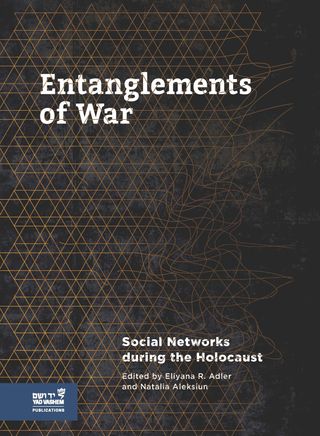
Yad Vashem, 2022.
The Nazi persecution and murder of the Jews of Europe led to the atomization of the social relationships of the victims. Families were ripped apart. Entire communities were ghettoized and isolated from the outside world. The forced removal of the Jews from the midst of the non-Jewish population facilitated the crimes committed against them, significantly ...
Added: August 26, 2024
Polian P. M., В кн.: Герасимова И.П. Марш жизни. О Николае Киселеве и спасенных им евреях.: М.: Книжники, 2023. С. 11–32.
This is the preface to the re-release of I. Gerasimova’s documentary book “March of Life”, dedicated to the history of the rescue of more than 200 Belarusian Jews by partisan Nikolai Kiselev and his comrades. ...
Added: November 1, 2023
Andrei B. Moroz, , in: The belarusian shtetl. History and memory.: Bloomington: Indiana University Press, 2023. Ch. 4 P. 95–114.
Based on field data, the article discusses folkloric versions explaining Hitler's hatred of Jews. The texts in question were recorded mainly in the territories that were part of the Pale of Settlement, from older people who either themselves had contacts with Jews, mainly before the World War II, or heard a lot about them from ...
Added: October 24, 2023
Estraikh G., Holocaust and Genocide Studies 2022 Vol. 36 No. 1 P. 60–73
A strict ban on organized Jewish activities apart from those of a limited number of religious bodies, coupled with the state monopoly on all publishing, simplified the Soviet Union’s control over Holocaust-related publication. The appearance of any such work was an idiosyncratic event, associated with concurrent political and cultural contexts and official agendas. The relatively ...
Added: December 8, 2022
Polian P. M., М.: Зебра Е, 2022.
Киевский овраг Бабий Яр – одна из «столиц» Холокоста, место рекордного единовременного убийства евреев, вероломно, под угрозой смерти, собранных сюда якобы для выселения. Почти 34 тысяч расстрелянных всего за полтора дня – 29 и 30 сентября 1941 года – трагический рекорд, полпроцента Холокоста! Бабий Яр – это архетип расстрельного Холокоста, это резиденция смерти – своего ...
Added: October 31, 2022
Budnitskii O., Engel D., Estraikh G. et al., NY: New York University Press, 2022.
The book explores how the Soviet Union’s changing relations with Nazi Germany between the signing of a nonaggression pact in August 1939 and the Soviet victory over German forces in World War II affected the lives of some five million Jews who lived under Soviet rule at the beginning of that period. Nearly three million ...
Added: October 29, 2022
Moroz A., Judaic-Slavic Journal 2021 № 2(6) С. 155–172
Based on field data, the article discusses folkloric versions explaining Hitler’s
hatred of Jews. The texts in question were recorded mainly in the territories that were
part of the Pale of Settlement, from older people who either themselves had contacts
with Jews, mainly before the World War II, or heard a lot about them from their parents.
The versions ...
Added: October 28, 2022
Khderi K., Вестник Российского университета дружбы народов. Серия: Всеобщая история 2017 Т. 9 № 4 С. 331–340
Своими корнями антисемитизм уходит далеко в прошлое. Сегодня представляется невозможным определить, был ли антисемитизм на протяжении столетий в Германии сильнее, чем в других странах Европы (Франция, Польша, Россия), поскольку с точки зрения исторической науки такие явления, как ненависть, предрассудки, не поддаются точным измерениям. Однако наибольшего расцвета ненависть и предрассудки в отноше-нии евреев достигли именно в ...
Added: October 28, 2022