• A
  • A
  • A
  • АБВ
  • АБВ
  • АБВ
  • A
  • A
  • A
  • A
  • A
Обычная версия сайта
  • RU
  • EN
  • HSE University
  • Publications
  • Book chapter
  • Аналитический обзор практики защиты прав студентов на примере опыта Высшей школы экономики
  • RU
  • EN
Расширенный поиск
Высшая школа экономики
Национальный исследовательский университет
Priority areas
  • business informatics
  • economics
  • engineering science
  • humanitarian
  • IT and mathematics
  • law
  • management
  • mathematics
  • sociology
  • state and public administration
by year
  • 2027
  • 2026
  • 2025
  • 2024
  • 2023
  • 2022
  • 2021
  • 2020
  • 2019
  • 2018
  • 2017
  • 2016
  • 2015
  • 2014
  • 2013
  • 2012
  • 2011
  • 2010
  • 2009
  • 2008
  • 2007
  • 2006
  • 2005
  • 2004
  • 2003
  • 2002
  • 2001
  • 2000
  • 1999
  • 1998
  • 1997
  • 1996
  • 1995
  • 1994
  • 1993
  • 1992
  • 1991
  • 1990
  • 1989
  • 1988
  • 1987
  • 1986
  • 1985
  • 1984
  • 1983
  • 1982
  • 1981
  • 1980
  • 1979
  • 1978
  • 1977
  • 1976
  • 1975
  • 1974
  • 1973
  • 1972
  • 1971
  • 1970
  • 1969
  • 1968
  • 1967
  • 1966
  • 1965
  • 1964
  • 1963
  • 1958
  • More
Subject
News
May 25, 2026
HSE Scientists Train Neural Network to 'Hear' Faults in Electric Motors
Researchers at the AI and Digital Science Institute of the HSE Faculty of Computer Science have developed a new method—the Signature-Guided Data Augmentation (SGDA) framework—that achieves 99% accuracy in motor fault detection and 86% accuracy in fault classification. The application of this approach can reduce industrial equipment repair costs, minimise downtime, and improve production safety. The study results have been published in Engineering Applications of Artificial Intelligence.
May 25, 2026
'The Humanities Serve as a Conscience'
Maria Mizernaia studies Soviet literature and the history of book publishing. In this interview for the HSE Young Scientists project, she discusses plans to publish a novel about besieged Leningrad, AI-provoked reflections on what it means to be human, and how novels can help satisfy our dopamine hunger.
May 25, 2026
Is It Possible to Predict a Citys Life Based on the Shape of Its Neighbourhoods?
Is it possible to predict, based on the configuration of streets and buildings, where a café will open or where traffic congestion will occur? Participants in the Spatial Analysis and Modelling of Urban Processes research and study group use open data and machine learning to identify universal patterns. Alexander Sheludkov and Eduard Somov discuss the purpose of comparing cities, the need for new forms of urban statistics, and how open data is transforming approaches to urban studies.


Have you spotted a typo?
Highlight it, click Ctrl+Enter and send us a message. Thank you for your help!

Publications
  • Books
  • Articles
  • Chapters of books
  • Working papers
  • Report a publication
  • Research at HSE

?

Аналитический обзор практики защиты прав студентов на примере опыта Высшей школы экономики

С. 29–33.
Морозов Д. А., Puchkov E.
Language: Russian
Full text
Keywords: права студентовстуденческое самоуправление

In book

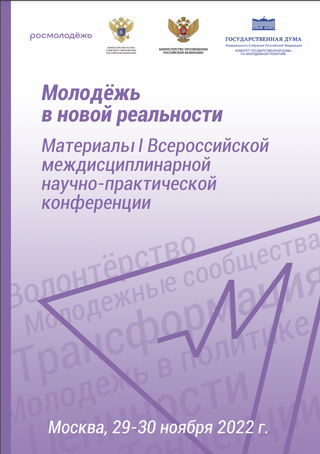
Молодежь в новой реальности. Материалы I Всероссийской междисциплинарной научно-практической конференции
М.: ЭйПиСиПаблишинг, 2022.
Similar publications
Культуры вовлеченности в студенческое самоуправление в российских вузах: тусовщики, прагматики и граждане
Efimov D. B., Batischev A., Kostyuk A. et al., Вопросы образования 2024 № 4 С. 61–94
The aim of this research is to explore the main models of student engagement in university self-government in Russia, to understand and categorize what drives the students’ participation in these institutions. The main content of the paper is based on a multi-stage coding and thematic analysis of 72 interviews conducted in the autumn of 2022 ...
Added: December 27, 2024
Мотивация участия в работе органов студенческого самоуправления
Matveeva M., В кн.: ГУМАНИТАРНЫЙ ФОРУМ В ПОЛИТЕХНИЧЕСКОМ. Материалы II Всероссийской молодежной научно-практической конференции. В 2-х томахТ. 1.: СПб.: Политех-Пресс, 2023. С. 415–422.
В статье студенческое самоуправление анализируется через призму теории полей и капитала. Подход позволяет объяснить мотивацию индивидов к выбору участия в органах студенческого самоуправления, производится сравнение с мотивацией вовлечения в волонтерскую деятельность. Приводится четырехсекционная модель мотивации и описываются категории восприятия последствий деятельности членов студенческого самоуправления. Характеризуется внутренний порядок полей студенческого самоуправления и анализируется степень их автономности ...
Added: September 6, 2023
Целеполагание участников студенческого самоуправления
Matveeva M., Kulyulina N., В кн.: Молодежь в новой реальности. Материалы I Всероссийской междисциплинарной научно-практической конференции.: М.: ЭйПиСиПаблишинг, 2022. С. 16–21.
Развитие органов студенческого самоуправления в противовес тенденции к раннему карьерному старту студентов акцентирует внимание на мотивах участия студентов в данных органах. Результаты исследования заставили нас отказаться от классического разделения мотивации к участию на внутреннюю и внешнюю в пользу четырехчастной структуры. Помимо этого, были классифицированы причины предпочтения участия в студенческом самоуправлении в противопоставлении выходу на рынок ...
Added: April 14, 2023
Студенческое представительство в университетском управлении: факторы вовлеченности
Efimov D. B., Мониторинг общественного мнения: Экономические и социальные перемены 2022 № 2 С. 140–167
The article is devoted to student representation, as an aspect of university management that is underinvestigated in Russia, but important in the world context. Based on previous studies on students` representation the author tests the key hypotheses on its possible determinants using dataset on elections of student representation bodies in the Higher School of Economics ...
Added: May 13, 2022
Устройство и деятельность университетского студенческого представительства в современной России
Efimov D. B., Вопросы образования 2021 № 4 С. 74–96
One of the key objectives in higher education governance today is to establish mechanisms for effective student representation. This paper, based on a study of the practices of 50 leading Russian universities—federal universities, national research universities, Project 5–100 universities, and universities included in the QS World University Rankings as of summer–fall 2020—reveals and summarizes the ...
Added: January 8, 2022
Изучение университетских органов студенческого представительства: состояние, проблемы, перспективы
Efimov D. B., Университетское управление: практика и анализ 2020 Т. 24 № 3 С. 105–121
В данной концептуальной статье проводится критический и рефлексивный анализ современных исследований структур представительства студентов в образовательном управлении, позволяющих обучающимся оказывать институциональное влияние на принятие решений университетами или органами государственного управления. Автором освещаются традиции осмысления студенческого представительства в контексте студенческой политики (соотношение со студенческим активизмом, политическая социализация, выборы); варианты осмысления студенческого представительства как части системы высшего ...
Added: November 15, 2020
Education in 100 Years: Challenges from the World Beyond
Abankina I., , in: The World in 100 Years: a collection of articles/ Мир через 100 лет: сборник статей.: М.: Весь мир, 2016. P. 321–328.
What will education be like in 100 years? The simple answer is as follows: education will be the driver of a new knowledge-based economy and society. This type of education will promote values that are shaped by society and include academic freedom; student self-government; the establishment of self-governing research teams composed of professors and students; ...
Added: September 5, 2016
Образование через 100 лет: вызовы из Зазеркалья
Abankina I., В кн.: Мир через 100 лет.: Весь мир, 2016. С. 356–363.
What will education be like in 100 years? The simple answer is as follows: education will be the driver of a new knowledge-based economy and society. This type of education will promote values that are shaped by society and include academic freedom; student self-government; the establishment of self-governing research teams composed of professors and students; ...
Added: September 5, 2016
  • About
  • About
  • Key Figures & Facts
  • Sustainability at HSE University
  • Faculties & Departments
  • International Partnerships
  • Faculty & Staff
  • HSE Buildings
  • HSE University for Persons with Disabilities
  • Public Enquiries
  • Studies
  • Admissions
  • Programme Catalogue
  • Undergraduate
  • Graduate
  • Exchange Programmes
  • Summer University
  • Summer Schools
  • Semester in Moscow
  • Business Internship
  • Research
  • International Laboratories
  • Research Centres
  • Research Projects
  • Monitoring Studies
  • Conferences & Seminars
  • Academic Jobs
  • Yasin (April) International Academic Conference on Economic and Social Development
  • Media & Resources
  • Publications by staff
  • HSE Journals
  • Publishing House
  • iq.hse.ru: commentary by HSE experts
  • Library
  • Economic & Social Data Archive
  • Video
  • HSE Repository of Socio-Economic Information
  • HSE1993–2026
  • Contacts
  • Copyright
  • Privacy Policy
  • Site Map
Edit