?
«Речь тонкословия греческого» как исторический источник
Гл. 18. С. 225–239.
Ivanov S. A.
The article analyzes the Russian-Greek phrasebook of the 15th century. For the first time, the text is viewed as a historical source.
In book
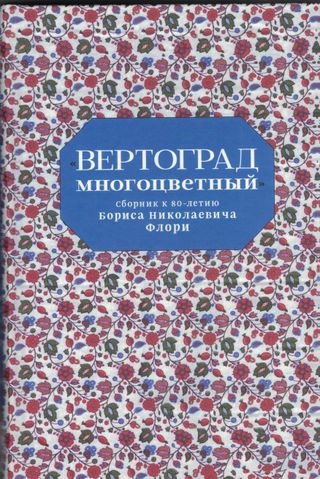
Ivanov S. A. М.: Издательство "Индрик", 2018.
Lukhovitskiy L., Byzantinoslavica 2025 Vol. 83 No. 1-2 P. 108–122
The academic vocabulary used to describe the Iconoclastic Controversy in Byzantium includes both authentic Middle Greek lexemes and artificial terms coined in 16th–17th-century Western Europe, developed in the context of Reformation theological debates. The former category is largely represented by terms referring to the so-called Iconoclasts (εἰκονομάχοι, εἰκονοκλάσται, εἰκονοκαῦ[σ]ται), while the latter includes designations for ...
Added: May 15, 2025
Lukhovitskiy L., Индоевропейское языкознание и классическая филология 2025 Т. 29 № 1 С. 1059–1079
This article examines the historical semantics of the post-classical Greek word χριστιανοκατήγορος (literally, “an accuser of Christians”). While its existence in the early Byzantine period is doubtful — there is only one isolated occurrence, which had no impact on later tradition and may even be a 10th-century correction — after the Second Council of Nicaea ...
Added: April 25, 2025
Hickmann M., Hendriks H., Demagny A. et al., Laboratoire Structures Formelles du langage, CNRS & University of Paris, 2022.
The information comprised in these appendices (Volume 2) are complementary to the Coding Manual
(Volume 1) with the same title. The two Volumes are based on data collected in a series of experimental
studies (controlled production) and longitudinal data collection (spontaneous productions by young
children) and concern the expression of space and / or time in spoken language. ...
Added: March 11, 2025
Ivanov S. A., Novi Sad: Akademska knjiga, 2023.
Ova knjiga će vas odvesti do znamenitosti koje se ne pominju u turističkim vodičima o Istanbulu: naći ćete crkvu iz IV veka u automehaničarskoj radionici, hodnik drevnog manastira u kućici kućepazitelja i podzemlje dvorca u prodavnici tepiha. Ona će vas dovesti do romantičnih vizantijskih ruševina na nenaseljenim ostrvima Prinčevog arhipelaga i do odlično sačuvanih hramova ...
Added: February 4, 2024
Sutorius K., Ярулина С. И., В кн.: Лихудовские чтения — 2022: материалы научной конференции «Пятые Лихудовские чтения». Великий Новгород, 14–15 апреля 2022 г.: Великий Новгород: НовГУ им. Ярослава Мудрого, 2023. С. 40–79.
Added: October 25, 2023
Shapira D., Vinogradov A., Journal of Jewish Languages 2023 Vol. 11 P. 1–18
In this short article we publish, with translations, a macaronic Hebrew cum Middle Greek religious poem, accompanied by a refrain in Ottoman Turkish, all written in Hebrew characters and fully vocalized. The text comes from a Karaite prayerbook printed in Venice in 1528 on behalf of the Constantinople Karaite community. This poem and its origins ...
Added: May 23, 2023
Ivanov S. A., Palaeoslavica 2022 Т. 30 № 1-2 С. 84–91
В статье на лексикографическом материале доказывается, что автором "Мартирия" был Феофилакт, аржиепископ Охридский ...
Added: February 15, 2023
Yakovleva A., Известия РАН. Серия литературы и языка 2021 Т. 80 № 5 С. 34–45
Greek adverbs are often claimed to have almost completely lost the ability to govern the genitive case, which is replaced by prepositional phrases with the accusative. Nevertheless, the corpus study presented in the article demonstrates that some low-frequent spatial adverbs δεξιά/αριστερά ‘on the right/left’ and βόρεια/νότια/ανατολικά/δυτικά ‘in the north/south/east/west’ retain the ability to govern genitive ...
Added: September 5, 2021
Ivanov S. A., Iasi: Doxologia, 2019.
j
Once a scholarly term has been coined, it begins a life of its own. The “holy fool” has come a long way.
Initially it described a village idiot who was regarded as both disgusting and awe-inspiring. His madness was not called into question: the ambivalence came from a conflict between the urge to ridicule and the ...
Added: July 29, 2021
Koukoulioti V., Bastiaanse R., Journal of Neurolinguistics 2020 Vol. 53 P. 100872
Several studies have shown selective deficits in the production and comprehension of verb forms referring to the past. On the basis of this evidence the Past Discourse Linking Hypothesis (Bastiaanse et al., 2011) suggests that individuals with aphasia have difficulties with verb forms referring to the past, in comparison to non-past forms such as the ...
Added: January 11, 2021
Khvalkov E., Khorkov G., ΙΣΤΟΡΊΑ ΕΙΚΟΝΟΓΡΑΦΗΜΈΝΗ 2020 Vol. January P. 6–16
This study is focused on two documents: an act of the Doge and the government of Venice, which gave ambassadors Giacomo Dolfino and Giacomo Contarini the power to negotiate and conclude a peace treaty with Michael Palaiologos on March 12, 1265 and the contract that the emperor concluded with these ambassadors on June 18, 1265. ...
Added: October 31, 2020
Ivanov S. A., , in: Byzantine Hagiography: Texts, Themes & ProjectsVol. 13.: Brepols Publishers, 2018. Ch. 11 P. 221–232.
The Life of the Patriarch John the Faster is published and introsuced as a first-hand historical source ...
Added: April 18, 2019
Ivanov S. A., В кн.: "Вертоград многоцветный". Сборник к 80-летию Бориса Николаевича Флори.: М.: Издательство "Индрик", 2018. С. 225–239.
статья посвящено греко-русскому разговорнику 15 в. как источнику по истории византийско-московских контактов ...
Added: April 16, 2019
Ivanov S. A., В кн.: У истоков и источников: на международных и междисциплинарных путях. Юбилейный сборник в честь Александра Васильевича Назаренко.: М.: Институт российской истории РАН, 2018. С. 156–165.
In the evidence of Byzantine sources layers are identified that reflect the
changes in political environment and the historical evolution in describing the
events of 941. ...
Added: April 9, 2019
Ivanov S. A., Travaux et Memoires 2018 Vol. 22 No. 1 P. 169–178
The versions of the Life of Basil the Younger found in the Greek manuscript Athos Dionysiou 107
and in several copies of the Life’s Slavic translation date back to early stages of the text’s editing.
These versions provide a lot of important data that disappeared at a later stage as reflected in
the Moscow manuscript, which is reproduced ...
Added: February 11, 2019
Ivanov S. A., В кн.: Восточная Европа в древности и средневековье: XXX Юбилейные Чтения памяти члена-корреспондента АН СССР Владимира Терентьевича Пашуто.: М.: [б.и.], 2018. Гл. 25 С. 118–123.
Найдены параллели между текстами Жития Нифонта и "Истории" Льва Диакона, что позволяет впервые точно датировать написание Жития 970-м годом и связать одно из пророчеств его героя с походом на Константинополь киевского князя Святослава в 970 г. Таким образом, у нас появляется новый источник по древнейшей истории Руси ...
Added: November 4, 2018
Yakovleva A., Вестник Православного Свято-Тихоновского гуманитарного университета. Серия 3: Филология 2019 Т. 58 № 1 С. 43–58
The paper deals with the encoding of “right” and “left” in Katharevousa Greek, which provides us with worth-exploring data on intentionally archaizing, artificial language of the XIX-XX centuries. The research is carried out on the basis of the Corpus of Modern Greek and the translations of two Classical Greek texts (“Anabasis” by Xenophon and “The ...
Added: October 1, 2018
Seleznev M., , in: Babel und Bibel 3.: Eisenbrauns, 2007. P. 371–380.
The article is devoted to the analysis of the semantics of the word stereoma. The Septuagint as it was understood by a Greek rhetorician: Pseudo-Longinus and στερέωμα. The paper deals with the first (and only) quotation from the Bible in the classical Greek literature: a quotation from the opening chapter of Genesis in a treatise ...
Added: August 12, 2018