?
Проблемы эффективности и пути развития социально-ориентированных НКО в Пермском крае
С. 2–9.
Ofitserov-Belskiy D. V.
The nonprofit sector weakness in Russia is no doubt. The most frequently cited reasons - immaturity of still young civil society structures and the lack of public funding in the third sector. Meanwhile, the process of becoming a non-profit sector can hardly be accelerated. The growth of the federal and regional subsidies, will not provide significant improvements. The main problem lies in the structural characteristics and low efficiency of voluntary sector. In this case, if some structure of the nonprofit sector, such as condominiums, generally demonstrate some progress in recent years, the socially-oriented NGOs are still in stagnation. Public policy can only partly correct the current state and trends.
In book
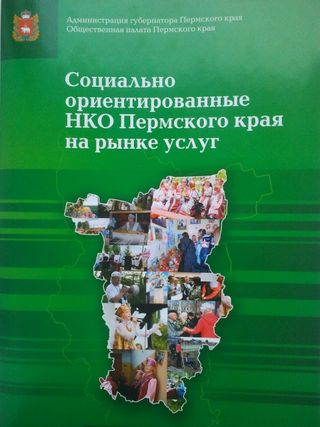
Пермь: ИП Осипенко Ирина Михайловна, 2012.
Shabanova M. A., Социологические исследования 2026 № 9 С. 96–109
The article raises the question of ethical consumption as an “invisible” sphere of modern civil society in Russia, one that expands its boundaries and functions. Using data from a representative survey (N=2,011, December 2024), the study reveals the level of Russians’ engagement in various types of ethical consumption that cover different stages of goods handling. ...
Added: October 12, 2026
Diskin I. E., Telitsyna A., Vasilyeva A. et al., Общественные науки и современность 2025 Т. 4 С. 122–135
The article provides comparative analysis of the development of nonprofit organizations (NPOs) in BRICS countries (with the exception of Russia and China, with their unique regulatory approaches to NPO activities, requiring a separate, in-depth study). Key parameters are examined: dynamics of the number of NPOs, level of public participation, legal regulation, intensity of international cooperation, ...
Added: November 20, 2025
Jakobson L. I., Журнал Новой экономической ассоциации 2025 № 1(66) С. 224–244
The purpose of the paper is to identify the objective circumstances limiting the effectiveness of self-organization. Self-organization is viewed as a type of relationship among individuals and organizations based on the norms other than those of remuneration which are typical of market institutions or the norms generated by the right to coercion inherent to the ...
Added: September 11, 2025
Дейнеко А. Г., В кн.: ОТ ПРОШЛОГО К БУДУЩЕМУ: ПРАВА ЧЕЛОВЕКА В СОВРЕМЕННОМ МИРЕ.: ЭйПиСиПаблишинг, 2025. Гл. 1 С. 10–39.
В первом парагафе рассмотрены три периода генезиса идеологии прав человека:
- колониальный, когда ценности экспортировались в зависимые страны в целях разрушения традиционных обществ и моделирования «нового образа жизни»;
- конфронтационный, когда холодная война подпитывалась соревнованием капиталистической и социалистической идеологий;
- интервенциональный, когда вопреки тезису о линейном характере развития обществ развивающиеся страны показали опережающие темпы роста экономик.
Во втором параграфе проанализирован используемый ...
Added: June 17, 2025
Philippova N., Middle East Policy 2025 Vol. 32 No. 4 P. 67–84
This article examines the contemporary state of the Israeli peace movement in light of escalating tensions following the events of October 7, 2023. Drawing on frame analysis and over 40 in-depth interviews with Israeli and Palestinian NGO representatives, the study categorizes the peace movement into three primary components: peace-building, human rights, and radicalism. It explores ...
Added: May 30, 2025
Shabanova M. A., Экономическая социология 2025 Т. 26 № 2 С. 14–52
This paper substantiates a theoretical concept and tests hypotheses concerning the relationship between ethical consumption as a new sphere of civil society (CS) and its traditional sphere (formal and informal structures beyond the consumption sphere). For the first time, the paper presents the data on Russians’ participation in a wide range of ethical consumption practices ...
Added: April 1, 2025
Maksimenko A., Krylova D., Дейнека О. С. et al., Журнал исследований социальной политики 2025 Т. 23 № 2 С. 267–288
This article analyzes the phenomenon of virtuous victimhood in the context of crowdfunding, a method of attracting private donations in situations of institutional instability and a lack of regulatory frameworks within the third sector. Relying on the concept of the 'double signal' (Ok et al., 2020), the authors argue that demonstrating vulnerability alongside moral impeccability ...
Added: October 30, 2024
Cook L., Iarskaia-Smirnova E. R., , in: Emerging Trends in Social Policy from the South: Challenges and Innovations in Emerging Economies.: Bristol: Policy Press, 2024. P. 248–267.
This chapter addresses development and change in Russia’s social policies since 2005. We focus on three areas that have undergone significant reform: policies toward people with disabilities, child welfare and outsourcing of social service delivery to SONPOs (socially oriented nonprofit organizations). In these areas, the Russian government has adopted potentially transformative changes, moving away from ...
Added: September 16, 2024
Shabanova M. A., В кн.: Самоорганизация граждан, благотворительность и третий сектор: теории, история и современные тенденции.: М.: Издательский дом НИУ ВШЭ, 2024. Гл. 13 С. 301–312.
Предмет главы 13 — новые вызовы, которые в условиях развития самоорганизации потребителей ВНЕ формальных структур гражданского общества возникают перед сектором НКО. Показано, что, хотя развитие этичного потребления в основном идет вне формальных гражданских структур, роль последних в условиях «морализации рынков» не ослабляется, а усиливается. Она реализуется по самым разным каналам: просвещение и информирование потребителей, организация ...
Added: September 8, 2024
Chalaya T., Uldanov A., Review of Policy Research 2024 Vol. 41 No. 6 P. 892–920
To what extent can nongovernmental organizations (NGOs) communicate policy problems in an authoritarian country, and how limited are they in narrating policy alternatives? This article seeks to develop studies on the application of the Narrative Policy Framework (NPF) in Russia, extend our knowledge about the use of narrative strategies in centralized and authoritarian policy processes, ...
Added: June 26, 2024
Obukhov K., Мониторинг общественного мнения: Экономические и социальные перемены 2023 № 5 С. 50–73
This article deals with the differentiation of accountability strategies that exist in regional socially oriented non-profit organizations (SO NPOs) in Russia. The theories of social capital apply to SO NPOs, which allows us to analyze the social relations developing around organizations and supporting them. Transparency and accountability are analyzed as closely interrelated processes that clarify ...
Added: November 4, 2023
Shabanova M. A., Экономическая социология 2023 Т. 24 № 1 С. 13–54
The paper examines the phenomenon of “voting for a better world with your wallet”, a highly controversial and debatable type of ethical consumption. Based on the synthesis and systematic review of the extant scholarship, the study justifies the reasons for academic disputes and advances hypotheses contributing to the development of a holistic model of ethical ...
Added: January 25, 2023
Bugrovskii A., Журнал исследований социальной политики 2021 Т. 19 № 4 С. 685–700
This paper investigates the phenomenon of inertia in the interaction of the state and all-Russian Societies of the Disabled. The Russian context retains conservative trends in the state cooperation with NGOs, which is marked by
paternalism and categorical assistance for disabled, formalism inherent in consultations with the state authorities. Along with this, there is the development ...
Added: December 7, 2022
Aleksandr Bugrovskii, Laboratorium: Russian Review of Social Research 2022 Vol. 14 No. 2 P. 102–119
This essay analyses the impact of Russian domestic actors (specifically, traditionalist NGOs) on the government’s adoption and regulation of international norms and practices regarding disability. The Russian state supports traditionalist NGOs established in Soviet times—such as the All-Russian Societies of the Disabled, the Blind, and the Deaf — rather than promoting the growth of an ...
Added: December 7, 2022
Mersiyanova I. V., Ivanova N., Брюхно А. С., Социологические исследования 2022 № 9 С. 38–48
The paper presents the results of the calculations of Russia’s first Index of NGO Basic Digital Competencies based on international experience and the data of two All-Russia NGO Surveys before the pandemic (2019) and a year following the pandemic outbteak (2021). The data highlight a critical underuse of digital technologies by Russian NGOS. An average ...
Added: October 26, 2022
Palgrave Macmillan, 2022.
Added: September 2, 2022
Cook L. J., Vinogradova E., Problems of Post-Communism 2006 Vol. 53 No. 5 P. 28–41
THE political transition in Eastern Europe and the former Soviet Union has generated a great deal of interest in the development of post-communist civil society—the autonomous sphere of activity between society and the state that provides the means for groups and organizations to build trust, articulate collective interests, and hold political authorities accountable. Non-governmental organizations ...
Added: March 23, 2021
Cook L. J., Iarskaia-Smirnova E. R., Tarasenko A., Post-Soviet Affairs 2021 Vol. 37 No. 2 P. 119–136
Our research bears on two critical issues for contemporary Russia: federal–regional power relations; and whether Moscow can modernize institutions and address dissatisfaction with social service delivery, a major political issue. It is the first comprehensive study of a major 2015 reform that ended the state monopoly over service provision and initiated outsourcing (contracting out) to socially oriented non-profits (SONPOs) ...
Added: January 3, 2021
Salamon L. M., Benevolenski V., Nonprofit and Voluntary Sector Quarterly 2021 Vol. 50 No. 1 P. 213–234
This article seeks to explain how a dramatic new program of financial and technical assists to nonprofit organizations managed to surface on the active policy agenda of Russia’s government between 2009 and 2013 at precisely the same time the Russian government was suppressing foreign-funded nonprofit organizations as “foreign agents” and earning for itself a reputation ...
Added: September 1, 2020
Toepler S., Fröhlich C., International Journal of Sociology and Social Policy 2020 Vol. 40 No. 11-12 P. 1473–1489
Purpose – The growing trend towards closing the political space for civil society in authoritarian regimes has
primarily targeted NGOs focused on rights-based advocacy. Drawing on a study of disability NGOs in Russia,
this paper seeks to contribute to a better understanding of the advocacy options that nonprofit organizations
have even in repressive political contexts. The authors first ...
Added: June 4, 2020