• A
  • A
  • A
  • АБВ
  • АБВ
  • АБВ
  • A
  • A
  • A
  • A
  • A
Обычная версия сайта
  • RU
  • EN
  • HSE University
  • Publications
  • Book chapter
  • ПОДШОФЕ – ПОЩИПЫВАТЬ и др.
  • RU
  • EN
Расширенный поиск
Высшая школа экономики
Национальный исследовательский университет
Priority areas
  • business informatics
  • economics
  • engineering science
  • humanitarian
  • IT and mathematics
  • law
  • management
  • mathematics
  • sociology
  • state and public administration
by year
  • 2028
  • 2027
  • 2026
  • 2025
  • 2024
  • 2023
  • 2022
  • 2021
  • 2020
  • 2019
  • 2018
  • 2017
  • 2016
  • 2015
  • 2014
  • 2013
  • 2012
  • 2011
  • 2010
  • 2009
  • 2008
  • 2007
  • 2006
  • 2005
  • 2004
  • 2003
  • 2002
  • 2001
  • 2000
  • 1999
  • 1998
  • 1997
  • 1996
  • 1995
  • 1994
  • 1993
  • 1992
  • 1991
  • 1990
  • 1989
  • 1988
  • 1987
  • 1986
  • 1985
  • 1984
  • 1983
  • 1982
  • 1981
  • 1980
  • 1979
  • 1978
  • 1977
  • 1976
  • 1975
  • 1974
  • 1973
  • 1972
  • 1971
  • 1970
  • 1969
  • 1968
  • 1967
  • 1966
  • 1965
  • 1964
  • 1963
  • 1958
  • More
Subject
News
September 11, 2026
How to Assess Students Knowledge in the Age of AI
A researcher at HSE University has proposed a flowchart to help lecturers decide how to assess students who use artificial intelligence. It shows where the use of AI should be restricted and where it can be incorporated into the learning process. The article has been published in IT Professional.
September 9, 2026
‘Balkan Hospitality Opens Doors: Studying Dialects on the Verge of Extinction
You cannot study spoken dialects from books. Instead, you need to go to a village, seek out its elders, and earn the trust of local residents before you can record hours of spontaneous stories. This is how Natalia Muravleva, Associate Professor at the Faculty of Humanities, conducts her research. Her internship in Serbia continued her long-standing study of dialects spoken by Macedonian settlers. In this interview, she discusses how diaspora cultural centres help researchers reach informants, why native speakers need to be interviewed only in their own language (otherwise, as she puts it, they may 'break'), and how a single field season helped her finalise her monograph. She also shares warm memories of autumn in Belgrade and of colleagues with whom grammar can be discussed in three languages at once.
September 9, 2026
Scientists Train Neural Network to Generate Process Plans from 3D Models
Researchers at the HSE FCS AI and Digital Science Institute have developed CAD2TechSpec, a framework that converts 3D models of mechanical parts into machining process plans—step-by-step instructions for machine tools. The solution aims to reduce the time required for the design and preparation of technical process documentation in mechanical engineering, aircraft manufacturing, and other high-tech industries. The study findings have been published in PeerJ Computer Science.


Have you spotted a typo?
Highlight it, click Ctrl+Enter and send us a message. Thank you for your help!

Publications
  • Books
  • Articles
  • Chapters of books
  • Working papers
  • Report a publication
  • Research at HSE

?

ПОДШОФЕ – ПОЩИПЫВАТЬ и др.

С. 318–352.
Nikishina E.
Language: Russian
Full text
Keywords: colloquial speechрусская разговорная речьRussian colloquial speechразговорная лексикаModern colloquial Russianрусская повседневная речь

In book

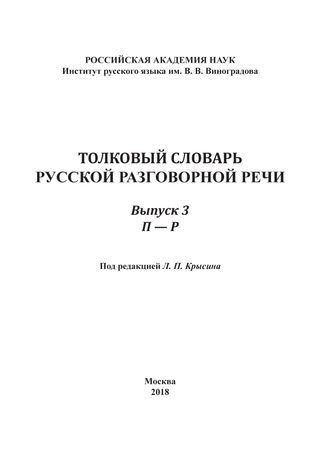
Толковый словарь русской разговорной речи. Вып. 3: П–Р
Гловинская М. Я., Голанова Е. И., Ермакова О. П., Занадворова А. В., Какорина Е. В., Крысин Л. П., Nikishina E., Пестова А. Р., Розанова Н. Н., Розина Р. И., Шарыкина О. А. Вып. 3: П–Р. , М.: Издательский дом ЯСК, 2019.
Similar publications
ВЕСЬ, ВОСВОЯСИ - ВЫПИХНУТЬ
Nikishina E., В кн.: Толковый словарь русской разговорной речи. Вып. 6, дополнительный, часть 1: А-ИЧ. 1: А-И. Вып. 6: дополнительный.: Институт русского языка им. В.В. Виноградова РАН, 2026. С. 194–285.
Added: March 9, 2026
Толковый словарь русской разговорной речи. Вып. 6, дополнительный, часть 1: А-И
Жидкова Е. Г., Занадворова А. В., Какорина Е. В. et al., Институт русского языка им. В.В. Виноградова РАН, 2026.
The dictionary provides a description of the vocabulary of modern Russian colloquial speech. The dictionary is experimental and, unlike most academic dictionaries, is not prescriptive. The authors' goal was to reflect as fully as possible, in dictionary form, the semantic, grammatical, collocational, and stylistic properties of the lexical and phraseological means used in the everyday ...
Added: March 9, 2026
Слова фигушки и хренушки как специфическое средство выражения отрицания в русской разговорной речи
Nikishina E., Russian Linguistics 2026 Т. 50 Статья 4
The article examines the words фигушки and хренушки (derivatives of the vulgar words фиг and хрен) as specific means of expressing negation in Russian colloquial speech. They have two main uses: first, they function as an independent response – a refusal to do something (– Лучше вылезай! – Фигушки, вы драться будете ‘– You’d better get out! – No ...
Added: March 9, 2026
Особенности функционирования существительных с опустошенной семантикой в русской разговорной речи
Nikishina E., Труды института русского языка им. В.В. Виноградова 2025 № 3(45) С. 231–244
The article examines placeholder nouns (штука, фигня, хреновина, etc.) in Russian colloquial speech. These words can function similarly to pronouns by substituting for other words, but their range of functions is much broader than that of pronouns. The study analyzes two groups of vague reference words: initially neutral ones (штука, вещь, дело) and initially evaluative ...
Added: March 8, 2026
Речевые акты с вежливыми диминутивами: жанровые и дискурсивные особенности
Fufaeva I., Вестник Волгоградского государственного университета. Серия 2: Языкознание 2025 Т. 24 № 4 С. 78–90
This study delves into speech acts utilizing diminutives for politeness, focusing on their discursive and genre-related aspects. It draws on authorial recordings of spoken discourse, data from the National Corpus of the Russian Language, and recordings of urban speech from the 1970s and late twentieth century. The research highlights the potential usage of polite diminutives in ...
Added: November 25, 2025
Анализ тематики повседневных разговоров: экспертный подход и автоматические методы
Sherstinova T., Вепринцева Д. А., Человек: образ и сущность. Гуманитарные аспекты 2025 № 2(62) С. 89–108
В статье рассматриваются три разных подхода к изучению тематики повседневных разговоров: экспертная тематическая разметка и два автоматических метода (тематическое моделирование и кластеризация). Материалом для исследования послужили расшифровки русской устной повседневной речи из корпуса ОРД, подготовленные на основе звукозаписей спонтанных разговоров, выполненных в естественных коммуникативных ситуациях (дома, на работе, в учебном заведении, в магазине, в поликлинике ...
Added: September 3, 2025
Прагматические маркеры русской повседневной речи: количественные данные
Богданова-Бегларян Н. В., Блинова О. В., Sherstinova T. et al., В кн.: Компьютерная лингвистика и интеллектуальные технологии: По материалам ежегодной международной конференции «Диалог» (Москва, 16–19 июня 2021 г.)Issue 20.: Russian State University for the Humanitie, 2021. С. 119–126.
Added: November 9, 2024
Чего мы на самом деле не знаем? О дискурсивных особенностях устойчивой неоднословной единицы (ну) (я) не знаю
Попова Т. И., Когнитивные исследования языка 2023 № 4(55) С. 457–460
В статье рассматриваются особенности дискурсивного употребления устойчивой неоднословной единицы (ну) (я) не знаю – из списка наиболее частотных три- и 4-грамм в корпусе русского языка повседневно общения «Один речевой день». Особен-ности употребления этой единицы соотносятся с когнитивным восприятием говоряще-го своей роли в коммуникации. ...
Added: October 28, 2023
Параметры частотного словаря в асимметричных и симметричных социальных ролях говорящего
Попова Т. И., Социо- и психолингвистические исследования 2018 № 6 С. 71–74
В ходе повседневного общения каждый говорящий выбирает социальную роль из определенного, присущего лично ему, ролевого набора (мать, жена, друг, коллега и т. п.) и в соответствии с этой ролью выстраивает свое поведение, в том числе речевое, в конкретном коммуникативном акте. Применение статистических параметров для анализа частотного словаря информантов корпуса русского языка повседневного общения «Один речевой ...
Added: October 28, 2023
ФИГ — ФИГУШКИ; ХРАБРИТЬСЯ — ХУХРЫ-МУХРЫ; ЦАП — ЦИРКАЧКА; ЦЫГАНИТЬ — ЦЫЦ
Nikishina E., В кн.: Толковый словарь русской разговорной речи. Вып. 5: У–ЯВып. 5: У-Я.: М., СПб.: Издательство Нестор-История, 2022. С. 318–411.
Фрагмент содержит словарные статьи ФИГ — ФИГУШКИ; ХРАБРИТЬСЯ — ХУХРЫ-МУХРЫ; ЦАП — ЦИРКАЧКА; ЦЫГАНИТЬ — ЦЫЦ. ...
Added: December 13, 2022
  • About
  • About
  • Key Figures & Facts
  • Sustainability at HSE University
  • Faculties & Departments
  • International Partnerships
  • Faculty & Staff
  • HSE Buildings
  • HSE University for Persons with Disabilities
  • Public Enquiries
  • Studies
  • Admissions
  • Programme Catalogue
  • Undergraduate
  • Graduate
  • Exchange Programmes
  • Summer University
  • Summer Schools
  • Semester in Moscow
  • Business Internship
  • Research
  • International Laboratories
  • Research Centres
  • Research Projects
  • Monitoring Studies
  • Conferences & Seminars
  • Academic Jobs
  • Yasin (April) International Academic Conference on Economic and Social Development
  • Media & Resources
  • Publications by staff
  • HSE Journals
  • Publishing House
  • iq.hse.ru: commentary by HSE experts
  • Library
  • Economic & Social Data Archive
  • Video
  • HSE Repository of Socio-Economic Information
  • HSE1993–2026
  • Contacts
  • Copyright
  • Privacy Policy
  • Site Map
Edit