• A
  • A
  • A
  • АБВ
  • АБВ
  • АБВ
  • A
  • A
  • A
  • A
  • A
Обычная версия сайта
  • RU
  • EN
  • HSE University
  • Publications
  • Book chapter
  • Russian Foreign Policy in the Middle East: New Challenge for Western Interests?
  • RU
  • EN
Расширенный поиск
Высшая школа экономики
Национальный исследовательский университет
Priority areas
  • business informatics
  • economics
  • engineering science
  • humanitarian
  • IT and mathematics
  • law
  • management
  • mathematics
  • sociology
  • state and public administration
by year
  • 2027
  • 2026
  • 2025
  • 2024
  • 2023
  • 2022
  • 2021
  • 2020
  • 2019
  • 2018
  • 2017
  • 2016
  • 2015
  • 2014
  • 2013
  • 2012
  • 2011
  • 2010
  • 2009
  • 2008
  • 2007
  • 2006
  • 2005
  • 2004
  • 2003
  • 2002
  • 2001
  • 2000
  • 1999
  • 1998
  • 1997
  • 1996
  • 1995
  • 1994
  • 1993
  • 1992
  • 1991
  • 1990
  • 1989
  • 1988
  • 1987
  • 1986
  • 1985
  • 1984
  • 1983
  • 1982
  • 1981
  • 1980
  • 1979
  • 1978
  • 1977
  • 1976
  • 1975
  • 1974
  • 1973
  • 1972
  • 1971
  • 1970
  • 1969
  • 1968
  • 1967
  • 1966
  • 1965
  • 1964
  • 1963
  • 1958
  • More
Subject
News
May 15, 2026
Preserving Rationality in a Period of Turbulence
The HSE International Laboratory for Logic, Linguistics and Formal Philosophy studies logic and rationality in a transformed world characterised by a diversity of logical systems and rational agents. The laboratory supports and develops academic ties with Russian and international partners. The HSE News Service spoke with the head of the laboratory, Prof. Elena Dragalina-Chernaya, about its work.
May 15, 2026
‘All My Time Is Devoted to My Dissertation
Ilya Venediktov graduated from the Master’s programme at the HSE Tikhonov Moscow Institute of Electronics and Mathematics through the combined Master’s–PhD track and is currently studying at the HSE Doctoral School of Engineering Sciences. At present, he is undertaking a long-term research internship at the University of Science and Technology of China in Hefei, where he is preparing his dissertation. In this interview, he explains how an internship differs from an academic mobility programme, discusses his research topic, and describes the daily life of a Russian doctoral student in China.
May 15, 2026
‘What Matters Is Not What You Study, but Who You Study with
Katerina Koloskova began studying Arabic expecting to give it up after a year—now she cannot imagine her life without it. In an interview for the Young Scientists of HSE University project, she spoke about two translated books, an expedition to Socotra, and her love for Bethlehem.


Have you spotted a typo?
Highlight it, click Ctrl+Enter and send us a message. Thank you for your help!

Publications
  • Books
  • Articles
  • Chapters of books
  • Working papers
  • Report a publication
  • Research at HSE

?

Russian Foreign Policy in the Middle East: New Challenge for Western Interests?

P. 101–125.
Kozhanov N.

Russian strategy in the Middle East comprises several elements. First,Moscow is persistent in defending what it sees as its red lines in the region. Thus, Russia is against any military intervention not approved by the UN Security Council. It does not welcome forced regime change if it leads to the destruction of existing state mechanisms. The Kremlin is also concerned about any change of borders in the Middle East, and it is firmly against any dialogue with radical Islamists and jihadists. Moscow’s flexibility has enabled it to talk to different forces in the region and, if necessary, play the mediator’s role. However, Russia is respected by Syria’s regional opponents, such as Saudi Arabia and Qatar, for the stubbornness it demonstrates when defending its own red lines in the region. Accordingly, the Saudis and Qataris are compelled to take Russia’s point of view into account and retain some dialogue with the Kremlin.

Second, Russia seems to be trying to reclaim its Cold War role as acounterweight to the U.S. in the region. Yet, the Kremlin does not directly oppose Washington, but rather exploits the region’s pre-existing disappointment with the U.S. through practical moves, which contrast American and European behavior. Thus, the reluctance of Washington to protect Mubarak, compared with the Russian support provided to Assad,encourages regional powers to consider Moscow a more reliable partner.

Third, Moscow avoids using ideological rhetoric in its official dialogue with the countries of the region.Unlike in the former Soviet space,the Russian leadership does not impose its views either by force or by means of economic coercion. In dialogue with the countries and political groupings of the region, Moscow tries to focus on existing commonalities rather than differences and contradictions. In all cases, the Kremlin also remains extremely pragmatic. Russia does not raise the question of political freedoms in Iran and tries not to be critical of Israel’s policies in Palestine and Gaza in spite of its support for a two-state solution. Moscow tries to support a dialogue with all countries in the region without expressing obvious support for any particular state or coalition, and, so far, it has been partly successful in doing so.

Finally, in its economic efforts, the Kremlin focuses on those areas where it has market advantages: nuclear energy, oil and gas, petro-chemicals, space, weapons, and grain. At the same time, Russian business in the Middle East is based on the adage of “Chinese price for European quality.”Thus, price and reliability were the main reasons for interest from Middle Eastern countries in Russian nuclear technologies.

Language: English
Keywords: Russian foreign policyMiddle East and North Africa

In book

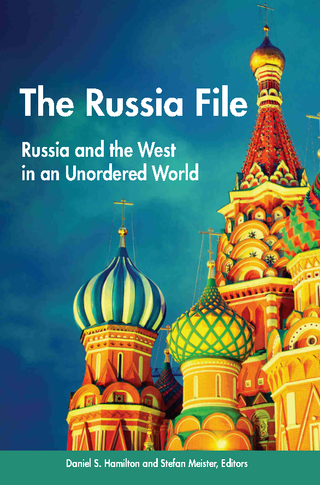
The Russia File: Russia and the West in an Unordered World
Berlin, Washington: Center for Transatlantic Relations; Deutsche Gesellschaft für Auswärtige Politik DGAP, 2017.
Similar publications
Саудовская Аравия и Объединенные Арабские Эмираты: тактическое или стратегическое партнерство?
Korotayev A., Хайруллин Т. Р., Shelkovnikov A., Восток. Афро-азиатские общества: история и современность 2025 № 1 С. 195–207
The article analyzes the Saudi-Emirati alliance formed after the events of the Arab Spring as a reaction to the strengthening of the Turkish-Qatari alliance. The common point of contact in the process of rapprochement between Saudi Arabia and the UAE was the fear and suspicion of the transnational organization Muslim Brotherhood supported by Qatar and ...
Added: April 20, 2026
A Global South 2.0? Evaluating the Concept of World Majority in Russian Foreign Policy
Kapoor N., Journal of Eurasian Studies 2025
The idea of world majority, floated by Russian experts after 2022, seeks to simultaneously offer a foreign policy direction for the country while also building a meta-category to define the non-western world. As an emerging concept, this article seeks to be one of the first systematic approaches towards understanding what the world majority stands for ...
Added: December 23, 2025
Перестройка? Бис!
Lukyanov F., Россия в глобальной политике 2025 Т. 23 № 2 С. 5–8
American politics has taken a dizzying turn since Donald Trump's return to the presidency. A suspicion arose: isn't this another turning point in the course of history, no less decisive than in the second half of the eighties of the last century? A reverse fracture. Gorbachev, with his new political thinking, willingly or unwittingly opened ...
Added: April 23, 2025
Ведущие вниз
Lukyanov F., Россия в глобальной политике 2025 Т. 23 № 1 С. 5–8
The relatively uniform globalization that it was at the turn of the century has ended, but the world has not fragmented. It has remained interconnected, although often in a whimsical way – through informal mechanisms and gray-black schemes. Centralized management by certain rules is being replaced by self–organization for survival - a special one, from ...
Added: April 23, 2025
Триумф воль
Lukyanov F., Россия в глобальной политике 2024 Т. 22 № 6 С. 5–8
2024 was immediately declared the year of big elections – half of the world's population voted in almost all significant countries and regions. And it's not just that the entire world politics depends on the results of the expression of will in some states. During periods of drastic change, as now, societies move. Elections serve ...
Added: April 23, 2025
Не по порядку
Lukyanov F., Россия в глобальной политике 2024 Т. 22 № 5 С. 5–10
The chain of conflicts with the armed component will continue, and many of the contradictions that were under control will enter an active phase. This is natural in the context of the general crisis of the restriction system. Hence the increased role of military force, which is certain today and inevitable tomorrow. But, as extensive ...
Added: April 23, 2025
Вероятное – неочевидное
Lukyanov F., Россия в глобальной политике 2024 Т. 22 № 2 С. 5–8
The events of two years have changed the perception of both war and peace. It would be an exaggeration to say that everything turned upside down overnight – international processes have long and consistently deviated from how they were usually described. The divergence of feelings, words, and deeds became more and more striking. Looking back, ...
Added: April 23, 2025
Легитимность эпохи неопределённости
Lukyanov F., Россия в глобальной политике 2024 Т. 22 № 1 С. 5–6
In the context of global instability, the stability of national systems is crucial. And it depends on how much the state power is able to get the population to recognize its right to govern. In other words, to ensure legitimacy. Historically, this has happened in different ways - by force, by class hierarchy, by dynastic ...
Added: April 23, 2025
Шире круг!
Lukyanov F., Россия в глобальной политике 2023 Т. 21 № 5 С. 5–8
By the autumn of 2023, the military campaign in Ukraine had become an integral part of the international political and economic landscape. A cessation of hostilities is not expected – neither a decisive victory by either side nor a peace agreement based on compromise seem likely in the foreseeable future. The conflict remains the main ...
Added: April 23, 2025
Two-Actor Play
Fyodor A. Lukyanov, Russia in Global Affairs 2025 Vol. 23 No. 2 P. 5–8
Classical diplomacy—based on the balance of power, on determining which of one’s own interests should be prioritized, on achieving their satisfaction in return for the satisfaction of others’, and on frank conversations between leaders—cannot guarantee success, but does at least strive for it. The U.S. and Russia clearly value the opportunity that has opened up before ...
Added: April 23, 2025
Downward
Lukyanov F., Russia in Global Affairs 2025 Vol. 23 No. 1 P. 5–8
The dismantling of the old world order has become a popular topic in recent years. Conceptually, everything is clear and even coherent: the end of hierarchy, the growing influence of various countries and peoples, a complex and unstable but generally fairer system, a new type of relations for a nonlinear world… But now we have entered the ...
Added: April 23, 2025
Out of Order
Fyodor A. Lukyanov, Russia in Global Affairs 2024 Vol. 22 No. 4 P. 5–8
When global tensions began to intensify a few years ago, discussion of major war as a real possibility gradually shifted from the tabloids to respectable analysis. While such a topic had been considered inappropriate, ignoring it became increasingly difficult as the signs of general disorder multiplied. ...
Added: April 23, 2025
Coming Full Circle
Lukyanov F., Russia in Global Affairs 2024 Vol. 22 No. 3 P. 5–8
The latest changes in the international arena, including the new Russia-DPRK relationship, are returning us to pre-liberal international practice. The first Cold War’s victors have so far been unsuccessful in their attempts to regain dominance. It is up to everyone to decide whether this is good or bad. But the world has come full circle. ...
Added: April 23, 2025
The Present Rooted in the Past
Fyodor A. Lukyanov, Russia in Global Affairs 2024 Vol. 22 No. 2 P. 5–8
Mikhail Gorbachev died in the late summer of 2022, having lived to see the final collapse of his hopes for a common European home. For him, this must have been much more bitter and painful than even the disappearance of the country he had once headed—the Soviet Union. After his resignation, Gorbachev repeatedly admitted that he had ...
Added: April 23, 2025
Not Against, but Beyond the West
Fyodor A. Lukyanov, Russia in Global Affairs 2023 Vol. 21 No. 4 P. 5–8
Major changes have occurred in the part of the world that is not involved in the conflict but affected by it. The World Majority concept, firmly established in Russia as a reference to the non-Western part of the globe, is somewhat confusing, because it suggests a consolidated community while the essential feature of this majority is ...
Added: April 23, 2025
Финансовые посреднические фонды Всемирного банка как многосторонний механизм трансфера помощи в политические нестабильные регионы (на примере Транзитного фонда "Довильского партнерства")
Vladimir B., Соломатин А. И., Вестник международных организаций: образование, наука, новая экономика 2020 Т. 15 № 3 С. 72–108
In recent years there has been a steady growth of “multi-bilateral aid,” or voluntary earmarked contributions transferred by international donors through multilateral organizations. The World Bank Group’s financial intermediary funds (FIFs) and trust funds have gained an especially wide recognition and have been particularly instrumental in channelling aid to fragile states - a priority group ...
Added: January 26, 2025
Европейские доноры в арабском мире: перераспределение ресурсов и ролей
Vladimir B., Современная Европа 2020 № 6 С. 76–89
The article explores official development assistance flows from European countries to the Middle East and North Africa (MENA) and highlights certain specifics and the logic of redistribution of resources and roles between the largest European donors throughout the 2010s - since the Arab Spring, which transformed the political landscape of the entire region. This trend ...
Added: January 26, 2025
"Довильское партнерство" со странами "Арабского пробуждения": траектория развития уникального формата
Vladimir B., Восток. Афро-азиатские общества: история и современность 2021 № 4 С. 95–106
This paper reconstructs the history of the Deauville Partnership with Arab Countries in Transition - a unique multilateral format established at the 2011 G8 Summit in Deauville, France to help the countries affected by the Arab Awakening navigate through the transition. It identifies the Partnership’s particularities, main objectives, pillars and key phases. The conclusion is ...
Added: January 24, 2025
Политика Китая на Ближнем Востоке и в Африке
Kondakova K., Yankova A., В кн.: Китайская Народная Республика: политика, экономика, культура. 2023.: М.: ИКСА РАН, 2024. С. 427–451.
С точки зрения концепции концентрических кругов, Африка и Ближний Восток находятся на дальних границах геополитической повестки дня КНР. Хотя контроль над ними не является жизненно важным для Пекина и легитимности КПК, они предоставляют Китаю несколько ключевых возможностей для экономического роста и международного влияния. К тому же эти страны традиционно являются проводниками для продвижения китайских глобальных ...
Added: November 15, 2024
Intelligence
Strokan M., , in: Routledge Handbook of Russian Foreign Policy.: ROUTLEDGE JOURNALS, TAYLOR & FRANCIS LTD, 2018. P. 153–167.
This chapter reviews the state of the English-language literature on Russian security services and foreign policy. It situates this literature within both the comparative study of intelligence agencies and the historical literature on the role of Soviet and Russian secret services in foreign policy. The chapter describes the organization of Russia’s security services and analyzes ...
Added: September 9, 2024
КНР и геополитическое моделирование «новой реальности» на Ближнем Востоке и в Северной Африке
Zelenev E., Soloshcheva M., Контуры глобальных трансформаций: политика, экономика, право 2023 Т. 16 № 3 С. 23–47
The article is devoted to the formation of a new geopolitical reality in the Middle East and North Africa. The main stages of the history and the contemporary Sino-Arab relations are analyzed in the context of the current global geopolitical transformation. The authors show that Chinese penetration into sub-Saharan Africa and the Arab Middle East in ...
Added: February 5, 2024
  • About
  • About
  • Key Figures & Facts
  • Sustainability at HSE University
  • Faculties & Departments
  • International Partnerships
  • Faculty & Staff
  • HSE Buildings
  • HSE University for Persons with Disabilities
  • Public Enquiries
  • Studies
  • Admissions
  • Programme Catalogue
  • Undergraduate
  • Graduate
  • Exchange Programmes
  • Summer University
  • Summer Schools
  • Semester in Moscow
  • Business Internship
  • Research
  • International Laboratories
  • Research Centres
  • Research Projects
  • Monitoring Studies
  • Conferences & Seminars
  • Academic Jobs
  • Yasin (April) International Academic Conference on Economic and Social Development
  • Media & Resources
  • Publications by staff
  • HSE Journals
  • Publishing House
  • iq.hse.ru: commentary by HSE experts
  • Library
  • Economic & Social Data Archive
  • Video
  • HSE Repository of Socio-Economic Information
  • HSE1993–2026
  • Contacts
  • Copyright
  • Privacy Policy
  • Site Map
Edit