• A
  • A
  • A
  • АБВ
  • АБВ
  • АБВ
  • A
  • A
  • A
  • A
  • A
Обычная версия сайта
  • RU
  • EN
  • HSE University
  • Publications
  • Books
  • Поливанов К. "Доктор Живаго" как исторический роман
  • RU
  • EN
Расширенный поиск
Высшая школа экономики
Национальный исследовательский университет
Priority areas
  • business informatics
  • economics
  • engineering science
  • humanitarian
  • IT and mathematics
  • law
  • management
  • mathematics
  • sociology
  • state and public administration
by year
  • 2027
  • 2026
  • 2025
  • 2024
  • 2023
  • 2022
  • 2021
  • 2020
  • 2019
  • 2018
  • 2017
  • 2016
  • 2015
  • 2014
  • 2013
  • 2012
  • 2011
  • 2010
  • 2009
  • 2008
  • 2007
  • 2006
  • 2005
  • 2004
  • 2003
  • 2002
  • 2001
  • 2000
  • 1999
  • 1998
  • 1997
  • 1996
  • 1995
  • 1994
  • 1993
  • 1992
  • 1991
  • 1990
  • 1989
  • 1988
  • 1987
  • 1986
  • 1985
  • 1984
  • 1983
  • 1982
  • 1981
  • 1980
  • 1979
  • 1978
  • 1977
  • 1976
  • 1975
  • 1974
  • 1973
  • 1972
  • 1971
  • 1970
  • 1969
  • 1968
  • 1967
  • 1966
  • 1965
  • 1964
  • 1963
  • 1958
  • More
Subject
News
November 17, 2026
Physicists Show How a Solvent Shapes the Response of Drug Molecules
Many drug molecules can switch between different three-dimensional shapes. Using a mathematical model of ibuprofen dissolved in supercritical CO₂, researchers from HSE University and the Institute of Solution Chemistry of the Russian Academy of Sciences have shown that the solvent can make these molecules appear to respond unusually slowly. The molecules themselves continue to change shape rapidly, but their surroundings rearrange much more slowly, and this lag shows up in the measurements. The study has been published in The Journal of Chemical Physics. 
November 10, 2026
Physicists Train AI to Optimise Particle Beams in Accelerators
Researchers from the AI and Digital Science Institute at the HSE Faculty of Computer Science and the Budker Institute of Nuclear Physics at the Siberian Branch of the Russian Academy of Sciences have developed RLABC (Reinforcement Learning for Accelerator Beamline Control), a framework that uses reinforcement learning to identify optimal settings for a particle accelerator. In a computer simulation, RLABC optimised the accelerator's parameters to achieve a particle transmission rate of 70%. The study has been published in Computer Physics Communications.
November 9, 2026
'Organ-on-a-Chip Technology Could Eliminate the Need for Animal Testing'
The Laboratory of Molecular Physiology at the HSE Faculty of Biology and Biotechnology investigates how molecular regulators known as microRNAs control gene expression and contribute to the development of diseases, including cancer, viral and inflammatory conditions, and pregnancy complications. At HSE University, researchers develop organ-on-a-chip models: miniature devices containing living cells that mimic the functions of human organs, such as the placenta and intestines. These models help researchers understand how diseases develop and how drugs affect them. HSE News Service spoke with Evgeny Knyazev, Head of the Laboratory.


Have you spotted a typo?
Highlight it, click Ctrl+Enter and send us a message. Thank you for your help!

Publications
  • Books
  • Articles
  • Chapters of books
  • Working papers
  • Report a publication
  • Research at HSE

?

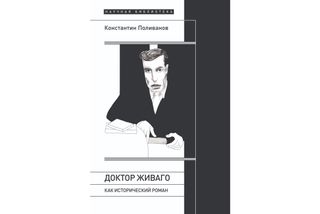
Поливанов К. "Доктор Живаго" как исторический роман

M. : Novoe literaturnoe obozrenie, 2024.
Polivanov K.
Under the general editorship: Т. Тимакова

When starting work on Doctor Zhivago, Boris Pasternak repeatedly stressed that he wanted to capture the course of Russian History at the beginning of the 20th century. What reference points define the picture of the epoch in this novel? What sources did Pasternak use and who can be called the prototypes of the novel's characters? What examples of genre tradition did he rely on? Konstantin Polivanov's book is an attempt to reconstruct both the history of the idea of "Doctor Zhivago" and the process of formation of the writer's historiosophical views. The Author demonstrates Pasternak's work with historical material, analyzes the complex game with time and the poetics of anachronisms in the novel, marking the onset of the "years of timelessness" in post-revolutionary Russia. K. Polivanov focuses his attention on the book of poems by Zhivago, completing the novel, which, according to the researcher, overcome timelessness, restoring historical time. Like the novel behind these poems, they testify to the "freedom" that, despite everything, will inevitably come after
Research target: Philology and Linguistics
Language: Russian
Full text
Keywords: исторический романБорис ПастернакRussian poetryhistorical novel20th century Russian literatureрусская поэзия XX века “Doctor Zhivago”Русская литература 19 и 20 вв."Доктор Живаго"B. L. Pasternak
Поливанов К. "Доктор Живаго" как исторический роман
Similar publications
Искусственный интеллект в преподавании иностранных языков
Bogolepova S., Smirnova A., Бабасян Е. Р. et al., М.: Юрайт, 2026.
Цель пособия – научить преподавателей использовать современные технологии в качестве инструмента для решения профессиональных задач, опираясь на фундамент методики преподавания иностранных языков. Читатель узнает, как применять ИИ для развития коммуникативной компетенции обучающихся, создания мультимодальных материалов, персонализации и дифференциации обучения. Внимание уделено планированию уроков, автоматизированному оцениванию, разработке устойчивых к ИИ заданий и оптимизации административной нагрузки с ...
Added: November 19, 2026
Непечатное. Самиздат и современное искусство.
М.: Музей современного искусства "Гараж", 2027.
Это книга о самиздате советских и современных художников на основе коллекции Музея «Гараж». Книгу открывает историко-культурный обзор феномена самиздата художников, который Гюнтер Хирт и Саша Вондерс подготовили для выставки Präprintium (1998–2000), посвященной книгам, созданным в кругу московского неофициального искусства с 1950-х по 1990-е. В издание также включены материалы конференций 2023 и 2024 годов. Дискуссии о бук-арте, о livre d’artiste, о зинах, политическом, литературном, ...
Added: November 19, 2026
Intelligibility of Slavic languages for Russian native speakers
Klyshinskiy E., Лукашевич Н. Ю., International Journal of Multilingualism 2026 P. 1–18
Here we study the intelligibility of Slavic languages to native speakers of Russian. We conducted cloze test experiments over pieces of written text in Russian translated into eight Slavic languages: Belarusian, Ukrainian (of the East Slavic subgroup), Czech, Polish, Slovak (of the West Slavic subgroup), Bulgarian, Serbian, and Slovene (of the South Slavic subgroup). The ...
Added: November 19, 2026
Практическое руководство по написанию аргументативных эссе на английском языке. A Practical Guide to Writing Argumentative Essays in English.
Voronina Y., Kuryan M., Н. Новгород: Нижегородский государственный технический университет им. Р.Е. Алексеева, 2026.
Modern foreign-language teaching is aimed at developing not only language skills but also the ability to organise and expres ideas logically and present one’s own position with well-supported arguments. In this context, academic writing is particularly important because it helps learners develop critical thinking, analyse information, compare different points of view, and support their conclusions with convincing ...
Added: November 18, 2026
«Сохрани мою речь...». Мандельштамовский альманах.
СПб.: Свет, 2026.
Мандельштамовское общество в сотрудничестве с Центром цифровых архивных исследований Школы филологических наук Научно-исследователь ского университета «Высшая школа экономики» возобновляет выпуск серии традиционных Мандельштамовских альманахов «Сохрани мою речь...». Ранее серия под эгидой Мандельштамовского общества выходила в издательствах «Обновление» (1991, выпуск 1), «Книжный сад» (1994, выпуск 2) и РГГУ (2000, 2008, 2011, выпуски 3–5). Шестой выпуск посвящен ...
Added: November 17, 2026
An Awkward Oikonym: Obscene Toponymy and Traditional Culture
Moroz A., Folklore (Estonia) 2026 Vol. 101 P. 441–456
Abstract. The article examines the situation surrounding an informal yet widely known and historically attested oikonym derived from an obscene word. On the one hand, the existence of this obscene oikonym serves as a point of pride and a unusual peculiarity, eagerly shared with ‘outsiders’ by locals. On the other hand, it makes the residents ...
Added: November 16, 2026
Вокруг Иосифа Бродского: неподцензурная литература 1950-х — 1970-х годов: материалы II международной конференции 28–29 мая 2025 года, Санкт-Петербург
Penskaja E., СПб.: ООО «Журнал «Звезда», 2026.
The collection includes articles by authoritative literary scholars—participants in the Second International Scholarly Conference “Around Joseph Brodsky: Uncensored Literature of the 1950s–1970s,” held in May 2025 in St. Petersburg. The collection is divided into two sections. The first section—“Joseph Brodsky: Biography and Creative Work in the Context of His Time”—is devoted to the life and ...
Added: November 15, 2026
Этнолингвистика. Ономастика. Этимология. Материалы VI Международной научной конференции, посвященной 100-летию со дня рождения А. К. Матвеева. Екатеринбург, 24–27 сентября 2026 г.
Moroz A., Издательство Уральского университета, 2026.
The field materials obtained through many years of work by folklore expeditions of RSUH and HSE University in various regions of Russia and the eastern regions of Belarus contain a large number of relatively uniform contexts in which an informant tells a story about events involving the manifestation of a demonological character, the manifestation of ...
Added: November 14, 2026
О чем говорит школьный урок? Корпусный анализ структуры урока и речи учителя как основа для педагогических продуктов
Виноградова Ю. С., Браташ В. С., Zubov V. et al., Вопросы образования 2026 Т. 1 № 3 С. 94–131
The aim of the study is to describe the structure of a school lesson and identify linguistic characteristics associated with effective teaching practices, based on recordings of real lessons in schools of the Russian Federation. Fifty-five audio recordings of lessons (Grades 5–9, six subjects, 2022–2024) were annotated for lesson structure, phonetic, lexical, and grammatical features, ...
Added: November 13, 2026
Берестяные грамоты из раскопок 2024 г. II. Великий Новгород, Старая Русса, Меглецы
Gippius A., Вопросы языкознания 2026 № 6 С. 7–26
This article presents a preliminary publication of 14 birchbark letters discovered during the 2024 archaeological season in Veliky Novgorod. Of particular historical and linguistic interest is a group of seven documents from the second half of the 14th century attributed to scribe Fefila, who was associated with posadnik Ontsifor Lukinich. It includes, in particular, court ...
Added: November 13, 2026
Thematic Clusters and Linguistic Features of Fashion Anglicisms Used by Russian Fashion Influencers
Karamalak O., Dionysios Zoumpalidis, English Today 2026 P. 1–11
The study explores the use of Anglicisms in the discourse of Russian speaking fashion influencers on YouTube, focusing on the thematic usage and linguistic adaptation of English borrowings to the Russian language. This topic is highly relevant due to the unprecedented popularity of digital social media and influencers who manipulate consumers’ opinions. Research methodology implies ...
Added: November 12, 2026
«Пролитая чаша» (Театр сатиры, 1952): нарративная адаптация и стилизация китайской классики как опыт межкультурного диалога
Чэнь Б., Penskaja E., Театр. Живопись. Кино. Музыка 2026 № 1 С. 150–162
Based on a  wide range of unpublished archival documents the article presents a comprehensive philological and historical-theatrical analysis of the first Soviet production of the classical Chinese drama The Western Chamber (Wang Shifu, 13th century) — the play The Spilled Cup (Moscow Satire Theatre, 1952, dir. N. V. Petrov and V. N. Pluchek, adaptation by A. P. Globа). ...
Added: November 11, 2026
“A Nursery of Technique,” the Laboratory in the Socio-Cultural Context of the 1920s–1930s: Between Practice and Metaphor
Penskaja E., Arts 2026 Vol. 15 No. 7 P. 172–203
This article analyzes the laboratory discourse in Soviet society during the first third of the twentieth century through the lens of tékhnē—the ancient fusion of making and knowing—arguing that the laboratory became a key site for redefining artistic practice as a form of knowledge production. Drawing on the institutional critique of the laboratory (Bruno Latour), ...
Added: November 11, 2026
"Подопытный". Сергей Петров и Осип Мандельштам
Penskaja E., "Сохрани мою речь..." Мандельштамовский альманах 2026 № 6 С. 206–219
This paper  is about the meeting between Nadezhda Yakovlevna Mandelstam and Sergei Vladimirovich Petrov (1911–1988), a poet, translator, and prose writer.³ He had been through prison and exile; after rehabilitation he taught foreign languages, and from 1960 he led a seminar of Scandinavianists in the literary translation section of the Leningrad branch of the Writers’ ...
Added: November 11, 2026
Латерализация функциональной гемодинамики мозга у детей раннего возраста как предиктор расстройств развития языка и речи: обзор литературы
Kibardina A., Vinogradova V., Alexeeva S. V. et al., Вопросы современной педиатрии 2026 Т. 25 № 6 С. 0–0
Проблема ранней диагностики расстройств развития языка и речи сохраняет актуальность в педиатрии. Успешность абилитации при таких расстройствах определяется ранним началом абилитационных мероприятий, но собственно речевые признаки дизонтогенеза в раннем возрасте (0-5 лет) еще недостаточно информативны для инициации вмешательства. По этой причине интерес представляют предикторы расстройств развития языка и речи, доступные для измерения на ранних этапах речевого развития. ...
Added: November 11, 2026
Литературный круг Михаила Кузмина: границы – уровни – прагматика
Pakhomova A., Quaestio Rossica 2026 Т. 14 № 2 С. 389–405
This paper examines the structural and pragmatic characteristics of the literary circle (Rus. литературный круг), a form of literary cooperation that has rarely been the subject of independent analysis, particularly when compared with other forms of writers’ associations (such as clubs, salons, and groups). The main set of issues associated with the literary circle lies ...
Added: June 30, 2026
Киноглаз 2.0: киносубъект в новейшей русской поэзии
Korchagin K., Slavic Literatures (ранее - Russian Literature) 2019 Т. 109/110 С. 235–256
Abstract The two most prominent innovations for 20th century poetry were the cinema and a specific kind of corporeality that embedded itself in literary milieus. Although these two innovations took place in the first quarter of the 20th century, their impact on poetry became evident only much later, and they still influence and shape the ...
Added: June 19, 2026
«Телесность и есть горизонт ожидания...»: Аркадий Драгомощенко как читатель Мориса Мерло-Понти
Korchagin K., Известия Уральского федерального университета. Серия 2: Гуманитарные науки 2020 Т. 22 № 2 С. 242–257
В статье рассматривается влияние французской феноменологической школы в лице Мориса Мерло-Понти на поэтику Аркадия Драгомощенко (1946—2012) — петербургского писателя, занимавшего видное место в русской литературе последней четверти ХХ — начала ХХI в. Интерес к новейшей европейской и аме риканской мысли, характерный для Драгомощенко, сыграл важную роль в его творчестве — и как источник цитат и ...
Added: June 19, 2026
«Констриком, но с новолефовским уклоном»: Ян Сатуновский и эволюция конструктивистской поэтики
Korchagin K., В кн.: «Лианозовская школа»: между барачной поэзией и русским конкретизмом.: М.: Новое литературное обозрение, 2021. С. 547–571.
В главе рассматриваются связи поэта Яна Сатуновского с Литературным центром конструктивистов. ...
Added: June 19, 2026
«Мы связаны одной судьбою»: два этюда о метрике и поэтической грамматике Булата Окуджавы
Korchagin K., Труды института русского языка им. В.В. Виноградова 2022 Т. 3 С. 36–49
В статье рассматривается поэзия Булата Окуджавы второй половины 1950-х — 1960-х годов в контексте тех процессов, которые происходили в русской литерату ре того времени, как в области метрики, так и в области поэтической грамматики. В первой части статьи рассматривается употребление местоимения «мы» в песнях и стихах Окуджавы и выдвигается гипотеза, что в его случае можно ...
Added: June 18, 2026
Нефть как пространство неперевода: Хикмет, Негарестани, Парщиков
Korchagin K., Слово.ру: балтийский акцент 2023 Т. 14 № 3 С. 52–73
В 1927 году Назым Хикмет написал несколько стихотворений, в основу которых легли его впечатления от поездки в Баку. Они вошли в сборник «Песня пьющих солн це» (1928) и были в скором времени переведены на русский язык. Бакинский цикл стал одной из первых попыток символического изображения нефти в русской поэзии, во многом предвосхитив позднейшую поэтику нефти, ...
Added: June 18, 2026
The Neo-Futurists
Korchagin K., , in: The Oxford Handbook of Soviet Underground Culture.: Oxford: Oxford University Press, 2021. P. 756–773.
Interest in the Russian Futurist poetry of the first two-and-a-half decades of the twentieth century was revived in Soviet literary circles in the mid-1950s. Initially focused on the work of Vladimir Mayakovsky, interest spread to other writers. At the turn of the fifties and sixties, this revival resulted in regular “unsanctioned” poetry readings at the ...
Added: June 18, 2026
Уитмен — Тагор — Рерих: об одном поэтическом треугольнике
Korchagin K., Восточный курьер 2024 № 4
Одна из глав романа Рабиндраната Тагора «Последняя поэма» (1929) изображает заседание калькуттского литературного кружка, где молодые бенгальские литераторы и интеллектуалы в критическом ключе обсуждают стихи Тагора. Эта сцена несколько выпадает из общего повествования и мотивирована по большей части тем, что протагонист романа, Омито, — тоже поэт, который хотя и не решается публиковать свои стихи, но ...
Added: June 18, 2026
История и коллективная идентичность в ленинградской неофициальной поэзии: Сергей Стратановский и Сергей Магид
Korchagin K., Челябинский гуманитарий 2025 № 1 С. 52–60
В статье рассматриваются способы конструирования поэтического «мы» у двух поэтов, принадлежащих к ленинградской неофициальной поэзии 1970–1980-х годов – Сергея Стратановского и Сергея Магида. В творчестве обоих поэтов можно заметить полемику с пониманием «мы» как претерпевающего коллективного субъекта, пассивного участника исторического процесса. Эти поэты смотрят на исторический процесс и место в нем «мы» под разными углами: ...
Added: June 18, 2026
  • About
  • About
  • Key Figures & Facts
  • Sustainability at HSE University
  • Faculties & Departments
  • International Partnerships
  • Faculty & Staff
  • HSE Buildings
  • HSE University for Persons with Disabilities
  • Public Enquiries
  • Studies
  • Admissions
  • Programme Catalogue
  • Undergraduate
  • Graduate
  • Exchange Programmes
  • Summer University
  • Summer Schools
  • Semester in Moscow
  • Business Internship
  • Research
  • International Laboratories
  • Research Centres
  • Research Projects
  • Monitoring Studies
  • Conferences & Seminars
  • Academic Jobs
  • Yasin (April) International Academic Conference on Economic and Social Development
  • Media & Resources
  • Publications by staff
  • HSE Journals
  • Publishing House
  • iq.hse.ru: commentary by HSE experts
  • Library
  • Economic & Social Data Archive
  • Video
  • HSE Repository of Socio-Economic Information
  • HSE1993–2026
  • Contacts
  • Copyright
  • Privacy Policy
  • Site Map
Edit