• A
  • A
  • A
  • АБВ
  • АБВ
  • АБВ
  • A
  • A
  • A
  • A
  • A
Обычная версия сайта
  • RU
  • EN
  • HSE University
  • Publications
  • Book chapter
  • Exchange Rate Regimes and Macroeconomic Volatility: is «Fear of Floating» a Stabilizing Policy
  • RU
  • EN
Расширенный поиск
Высшая школа экономики
Национальный исследовательский университет
Priority areas
  • business informatics
  • economics
  • engineering science
  • humanitarian
  • IT and mathematics
  • law
  • management
  • mathematics
  • sociology
  • state and public administration
by year
  • 2027
  • 2026
  • 2025
  • 2024
  • 2023
  • 2022
  • 2021
  • 2020
  • 2019
  • 2018
  • 2017
  • 2016
  • 2015
  • 2014
  • 2013
  • 2012
  • 2011
  • 2010
  • 2009
  • 2008
  • 2007
  • 2006
  • 2005
  • 2004
  • 2003
  • 2002
  • 2001
  • 2000
  • 1999
  • 1998
  • 1997
  • 1996
  • 1995
  • 1994
  • 1993
  • 1992
  • 1991
  • 1990
  • 1989
  • 1988
  • 1987
  • 1986
  • 1985
  • 1984
  • 1983
  • 1982
  • 1981
  • 1980
  • 1979
  • 1978
  • 1977
  • 1976
  • 1975
  • 1974
  • 1973
  • 1972
  • 1971
  • 1970
  • 1969
  • 1968
  • 1967
  • 1966
  • 1965
  • 1964
  • 1963
  • 1958
  • More
Subject
News
October 14, 2026
At HSE University–St Petersburg, Experts Discuss How AI Changes Tourist Routes and Cultural Heritage
Neural networks are no longer simple travel assistants; now they decide what to include on the route and what to skip. Artificial intelligence changes how people perceive a place and shapes the image of tourist centres. At the II International Scientific and Practical Conference ’Information Technologies in the Preservation and Promotion of Cultural Heritage,’ researchers discussed who controls algorithmic solutions and in what ways, and whether authentic traditions get lost in them.
October 12, 2026
Road Injuries Leading Cause of Death Among Men Aged 10 to 39
Worldwide, road injuries are the leading cause of death among males aged 10–39. An international team of researchers reached this conclusion as part of the Global Burden of Disease Study 2023, analysing data from 204 countries between 1990 and 2023. Their findings have been published in The Lancet Public Health, with HSE University Professor Vasily Vlassov listed among the collaborators.
October 8, 2026
HSE Experts Take Part in 23rd Annual Meeting of Valdai Discussion Club
The 23rd Annual Meeting of the Valdai Discussion Club was held from September 28 to October 1, 2026 under the theme ‘Responsibility for the Future: Limits of the Possible, or Limitless Possibilities?’ The forum brought together 120 experts from 40 countries, including representatives of China, the United States, India, Brazil, the United Kingdom, Germany, Egypt, Iran, and Japan.


Have you spotted a typo?
Highlight it, click Ctrl+Enter and send us a message. Thank you for your help!

Publications
  • Books
  • Articles
  • Chapters of books
  • Working papers
  • Report a publication
  • Research at HSE

?

Exchange Rate Regimes and Macroeconomic Volatility: is «Fear of Floating» a Stabilizing Policy

P. 242–251.
Sokolov V., Mark N.

Using a panel data set of 180 countries spanning from 1971 to 2000, we find evidence that exchange rate policy affects macroeconomic performance for the sample of non-industrialized countries. We consider two measures of economic performance: i) per capita GDP growth and ii) the volatility of per capita GDP growth and investigate the nature of their dependence on de facto/de jure mix of exchange rate policies. Our characterization of exchange rate policy measures whether a country's de facto policy is consistent with its publicly stated de jure exchange rate regime. Employing the Rogoff and Reinhart (2002) de facto classification we find the significant statistical relationship between exchange rate policy and growth which is robust to the inclusion of conventional growth control variables. Our nuanced characterization shows that the non-industrialized countries exhibiting `fear of floating,' have higher GDP growth. With respect to GDP volatility a division of policy into fixed versus floating exchange rates using the de facto/de jure metrics is significant and indicates that `fear of floating' is stabilizing for the non-industrialized but destabilizing for industrialized countries.

Language: English
Full text
Keywords: валютный режимexchange rateобменный курсcurrency regimepolicy of stabilizationmacroeconomic fluctuationsполитика стабилизациимакроэкономические колебания

In book

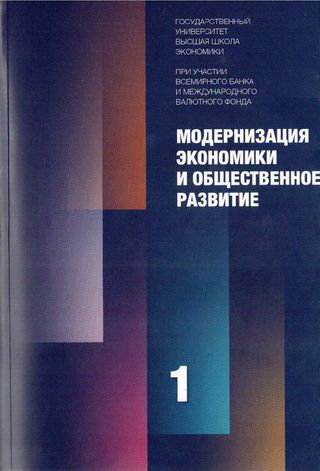
VIII Международная научная конференция. Модернизация экономики и общественное развитие: В 3 кн.
Кн. 1. , М.: Издательский дом ГУ-ВШЭ, 2007.
Similar publications
«Обеспеченный» рубль: Deus ex machina?
Smirnov A. D., Экономический журнал Высшей школы экономики 2022 Т. 26 № 4 С. 497–522
Huge volumes of world liquidity which were followed by the splurge of the global inflation once more highlighted fundamental shortcomings of the fiduciary money. Its promising alternative, as shown in the paper, could be a currency collateralized by the value of a natural resource to be formed on a соmpetitive and liquid market. Until recently, ...
Added: December 9, 2022
Thirty years of economic transition in the former Soviet Union: Macroeconomic dimension
Dabrowski M., Russian Journal of Economics 2022 Vol. 8 No. 2 P. 95–121
The paper contains a retrospective analysis of macroeconomic policy and reforms in the countries of the former Soviet Union (FSU) from 1992 to 2021, after obtaining political and economic independence in 1991. Special attention is given to problems of macroeconomic stabilization and economic growth. As a result of structural distortions inherited from the Soviet economy and ...
Added: September 3, 2022
ПОТРЕБИТЕЛЬСКИЕ ЦЕНЫ В РОССИИ: ВЛИЯНИЕ ШОКОВ ВАЛЮТНОГО КУРСА
Pikhteev Y., Корнейченко Е. Н., Новопашина А. Н., Известия Саратовского университета. Новая серия. Серия: Экономика. Управление. Право 2020 Т. 20 № 1 С. 4–15
Introduction. National currency exchange rate change can lead to a change in prices for both imported and domestic goods. Therefore, the growth of inflation observed in 2014-2015, accompanied by the ruble depreciation raises the question: what role did currency shocks play in this? The study is devoted to assessing the pass-through in Russia. Theoretical analysis. ...
Added: March 15, 2022
ЭФФЕКТ ПЕРЕНОСА ВАЛЮТНОГО КУРСА В ПОТРЕБИТЕЛЬСКИЕ ЦЕНЫ В РЕГИОНАХ РОССИИ: ПОИСК ПРОСТРАНСТВЕННЫХ ВЗАИМОСВЯЗЕЙ
Pikhteev Y., Корнейченко Е. Н., Новопашина А. Н., Известия Саратовского университета. Новая серия. Серия: Экономика. Управление. Право 2021 Т. 21 № 4 С. 398–404
Introduction. The article examines the spatial heterogeneity and factors of the exchange rate pass-through effect in consumer prices in Russian regions. Two hypotheses are tested. The first hypothesis is that there are differences in the magnitude of the pass-through between the Russian regions, the second is the significant influence of spatial relationships between regions on ...
Added: March 15, 2022
STRENGTH OF WORDS: DONALD TRUMP'S TWEETS, SANCTIONS AND RUSSIA'S RUBLE
Afanasyev D., Fedorova E., Ledyaeva S., Journal of Economic Behavior and Organization 2021 Vol. 184 P. 353–377
We empirically test if the US President Donald Trump's rhetoric towards Russia (represented by his Russia-related tweets) affects ruble's exchange rate. Using three-stepped empirical framework, we find that escalation of negative sentiment of Trump's Russia-related tweets leads to ruble's depreciation (4–10%) in short-term periods (around 3 days). Though these episodes tend to coincide with imposition or announcement ...
Added: November 29, 2021
Механизмы реализации и оценка эффективности бюджетной политики в условиях пандемии COVID-19
Kosov M., Соловьева М. Г., Вестник Университета (Государственный университет управления) 2020 № 9 С. 128–137
The state budget acts as a mechanism for accumulating financial resources of the state, including in the context of implementing relations between social groups and strata in society. The widespread quarantine measures to prevent the COVID-19 pandemic and the consequences of their introduction on determining the recessive scenario of economic development in the near future ...
Added: September 2, 2021
Is COVID-19 triggering a new emerging-market crisis?
Dabrowski M., Dominguez-Jimenez M., / Series Bruegel blog "Bruegel blog". 2020.
Emerging economies have received little attention in the economic debate regarding the COVID-19 pandemic, yet the performance of their primary market indicators, chiefly sovereign debt, foreign exchange and equities, indicate a deep deterioration is taking place. Times of crisis often lead to capital flight from emerging markets as investors seek safe haven assets, while the ...
Added: October 29, 2020
Exchange rate and Chinese Outward FDI
Liu H. Y., Deseatnicov I., Applied Economics 2016 Vol. 48 No. 51 P. 4961–4976
Did the exchange rate (ER) regime change that was announced by the Chinese government in 2005 lead to an increased sensitivity of Chinese multinational companies (MNCs) to ER fluctuations? To answer this question our article considers the effect of ER level, volatility and expectation on the Chinese outward foreign direct investment (OFDI) activities in 119 countries ...
Added: October 18, 2018
Валютный курс и вербальные интервенции Банка России и органов государственной власти
Kuznetsova O., Ulyanova S., Экономический журнал Высшей школы экономики 2018 Т. 22 № 2 С. 228–250
This paper measures the effects of the Russian Government and the Bank of Russia’s verbal interventions on the USD/RUB exchange rate. To take into account the verbal interventions by the Bank of Russia, we analyze the announcements made by the members of its Board of Directors and by the press-service. Concerning the communication policy of ...
Added: September 14, 2018
Влияние курса рубля на долгосрочное развитие промышленности
Osmakov V., Мониторинг экономической ситуации в России, Россия 2018 № 6 (67) С. 21–24
Влияние обменного курса рубля на развитие промышленности зависит от многих факторов, включая отраслевую принадлежность предприятий, наличие у них долгосрочных планов развития, возможности экспортировать свою продукцию и др. При этом исследования представлений, существующих в промышленности, о желательном курсе рубля, зачастую опираются на частные мнения руководства предприятий. ...
Added: September 11, 2018
Economic Fluctuations and Their Drivers in Russia
Smirnov Sergey, , in: Business Cycles in BRICS.: Springer, 2019. Ch. 6 P. 89–119.
In many respects, the historical trajectory of the Russian economy during the Twentieth century has been a terra incognita until now. As for the official statistics, there are at least three important reasons for this. First, many relevant indicators were either not measured, or were kept secret and never published. Second, Russia (as the RSFSR) ...
Added: August 20, 2018
Валютное положение и валютное регулирование
Karpova N. S., В кн.: Национальная экономика : учебник / 5-е изд., перераб. и доп.: М.: ИНФРА-М, 2018. Гл. 53 С. 655-1–655-31.
Foreign exchange reserves and regulation in the Russian Federation: evolution and trends 1990-2017 ...
Added: February 25, 2018
Between the hammer and the anvil: The impact of economic sanctions and oil prices on Russia’s ruble
Dreger C., Kholodilin K., Ulbricht D. et al., Journal of Comparative Economics 2016 Vol. 44 No. 2 P. 295–308
Exchange rate fluctuations strongly affect the Russian economy, given its heavy dependence on foreign trade and investment. In the aftermath of the conflict between Russia and Ukraine that broke out early 2014, the Russian ruble lost 50% of its value against the US dollar. The impact of the conflict on Russia may have been amplified ...
Added: April 17, 2017
Прогнозирование котировок валютного курса евро и доллара с использованием искусственных нейронных сетей
Nazarova V., Ульзутуева Б. Д., Управление финансовыми рисками 2016 № 1 (45) С. 42–57
The first part of the issue gives general information about foreign exchange market (FOREX), review of forecasting foreign exchange rate is given.  In addition we will consider the new model of nonlinear analysis to give a broader theoretical basis to the research - an artificial neural network (ANN).The nonlinear analysis and the ANN is still ...
Added: February 13, 2017
Оценка зависимости спрэда доходности корпоративных облигаций от динамики валютного курса (на примере рынка облигаций РФ)
Suveyka S., Финансовый бизнес 2015 № 4(177) С. 54–63
In this paper we analyze what are the channels of exchange rate dynamics effect on corporate bond yield spread. Under the uncovered interest rate parity (UIP) exchange rate level and interest rates are linked so that the yields in two countries are equal. There is an evidence in literature that exchange rate volatility also plays ...
Added: February 24, 2016
Причины нестабильности глобального финансового рынка и возможные средства ее преодоления
Zukhba D., Zukhba E., Научные труды Донецкого национального технического университета. Серия: экономическая 2002 № 53 С. 148–154
Free flows of the international capital brought huge benefits, but they are also connected with risks threatening both separate countries and the whole world. The authors demonstrate the ways of developing instability of the global financial market, such as excessive investment in the countries with inceptive market economy, moral risk, currency exchange rate fluctuation. They ...
Added: February 11, 2016
Глава 56. Валютное положение и валютное регулирование
Karpova N. S., В кн.: Национальная экономика: Учебник.: М.: ИНФРА-М, 2016. Гл. 56 С. 687–708.
The Chapter examines the evolution of the modern system of currency regulation in Russia. Special attention is paid to sustainability of the national currency, the causes and consequences of capital outflow, as well as measures of deoffshorization of the Russian economy. ...
Added: January 26, 2016
Российская девальвация 2014-2015гг.: падение в пропасть или окно возможностей?
Mironov V., Вопросы экономики 2015 № 12 С. 3–30
The fall in the oil prices from mid-2014 is causing a decrease in domestic demand and a strong devaluation of the ruble, which in turn promotes the growth of the price competitiveness of Russian producers, stimulates supply side of the economy (especially in foreign markets, where there is no recession), and thus creates, the possibility ...
Added: October 21, 2015
Взаимодействие консервативного центрального банка и правительства в экспортоориентированной экономике
Merzlyakov S., Pekarski S. E., Горизонты экономики 2015 Т. 23 № 4 С. 37–45
This paper focuses on the role of central bank conservatism while an optimal macroeconomic policy in export-oriented economy is conducted. The main research question is whether monetary policy should be carried out by the central bank, which gives higher priority to inflation rather than output, regardless of the form of strategic monetary and fiscal policy ...
Added: October 1, 2015
Обзор экономики СНГ. Восстановление откладывается
Евгений Гавриленков, Антон Струченевский, Сергей Коныгин, М.: Sberbank CIB, 2015.
В феврале - марте в экономике Белоруссии, Украины и Казахстана сохранялись разнонаправленные тенденции. В некоторых случаях расхождения были достаточно радикальными. Например, месячная инфляция в марте составила 0,1% в Казахстане и 10,8% на Украине, а инфляция за 3М15 достигла 1,1% в Казахстане и 20,3% на Украине. Годовая инфляция на Украине ускорилась до 45,8% даже без индексации ...
Added: August 13, 2015
Проблема выбора валютного режима странами с развивающимися экономиками
Novak A., Кабаев В. Н., Khvostova I., Приложение к Журналу Новой экономической ассоциации 2014 С. 117–125
В статье проанализированы и систематизированы теории выбора валютного режима для стран, либерализирующих свою финансовую систему. Авторами проведен анализ валютных привязок для пяти стран методом скользящей регрессии. Полученные траектории оценок коэффициентов позволили проследить изменение курса национальной валюты по отношению к изменению курса базовой. Эмпирическая оценка показала, что существуют несоответствия между заявленным валютным режимом и фактически наблюдаемым. ...
Added: October 3, 2014
Неопределенность тормозит рост
Евгений Гавриленков, Антон Струченевский, Эффективное антикризисное управление 2014 № 1 С. 30–33
В статье анализируется экономическая ситуация в России в январе-феврале 2014 г. Важно различать "слабую" и "слабеющую" национальную валюту: слабый рубль обеспечивает локальным производителчм определенные конкурентные преимущества, тогда как продолжительныйпериод ослабленич зачастую сопровождается оттоком капитала ...
Added: August 27, 2014
  • About
  • About
  • Key Figures & Facts
  • Sustainability at HSE University
  • Faculties & Departments
  • International Partnerships
  • Faculty & Staff
  • HSE Buildings
  • HSE University for Persons with Disabilities
  • Public Enquiries
  • Studies
  • Admissions
  • Programme Catalogue
  • Undergraduate
  • Graduate
  • Exchange Programmes
  • Summer University
  • Summer Schools
  • Semester in Moscow
  • Business Internship
  • Research
  • International Laboratories
  • Research Centres
  • Research Projects
  • Monitoring Studies
  • Conferences & Seminars
  • Academic Jobs
  • Yasin (April) International Academic Conference on Economic and Social Development
  • Media & Resources
  • Publications by staff
  • HSE Journals
  • Publishing House
  • iq.hse.ru: commentary by HSE experts
  • Library
  • Economic & Social Data Archive
  • Video
  • HSE Repository of Socio-Economic Information
  • HSE1993–2026
  • Contacts
  • Copyright
  • Privacy Policy
  • Site Map
Edit