• A
  • A
  • A
  • АБВ
  • АБВ
  • АБВ
  • A
  • A
  • A
  • A
  • A
Обычная версия сайта
  • RU
  • EN
  • HSE University
  • Publications
  • Book chapter
  • Машьякъ-антихрист, мессия еврейский, и его компания: ранние гебраизмы восточнославянской книжности в эсхатологическом контексте
  • RU
  • EN
Расширенный поиск
Высшая школа экономики
Национальный исследовательский университет
Priority areas
  • business informatics
  • economics
  • engineering science
  • humanitarian
  • IT and mathematics
  • law
  • management
  • mathematics
  • sociology
  • state and public administration
by year
  • 2028
  • 2027
  • 2026
  • 2025
  • 2024
  • 2023
  • 2022
  • 2021
  • 2020
  • 2019
  • 2018
  • 2017
  • 2016
  • 2015
  • 2014
  • 2013
  • 2012
  • 2011
  • 2010
  • 2009
  • 2008
  • 2007
  • 2006
  • 2005
  • 2004
  • 2003
  • 2002
  • 2001
  • 2000
  • 1999
  • 1998
  • 1997
  • 1996
  • 1995
  • 1994
  • 1993
  • 1992
  • 1991
  • 1990
  • 1989
  • 1988
  • 1987
  • 1986
  • 1985
  • 1984
  • 1983
  • 1982
  • 1981
  • 1980
  • 1979
  • 1978
  • 1977
  • 1976
  • 1975
  • 1974
  • 1973
  • 1972
  • 1971
  • 1970
  • 1969
  • 1968
  • 1967
  • 1966
  • 1965
  • 1964
  • 1963
  • 1958
  • More
Subject
News
September 11, 2026
How to Assess Students Knowledge in the Age of AI
A researcher at HSE University has proposed a flowchart to help lecturers decide how to assess students who use artificial intelligence. It shows where the use of AI should be restricted and where it can be incorporated into the learning process. The article has been published in IT Professional.
September 9, 2026
‘Balkan Hospitality Opens Doors: Studying Dialects on the Verge of Extinction
You cannot study spoken dialects from books. Instead, you need to go to a village, seek out its elders, and earn the trust of local residents before you can record hours of spontaneous stories. This is how Natalia Muravleva, Associate Professor at the Faculty of Humanities, conducts her research. Her internship in Serbia continued her long-standing study of dialects spoken by Macedonian settlers. In this interview, she discusses how diaspora cultural centres help researchers reach informants, why native speakers need to be interviewed only in their own language (otherwise, as she puts it, they may 'break'), and how a single field season helped her finalise her monograph. She also shares warm memories of autumn in Belgrade and of colleagues with whom grammar can be discussed in three languages at once.
September 9, 2026
Scientists Train Neural Network to Generate Process Plans from 3D Models
Researchers at the HSE FCS AI and Digital Science Institute have developed CAD2TechSpec, a framework that converts 3D models of mechanical parts into machining process plans—step-by-step instructions for machine tools. The solution aims to reduce the time required for the design and preparation of technical process documentation in mechanical engineering, aircraft manufacturing, and other high-tech industries. The study findings have been published in PeerJ Computer Science.


Have you spotted a typo?
Highlight it, click Ctrl+Enter and send us a message. Thank you for your help!

Publications
  • Books
  • Articles
  • Chapters of books
  • Working papers
  • Report a publication
  • Research at HSE

?

Машьякъ-антихрист, мессия еврейский, и его компания: ранние гебраизмы восточнославянской книжности в эсхатологическом контексте

С. 85–123.
Grishchenko A.

The paper reviews the manuscript tradition of three Hebraisms from the Early East Slavic literature, as following: Mašliakh occurred in the Palaea Interpretata (that was connected to earlier Mašika / Mašiaak from the Addresses to a Jew on the Incarnation of the Son of God of the Miscellany from the 13th century, i.e., resp. Hebrew Māšîaḥ ‘the Messiah’), Malkatošva (from Hebrew Malkaṯ Šəḇāʾ ‘the Queen of Sheba’), and Šamir (resp. Hebrew šāmîr ‘a diamond’). The last two words are recorded in the stories of Solomon’s Cycle which were attached to the Palaea Interpretata while it was modified to the Full Chronographical Palaea. The Hebraism Mašliakh was undoubtedly borrowed from the Semitic form directly, i.e., without Greek mediation. The spelling Mašliakh indicates that this word was used in Slavonic as spoken form for a long time: Hebrew Mašíax > Slavonic Mašǐjaxъ > Mašjax > Mašliax. Considering the chronology of the loss of reduced vowels, the form Mašjax could appear in Old Russian in the 12th c. The same is true for the form Malkatъ Šьva, in which the behavior of the reduced vowels fully corresponds to the Old Russian historical phonetics. The article proposes the hypothesis that all these early Hebraisms could have appeared as a result of contacts between Old Russian pilgrims and Jewish bookmen in the First Kingdom of Jerusalem in the Holy Land (1099–1187), facilitated by the eschatological expectations of the Jewish communities under the rule of the Crusaders. Moreover, the direct Jewish-Christian contacts in the Slavonic Middle Ages could not have been perceived otherwise than in the context of the End Times.

Language: Russian
Full text
DOI
Text on another site
Keywords: средневековые рукописиапокрифыэсхатологиядревнерусский языкгебраизмыeschatologyисторическая фонетикацерковнославянский языкapocryphaChurch Slavonicmedieval manuscriptsHebraismshistorical phoneticsOld Russianиудео-христианские отношенияChristian-Jewish relationsPalaea InterpretataПалея Толковая

In book

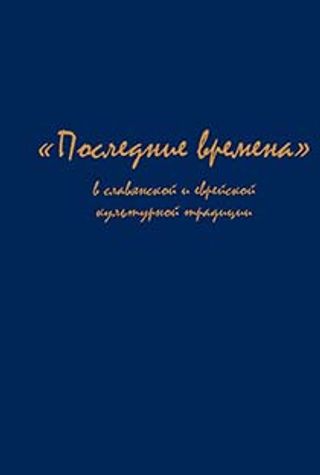
«Последние времена» в славянской и еврейской культурной традиции
Белова О. В., Копченова И. В., Ясинская М. В., Мочалова В. В., Амосова С. Н., Шнирельман В. А., Сидоренко Н. В., Petrukhin V., Grishchenko A., Новокрещенных Е. В., Львов А. Л., Гаммал М. И., Алпатов С. В., Чёха О. В., Прохоров Г. С., Элиасберг Г. А., Адельгейм И. Е. М.: Научно-гуманитарный центр «Сэфер», 2023.
Similar publications
Эсхатология как медиатический конструкт: теоретико-обобщающий анализ языковых и визуальных практик
Moskvina Z. О., Филология: научные исследования 2026 № 8 С. 629–640
Abstract: The subject of this study is eschatology as a media construct in the contemporary communicative space. This theoretical analysis encompasses the linguistic, narrative, and visual mechanisms through which eschatological motifs migrate from religious discourse to the secular information field, where they are reinterpreted and adapted to the logic of modern media. Particular attention is paid ...
Added: September 4, 2026
Христианская и языческая эсхатология в поэме Muspilli
Zemlyakov M., В кн.: Восточная Европа в древности и средневековье. Чтения памяти члена-корреспондента АН СССР В.Т. Пашуто. Выпуск XXXVIII. Будущее в настоящем: предсказания, знамения, видения, сны.: М.: ИВИ РАН, 2026. С. 54–58.
Доклад посвящён обширной дискуссии, начатой вокруг сути и значения предсказания о конце света в 103-строчной аллитерационной поэме Muspilli с момента её обнаружения знаменитым филологом Иоганном Андреасом Шмеллером (1785–1852) и продолжающейся до сих пор. Если в XIX в. большинство немецких филологов придерживалось версии о том, что перед нами аналог христианской покаянной молитвы, призывающей к очищению от грехов и смирению, то ...
Added: April 17, 2026
Введение в ислам: 12 лекций для проекта Магистерия
Zhuravskiy A., М.: Роузбад Интерэктив, 2026.
Перед вами сборник лекций об исламе, прочитанных Алексеем Васильевичем Журавским для проекта «Магистерия». Это целостное и доступное религиоведческое введение в систему представлений, норм и практик одной из мировых религий, представителями которой являются в настоящее время 1,6 млрд. человек, или 23% населения земного шара. Автор — старший научный сотрудник Института классического востока и античности НИУ ВШЭ, ...
Added: March 5, 2026
Деяния Андрея и Варфоломея
Vinogradov A., В кн.: Древние свидетельства об апостоле Андрее Первозванном. Агиографические тексты 1-го тысячелетия по Р.Х.: М.: Издательский дом "Лингва-Ф", 2025. С. 197–226.
Перевод части I выполнен А. А. Рогожиной с коптского (по изданиям: Guidi I. Frammenti copti // Rendiconti dell R. Accad. dei Lincei, Classe di scienze morali, storiche e filologiche. 1887. Vol. 3. P. 177–190; Lucchesi E. Deux nouveaux fragments coptes des Acts d’André et Barthélemy (BHO 57) // Analecta Bollandiana. 1980. T. 98. P. 75–82; ...
Added: December 27, 2025
Nominative Object
Ronko R., Wiemer B., , in: Encyclopedia of Slavic Languages and Linguistics Online.: Brill, 2020.
The nominative object describes a clause type in which the object of a transitive verb takes nominative morphology, and this coding is not conditioned by voice operations. It is a salient property in regions in which Slavic varieties have been in contact with Finnic- and/or Baltic-speaking population, i.e., in the eastern part of the Circum-Baltic ...
Added: December 19, 2025
Hokan II: Labial and coronal obstruents
Zhivlov M., Journal of Language Relationship 2025 Vol. 23 No. 1-2 P. 51–93
The article continues the series of publications focused on the reassessment of the controversial Hokan hypothesis. In this paper, the traditional comparative method is applied to sound correspondences involving labial and coronal obstruents. The obtained results are compared to Terrence Kaufman’s (1989) reconstruction of Proto-Hokan. ...
Added: October 29, 2025
О критериях выявления и стратификации булгаро-чувашских заимствований в пермских языках I
Savelyev A., Вопросы языкового родства 2025 № 23/1-2 С. 137–167
This article represents the first part of a two-part study devoted to the analysis of Turkic loanwords of the Bulghar-Chuvash type in the Permic languages. In this part, general criteria are proposed for distinguishing Bulgharic borrowings within the corpus of Udmurt and Komi words of Turkic origin. In addition, a “core” layer of Bulghar-Chuvash loanwords ...
Added: October 28, 2025
The Twofold Nature of Old East Slavic Iže
Anna A. Fitiskina, Russian linguistics 2025 Vol. 49 Article 4
This paper aims to demonstrate that the Old East Slavic pronoun iže, traditionally considered a loanword from Old Church Slavonic and a marker of literacy, was in fact also widely used in secular texts of the earliest period and that its usage there differed considerably from that found in Old East Slavic church-oriented literature. The ...
Added: September 26, 2025
Берестяные грамоты из раскопок 2024 г. I. Великий Новгород, Троицкий раскоп
Gippius A., Вопросы языкознания 2025 № 4 С. 7–41
This article contains a preliminary publication of 30 birchbark letters found during the 2024 archaeological season at the Troitsky excavation in Veliky Novgorod. The vast majority of the published texts date back to the 12th century. Most important in historical and philological terms are the following items: a letter mentioning a military campaign and related ...
Added: September 21, 2025
Эсхатология в поэмах неоавангарда (на материале творчества К. К. Кузьминского, Г. В. Сапгира, И. С. Холина
Pavlovets M., История и теория культуры: Альманах. Москва : Издательство Московского университета 2025 № 5 С. 462–474
The article is devoted to the eschatological theme in the poems of Konstantin Kuzminsky, Genrikh Sapgir and Igor Kholin ...
Added: September 16, 2025
Употребление будущего времени в греческом тексте псалмов и гипотеза об «эсхатологизации» греческой Псалтири
Seleznev M., Индоевропейское языкознание и классическая филология 2025 Т. 29 № 2 С. 401–410
The crystallization of apocalyptic and eschatological ideas in the Jewish tradition began during the Babylonian captivity and continued during the Second Temple period. In a developed form, Jewish eschatology is presented in the book of Daniel (second century B.C.), in the book of Enoch (last centuries B.C.), in the New Testament, and in numerous Jewish ...
Added: August 19, 2025
Сивилла Тибуртина в православной проповеди Киевской митрополии рубежа XVI—XVII вв.
Nepryakhin I., Электронный научно-образовательный журнал "История" 2025 Т. 16 № 2(148)
В период активного развития проповеди в восточнославянских землях Речи Посполитой большую популярность получил жанр учительных Евангелий, включавших в свой состав новые религиозные сюжеты. В одной из редакций учительного Евангелия сохранился рассказ о пророчестве сивиллы Тибуртины римскому императору Октавиану Августу о рождении Христа. В статье показаны особенности бытования рассказов о сивиллах в православной книжности в XVI—XVII ...
Added: June 25, 2025
Время человека в философии Н.А. Бердяева: образ и смысл
Zhukova O., Человек 2025 Т. 36 № 3 С. 13–29
The article examines the peculiarities of N.A. Berdyaev’s philosophical and anthropological concept. Its constructive and semantic element is the problem of human existence in history and eternity. Berdyaev presents his philosophy as an experience of insight into the reality of the free spirit, symbolized by the historical and cultural process. In the Meaning of Creativity Berdyaev ...
Added: June 17, 2025
Финно-угорские этносы в библейской генеалогии народов Палеи Толковой
Пузанов Д. В., Вестник Удмуртского университета. Серия История и филология 2015 № 4 С. 141–145
Исследуются познавательные возможности Палеи Толковой - важного источника по истории средневековой Руси - относительно финно-угроведения. Особое внимание уделяется сравнению таблицы народов, представленной в Повести временных лет с перечислением народов Иафетова жребия в Палее Толковой. В Палее упоминаются три финно-угорских племенных образования, не вошедших в раннюю летопись. Это не означает, что во времена составления Повести временных ...
Added: June 10, 2025
Философия и методология истории в России
Malinov A. V., СПб.: Интерсоцис, 2015.
В основе книги – курс лекций по философии и методологии истории в России, читавшийся в Санкт-Петербургском государственном университете. Рассматриваются основные философско-исторические подходы и концепции от эпохи Средневековья до начала ХХ века. В русской философии истории выделяются два направления: историософское и теоретико-методологическое. Первое из них связано с религиозной интерпретацией исторического процесса, в рамках второго направления происходило ...
Added: April 13, 2025
Херувим из иллюстративного ряда Speculum theologiae
Egorova A., Вестник Православного Свято-Тихоновского гуманитарного университета. Серия 5: Вопросы истории и теории христианского искусства 2019 № 35 С. 33–47
The Mirror of Theology (Speculum theologiae) is a unique example of a book miniature of the Latin Middle Ages. It represents an embodiment of the Catholic didactics of the 13th 15th centuries concentrated to its maximum. This article studies one of the miniatures of the illustrative range of the Speculum theologiae with a schematic drawing ...
Added: March 2, 2025
Латынь и церковнославянский как языки «ученого духовенства»: к истории духовного образования в XVIII веке
Kislova E., Вестник Православного Свято-Тихоновского гуманитарного университета. Серия 3: Филология 2024 № 79 С. 34–51
Духовенство переживает в XVIII в. важнейшие процессы, связанные с формированием сословия; важнейшую роль в этом процессе играет создание системы духовного образования. Мы рассмотрим, каким образом в среде духовенства формировалось представление о грамотности и учености как обязательных компонентов представления о себе, и каким образом на протяжении века меняются языки, включенные в эти представления. Проанализировав "грамотность" и ...
Added: February 19, 2025
  • About
  • About
  • Key Figures & Facts
  • Sustainability at HSE University
  • Faculties & Departments
  • International Partnerships
  • Faculty & Staff
  • HSE Buildings
  • HSE University for Persons with Disabilities
  • Public Enquiries
  • Studies
  • Admissions
  • Programme Catalogue
  • Undergraduate
  • Graduate
  • Exchange Programmes
  • Summer University
  • Summer Schools
  • Semester in Moscow
  • Business Internship
  • Research
  • International Laboratories
  • Research Centres
  • Research Projects
  • Monitoring Studies
  • Conferences & Seminars
  • Academic Jobs
  • Yasin (April) International Academic Conference on Economic and Social Development
  • Media & Resources
  • Publications by staff
  • HSE Journals
  • Publishing House
  • iq.hse.ru: commentary by HSE experts
  • Library
  • Economic & Social Data Archive
  • Video
  • HSE Repository of Socio-Economic Information
  • HSE1993–2026
  • Contacts
  • Copyright
  • Privacy Policy
  • Site Map
Edit