?
Emil von Qvanten, Mikhail Bakunin and pan-national activist networks
Ch. 7. P. 117–136.
Björk-Winberg M., Egorov E.
This chapter focuses on two non-Scandinavian protagonists with links to different pan-national movements in Northern Europe.
In book
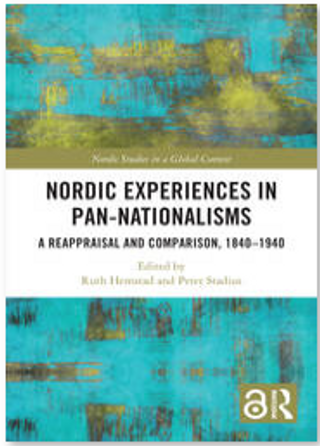
Björk-Winberg M., Bohlin A., Egorov E., Elmgren A., van Gerven T., Glenthøj R., Hemstad R. L.: Routledge, 2023.
Uspensky P., Новый мир 2025 № 3 С. 199–215
The second article examines the possible influence of skaldic poetry on Mayakovsky's metaphors. I analyze in detail the translations and analyses of skaldic poetry available in the 1900s. I demonstrate that readers at the turn of the century could have formed a certain understanding of this poetry. Moreover, the article introduces an archival document—a letter ...
Added: September 27, 2025
Egorov E., Slavonic and East European Review 2026 Vol. 104 No. 2 P. 305–330
Advocates of pan-Scandinavianism in the mid-19th century hoped to establish a union between Denmark and Sweden-Norway, strong enough to counter potential external aggression. By 1864, as the Second Schleswig War unfolded, the possibility of a Scandinavian union became a conceivable outcome of the conflict. The Russian Emperor Alexander II and his foreign minister Alexander Gorchakov ...
Added: September 22, 2025
Egorov E., , in: Nordic Experiences in Pan-nationalisms: A Reappraisal and Comparison, 1840–1940.: L.: Routledge, 2023. Ch. 5 P. 76–95.
This chapter mostly fathoms into power relations and knowledge-production concerned with Scandinavianism in the imperial institutions. Its focal point gravitates between the Finnish administration and the Ministry of Foreign Affairs to argue that internal and external perception of Scandinavianism coalesced with each other. ...
Added: June 11, 2023
М.: Регтайм, 2021.
"Прямухинские чтения"- это конференция, которая с 2001 года каждое лето проводится на родине М.А. Бакунина - в селе Прямухине Тверской области. Тематика конференции охватывает историю рода Бакуниных и их родового гнезда, а также жизнь и деятельность членов этой замечательной семьи и - прежде всего - Михаила Бакунина. Большое внимание уделяется истории развития анархических идей и ...
Added: November 29, 2021
Ilyin A., В кн.: Великая российская революция 1917-1921: либертарный взгляд: (Прямухинские чтения, 2017).: Регтайм, 2018. Гл. 12 С. 246–263.
В статье рассматриваются менявшиеся представления революционера и теоретика анархизма М.А. Бакунина (1814-1876) о политическом насилии. Прослежен его переход от поддержки идеи гражданской войны как инструмента политического и социального прогресса к пацифизму и обратно. ...
Added: October 20, 2020
Chepurin K., Dubilet A., , in: Thought: A Philosophical History.: Routledge, 2021. Ch. 21 P. 293–306.
This paper cuts across three nineteenth-century Russian thinkers—Pyotr Chaadaev, Mikhail Bakunin and Nikolai Fedorov—to reconstruct a speculative trajectory that seeks to think an ungrounding and delegitimation of the (Christian-modern) world and its logics of violence, domination, and exclusion. In Chaadaev, Russia becomes a territory of nothingness—an absolute exception from history, tradition, and memory, without attachment ...
Added: January 22, 2020
Ilyin A., Вестник Русской христианской гуманитарной академии 2016 № 4 С. 169–177
This paper examines concept "revolution" in writings of M. A. Bakunin (1814-1876), revolutionary and theorist of anarchism. A particular focus of the study is difference between two distinct and incompatible approaches to revolution in Bakunin's texts. First one is based on the idea of historical progress and development of human rationality. The second one stems ...
Added: July 22, 2018
Shkolnikov V., Die Welt der Slaven. Internationale Halbjahresschrift für Slavistik 2018 Vol. 63 No. 2 P. 334–363
This article examines how a crucial aspect of the founding myth of the Russian intelligentsia—the notion of the intelligentsia as “the conscience of Russian society”—was initially formulated in the conceptual language of Hegelian philosophy by the members of Stankevich circle in the late 1830s and early 40s. The aim is to present a more precise ...
Added: January 17, 2018
Shkolnikov V., , in: Hegel's Thought in Europe: Currents, Crosscurrents and Undercurrents.: Palgrave Macmillan, 2013. P. 17–34.
This paper recounts how the initial influence of Hegelian ideas in Russian during the 1830s and 40s acted as the catalyst for a complex process of personal and philosophical development, which eventually transformed the youthful members of Moscow's philosophical circles into the leaders of Russia's 'liberation movement.' Focusing in particular on Vissarion Belinsky, Mikhail Bakunin, ...
Added: October 23, 2017
Kantor V., Человек 2014 № 3 С. 148–159
In the world philology the discussion on identity of the prototype of Stavrogin, the primary character of “Demons” by А. Dostoevsky. This character is the key one for Dostoevsky’s views on Russian revolutionary radicalism. The author of the article finds a number of correspondences in the life and activities of A. Herzen and the novel’s ...
Added: August 4, 2014
М.: Футурис, 2012.
«Прямухинские чтения» – это конференция, которая с 2001 года каждое лето проводится на родине М. А. Бакунина – в селе Прямухине Тверской области. Тематика конференции охватывает историю рода Бакуниных и их родового гнезда, а также жизнь и деятельность членов этой замечательной семьи и – прежде всего – Михаила Бакунина. Большое внимание уделяется истории развития анархических ...
Added: February 14, 2013