?
Vaccine prophylaxis, diagnostics and genotypes of mumps (epidemic parotitis) virus
P. 539–540.
We describe the methods of diagnostic and vaccine prevention of mumps
In book
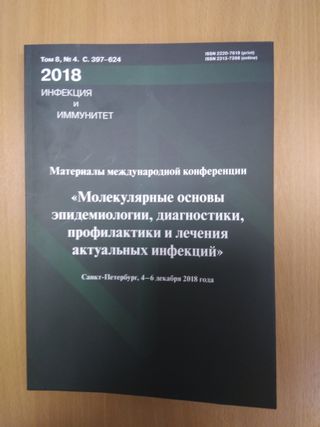
Vol. 8. Issue 4. , [б.и.], 2018.
Knight M., Bienhoff K., A B. et al., The Lancet Public Health 2026 Vol. 11 No. 9 P. e604–e629
Background
Understanding the size, gender composition, and cadre mix of the health workforce and how it has evolved across time and locations can inform policies for planning, recruitment, training, and retention of human resources for health (HRH), and improvement of access to the health-care workforce among populations. Using comparable and standardised data sources, we aim to ...
Added: August 25, 2026
Razo C., DeCleene N., Johnson C. et al., JAMA - Journal of the American Medical Association 2026 Vol. 336 No. 8 P. 673–696
Importance Elevated low-density lipoprotein cholesterol (LDL-C) is a modifiable risk factor for cardiovascular disease, the leading cause of premature death worldwide. Assessing the LDL-C–related burden is critical for guiding prevention and treatment strategies.
Objectives To estimate the global, regional, and national burden of ischemic heart disease and ischemic stroke attributable to elevated LDL-C (relative to 35-54 mg/dL) from ...
Added: August 4, 2026
van der Lubbe S. C., Moberg M. E., Aluquin D. et al., The Lancet Public Health 2026 Vol. 11 No. 9 P. e589–e603
Background
Road injuries are a leading cause of mortality and morbidity worldwide. Years of international efforts have aimed to strengthen policy engagement, including the 2020 UN General Assembly's proclamation of the Second Decade of Action for Road Safety (2021–30), targeting a 50% reduction in road traffic deaths and serious injuries by 2030. The aim of this ...
Added: July 25, 2026
Vlassov V., The Lancet Infectious Diseases 2026 P. 1–12
Background
Tuberculosis (TB) is the leading global cause of death from a single infectious agent. Recent reductions in global health funding have threatened TB control, making comprehensive assessment of TB, HIV-related TB, and drug-resistant TB burdens before these disruptions essential for shaping effective responses. The WHO End TB Strategy sets targets of a 95% reduction in ...
Added: July 7, 2026
Liapin G., Vlassov V., DIALOGUES IN HEALTH 2026 Vol. 8 Article 100317
Objectives
Due to the economic growth at the end of the 20th century, people in low-income countries live longer but still spend most of their income on food. These countries, as well as affluent countries, demonstrate a rising prevalence of obesity. The interplay of longevity and obesity at different levels of economic development is not clear.
Methods
We ...
Added: June 29, 2026
Bhangdia K., May M. L., Kocarnik J. M. et al., The Lancet Oncology 2026 Vol. 27 No. 3 P. 302–326
Background
Breast cancer is a leading cause of mortality and morbidity among females worldwide. As part of the Global Burden of Diseases, Injuries, and Risk Factors Study (GBD) 2023, we provided an updated comprehensive assessment of the epidemiological trends, disease burden, and risk factors associated with breast cancer globally, regionally, and nationally from 1990 to 2023.
Methods
Breast ...
Added: March 6, 2026
Stark B., DeCleene N., Desai E. et al., Journal of the American College of Cardiology 2025 Vol. 86 No. 22 P. 2167–2243
Background: Cardiovascular diseases (CVDs) are the leading cause of mortality and are among the foremost causes of disability globally. CVD burden has continued to increase in most countries since 1990, with trends driven by changing exposures to harmful risk factors, population growth, and population aging.
Objectives: We report estimates of global, national, and subnational CVD burden, including 18 ...
Added: December 7, 2025
Troeger C., Arndt M. B., Aalruz H. et al., The Lancet Child and Adolescent Health 2026 Vol. 10 No. 1 P. 22–38
Background Child growth failure (CGF), which includes underweight, wasting, and stunting, is among the factors most strongly associated with mortality and morbidity in children younger than 5 years worldwide. Poor height and bodyweight gain arise from a variety of biological and sociodemographic factors and are associated with increased vulnerability to infectious diseases. We used data ...
Added: December 6, 2025
Naghavi M., Kyu H. H., A B. et al., The Lancet 2025 Vol. 406 No. 10513 P. 1811–1872
Background
Timely and comprehensive analyses of causes of death stratified by age, sex, and location are essential for shaping effective health policies aimed at reducing global mortality. The Global Burden of Diseases, Injuries, and Risk Factors Study (GBD) 2023 provides cause-specific mortality estimates measured in counts, rates, and years of life lost (YLLs). GBD 2023 aimed ...
Added: October 15, 2025
Hay S. I., Ong K. L., Santomauro D. F. et al., The Lancet 2025 Vol. 406 No. 10513 P. 1873–1922
Background
For more than three decades, the Global Burden of Diseases, Injuries, and Risk Factors Study (GBD) has provided a framework to quantify health loss due to diseases, injuries, and associated risk factors. This paper presents GBD 2023 findings on disease and injury burden and risk-attributable health loss, offering a global audit of the state of ...
Added: October 15, 2025
Force L. M., Kocarnik J. M., May M. L. et al., The Lancet 2025 Vol. 406 No. 10512 P. 1565–1586
Background
Cancer is a leading cause of death globally. Accurate cancer burden information is crucial for policy planning, but many countries do not have up-to-date cancer surveillance data. To inform global cancer-control efforts, we used the Global Burden of Diseases, Injuries, and Risk Factors Study (GBD) 2023 framework to generate and analyse estimates of cancer burden ...
Added: September 25, 2025
Vlassov V., BMJ Evidence-Based Medicine 2025 Vol. 30 P. A10–A11
World wide reduction of fertility below the threshold of substitution lead to the shrinkage of the populations, ageing of populations and multiple undesired consequences including the collapse of the pension systems. Countries with the large and underpopulated territory (Russia) and/or quick ageing and population reduction (China) share the pessimistic vision of the instability and vulnerability. ...
Added: September 22, 2025
Anza-Ramirez C., Jaime Miranda J., Armocida B. et al., Nature Communications 2025 Vol. 16 Article 4235
Chronic care manages long-term, progressive conditions, while acute care addresses short-term conditions. Chronic conditions increasingly strain health systems, which are often unprepared for these demands. This study examines the burden of conditions requiring acute versus chronic care, including sequelae. Conditions and sequelae from the Global Burden of Diseases Study 2019 were classified into acute or ...
Added: July 14, 2025
Ng M., Gakidou E., Lo J. et al., The Lancet 2025 Vol. 405 No. 10481 P. 813–838
Background
Overweight and obesity is a global epidemic. Forecasting future trajectories of the epidemic is crucial for providing an evidence base for policy change. In this study, we examine the historical trends of the global, regional, and national prevalence of adult overweight and obesity from 1990 to 2021 and forecast the future trajectories to 2050.
Methods
Leveraging established ...
Added: March 9, 2025
Kerr J. A., Cini K. I., Patton G. C. et al., The Lancet 2025 Vol. 405 No. 10481 P. 785–812
Background
Despite the well documented consequences of obesity during childhood and adolescence and future risks of excess body mass on non-communicable diseases in adulthood, coordinated global action on excess body mass in early life is still insufficient. Inconsistent measurement and reporting are a barrier to specific targets, resource allocation, and interventions. In this Article we report ...
Added: March 7, 2025
Different phenotypic assessment of depression prevalence in Russian population: DSM-criteria vs HADS
Rukavishnikov G., Rakitko A., Kasyanov E. et al., European Psychiatry 2022 Vol. 65 No. S1 P. 556–556
Introduction
Because of different phenotypic approaches, data on depression prevalence is variable and controversial.
Objectives
The aim was to evaluate the prevalence of different depressive phenotypes in the Russian population (DSM criteria based self-report vs HADS questionnaire).
Methods
The data was from the on-line survey of 5116 clients of Genotek Ltd. (males - 50,63%; age - Me=35 (Q1-30;Q3-42)). The survey ...
Added: March 4, 2025
Arndt M. B., Abate Y. H., Abbasi-Kangevari M. et al., The Lancet 2025 Vol. 404 No. 10471 P. 2543–2583
Background
The six global nutrition targets (GNTs) related to low birthweight, exclusive breastfeeding, child growth (ie, wasting, stunting, and overweight), and anaemia among females of reproductive age were chosen by the World Health Assembly in 2012 as key indicators of maternal and child health, but there has yet to be a comprehensive report on progress for ...
Added: December 15, 2024
Soshnikov S., Bekker S., Idrisov B. et al., JMIR Formative Research 2024 Vol. 8 Article e56006
Background:Studying illicit drug circulation and its effects on population health is complicated due to the criminalization of trade and consumption. Illicit drug markets have evolved with IT, moving digital to the “darknet.” Previous research has analyzed darknet market listings and customer reviews. Research tools include public health surveys and medical reports but lack neutral data ...
Added: December 7, 2024
Comfort H., McHugh T. A., Schumacher A. E. et al., The Lancet 2024 Vol. 404 No. 10466 P. 1955–1988
Background
Stillbirth is a devastating and often avoidable adverse pregnancy outcome. Monitoring stillbirth levels and trends—in a comprehensive manner that leaves no one uncounted—is imperative for continuing progress in pregnancy loss reduction. This analysis, completed as part of the Global Burden of Diseases, Injuries, and Risk Factors Study (GBD) 2021, methodically accounted for different stillbirth definitions ...
Added: November 12, 2024
Malekpour M., Rezaei N., Azadnajafabad S. et al., Public Health 2024 Vol. 237 P. 212–231
Objectives
In this study, the trends and current situation of the injury burden as well as attributable burden to injury risk factors at global, regional, and national levels based on the Global Burden of Diseases, Injuries, and Risk Factors Study (GBD) 2019 are presented.
Study design
To assess the attributable burden of injury risk factors, the data of ...
Added: October 31, 2024
Jin Y., Guo C., Abbasian M. et al., Med 2024 Vol. 5 No. 8 P. 943–962.e6
Background
This study aims to estimate the burden, trends, forecasts, and disparities of early musculoskeletal (MSK) disorders among individuals ages 15 to 39 years.
Methods
The global prevalence, years lived with disabilities (YLDs), disability-adjusted life years (DALYs), projection, and inequality were estimated for early MSK diseases, including rheumatoid arthritis (RA), osteoarthritis (OA), low back pain (LBP), neck pain ...
Added: June 11, 2024
Emil Vollset S., Ababneh H. S., Habtegiorgis Abate Y. et al., The Lancet 2024 Vol. 403 No. 10440 P. 2204–2256
Background
Future trends in disease burden and drivers of health are of great interest to policy makers and the public at large. This information can be used for policy and long-term health investment, planning, and prioritisation. We have expanded and improved upon previous forecasts produced as part of the Global Burden of Diseases, Injuries, and Risk ...
Added: May 21, 2024