• A
  • A
  • A
  • АБВ
  • АБВ
  • АБВ
  • A
  • A
  • A
  • A
  • A
Обычная версия сайта
  • RU
  • EN
  • HSE University
  • Publications
  • Book chapter
  • Мудрость святых у языческих философов: к эволюции этических взглядов Иоанна Уэльского
  • RU
  • EN
Расширенный поиск
Высшая школа экономики
Национальный исследовательский университет
Priority areas
  • business informatics
  • economics
  • engineering science
  • humanitarian
  • IT and mathematics
  • law
  • management
  • mathematics
  • sociology
  • state and public administration
by year
  • 2027
  • 2026
  • 2025
  • 2024
  • 2023
  • 2022
  • 2021
  • 2020
  • 2019
  • 2018
  • 2017
  • 2016
  • 2015
  • 2014
  • 2013
  • 2012
  • 2011
  • 2010
  • 2009
  • 2008
  • 2007
  • 2006
  • 2005
  • 2004
  • 2003
  • 2002
  • 2001
  • 2000
  • 1999
  • 1998
  • 1997
  • 1996
  • 1995
  • 1994
  • 1993
  • 1992
  • 1991
  • 1990
  • 1989
  • 1988
  • 1987
  • 1986
  • 1985
  • 1984
  • 1983
  • 1982
  • 1981
  • 1980
  • 1979
  • 1978
  • 1977
  • 1976
  • 1975
  • 1974
  • 1973
  • 1972
  • 1971
  • 1970
  • 1969
  • 1968
  • 1967
  • 1966
  • 1965
  • 1964
  • 1963
  • 1958
  • More
Subject
News
May 25, 2026
HSE Scientists Train Neural Network to 'Hear' Faults in Electric Motors
Researchers at the AI and Digital Science Institute of the HSE Faculty of Computer Science have developed a new method—the Signature-Guided Data Augmentation (SGDA) framework—that achieves 99% accuracy in motor fault detection and 86% accuracy in fault classification. The application of this approach can reduce industrial equipment repair costs, minimise downtime, and improve production safety. The study results have been published in Engineering Applications of Artificial Intelligence.
May 25, 2026
'The Humanities Serve as a Conscience'
Maria Mizernaia studies Soviet literature and the history of book publishing. In this interview for the HSE Young Scientists project, she discusses plans to publish a novel about besieged Leningrad, AI-provoked reflections on what it means to be human, and how novels can help satisfy our dopamine hunger.
May 25, 2026
Is It Possible to Predict a Citys Life Based on the Shape of Its Neighbourhoods?
Is it possible to predict, based on the configuration of streets and buildings, where a café will open or where traffic congestion will occur? Participants in the Spatial Analysis and Modelling of Urban Processes research and study group use open data and machine learning to identify universal patterns. Alexander Sheludkov and Eduard Somov discuss the purpose of comparing cities, the need for new forms of urban statistics, and how open data is transforming approaches to urban studies.


Have you spotted a typo?
Highlight it, click Ctrl+Enter and send us a message. Thank you for your help!

Publications
  • Books
  • Articles
  • Chapters of books
  • Working papers
  • Report a publication
  • Research at HSE

?

Мудрость святых у языческих философов: к эволюции этических взглядов Иоанна Уэльского

С. 183–204.
Yatsyk S.

Franciscan theologian an industrious collector of exempla John of Wales († ca. 1285) was a forerunner of so-called “classicizing” movement within the Franciscan order. “Classicising friars” had a special concern in Antiquity and inclined to combine scholastic background and classical tradition and literature while working on educational and didactic texts. John who was definitely fascinated by lives of pagan philosophers and intended to use their stories as sources of moralising exempla, had to face a “problem of paganism” (term introduced by J. Marenbon). He felt the need to justify the application of ancient exempla in sermons.

Current article aims at tracing his arguments for the use of “pagan” exempla. As a result of analysis of John’s “-loquia” sequence, following pros were brought to light: first of all, he makes references to the authority of Church fathers and other theologians who also mentioned Seneca and other philosophers. Secondly, he stated (cunningly, of course) that whereas biblical exempla were already well-known for the preachers, he felt the need to introduce some new stories. John believed that the preacher had to have a convenient sermon for every moment, not only while preaching but for didactic talks in mensa as well. Finally, his third argument was inspired by St. Augustin who affirmed that human deeds have to be classified according to their goal or motivation (finis). So, John proved the virtuosity of pagan’s deeds by showing that this act aimed at utility (utilitas) or honour (honestas).

Language: Russian
Full text
Keywords: John of WalesИоанн Уэльскийproblem of paganismBreviloquium de virtutibusBreviloquium de sapientia sanctorumязыческая проблема
Publication based on the results of:
Eastern and Western Europe in the Middle Ages and Early Modern Period: historical and cultural commonalities, regional peculiarities and the dynamics of interaction (2014)

In book

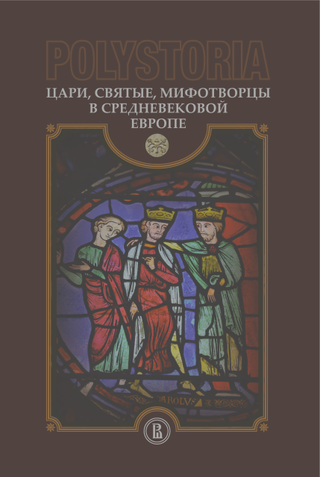
Polystoria: Цари, святые, мифотворцы в средневековой Европе
М.: Издательский дом НИУ ВШЭ, 2016.
Similar publications
Краткая беседа о мудрости святых (вступ. статья, пер. и примеч. С. А. Яцык)
Yatsyk S., Вестник Православного Свято-Тихоновского гуманитарного университета. Серия 3: Филология 2017 Т. 50 С. 119–138
The present publication is the very first scholarly translation of «Breviloquium de sapientia sanctorum», a tract written by John of Wales in Paris around 1272. This treatise is the last of John’s «-loquia» sequence and by now it lacks attention of scholars. Out of 28 survived copies, current translation is based on 3 following manuscripts: ...
Added: March 11, 2017
Scientia, sapientia, philosophia: иерархия форм знания в сочинениях Иоанна Уэльского
Yatsyk S., Индоевропейское языкознание и классическая филология 2015 С. 1061–1069
Present article focuses on analysis of John of Wales' classification of several types of knowledge on the basis of his "-loquia" sequence (consisting of “Breviloquium de philosophia, sive sapientia sanctorum”, “Communiloquium” or “Summa collationum”, “Compendiloquium” and “Breviloquium de virtutibus antiquorum Principum et Philosophorum”). John, an important Franciscan theologian and an industrious collector of exempla of the 13th century, ...
Added: June 23, 2015
  • About
  • About
  • Key Figures & Facts
  • Sustainability at HSE University
  • Faculties & Departments
  • International Partnerships
  • Faculty & Staff
  • HSE Buildings
  • HSE University for Persons with Disabilities
  • Public Enquiries
  • Studies
  • Admissions
  • Programme Catalogue
  • Undergraduate
  • Graduate
  • Exchange Programmes
  • Summer University
  • Summer Schools
  • Semester in Moscow
  • Business Internship
  • Research
  • International Laboratories
  • Research Centres
  • Research Projects
  • Monitoring Studies
  • Conferences & Seminars
  • Academic Jobs
  • Yasin (April) International Academic Conference on Economic and Social Development
  • Media & Resources
  • Publications by staff
  • HSE Journals
  • Publishing House
  • iq.hse.ru: commentary by HSE experts
  • Library
  • Economic & Social Data Archive
  • Video
  • HSE Repository of Socio-Economic Information
  • HSE1993–2026
  • Contacts
  • Copyright
  • Privacy Policy
  • Site Map
Edit