?
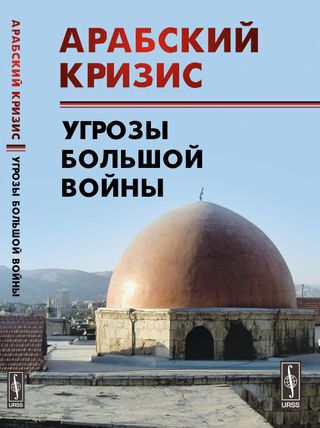
Фитна как форма и метод политического протеста в арабских странах
С. 95–112.
Shishkina A., Шишкин Г. В., Ideology and Politics Journal 2021 Vol. 3 No. 19 P. 50–67
This paper is devoted to the study of the phenomenon of the Palestinian intifada in the wider context of the theoretical understanding of the socio-political] protests in the Middle East. The complexities of socio-economic and political prerequisites for the emergence of protest actions, as well as their dynamics are analyzed in this article from a comparative angle. The authors ...
Added: January 10, 2022
ал-Будайри Ш. А., М.: Издательство "Индрик", 2021.
The chronicle of Shihāb al-Dīn Aḥ mad Ibn Budayr (commonly known as Ahmad
al-Budayrī), a barber in eighteenth-century Damascus, is a valuable resource for
learning about the commonplace city life in the Levant. Set in the early modern period, the chronicle at times anticipates the ideology of the Arab Renaissance (al-Nahḍ a)
of the nineteenth century. The earliest ...
Added: October 25, 2021
Zelenev E., Iliushina M., Восток. Афро-азиатские общества: история и современность 2018 № 1 С. 31–40
The classic Mamluk era (mid‑13th – early 16th century) was one of the brightest in the history of
Egypt, as well as of the entire Middle East. The reign of the sultan Barquq marked the beginning of
what is known as the Burji, or Circassian, period (1382–1517). The current paper regards the impact
of the sultan Barquq’s policy ...
Added: March 8, 2018
Shishkina A., Issaev L., Religions 2017 Vol. 8 No. 9 P. 1–9
Since 2011, the Arab world has entered a period of political turbulence accompanied by widespread growth of protest activity. The events that were metaphorically called the “Arab Spring” referring to the “Spring of Nations” of 1848, affected virtually all countries of the Middle East and North Africa. In Libya, Syria, and Yemen, antigovernment demonstrations led ...
Added: October 15, 2017
Issaev L., Неприкосновенный запас. Дебаты о политике и культуре 2017 № 2 С. 146–156
Начиная с 2011 года, арабский мир вступил в период политической турбулентности, сопровождаемый повсеместным ростом протестной активности. События, которые получили метафорическое название «арабская весна», отсылающее к «весне народов» 1848 года, затронули практически все страны Ближнего Востока и Северной Африки. В Ливии, Сирии и Йемене народные выступления привели к почти полному разрушению государственности, поставив вопрос о существовании ...
Added: May 23, 2017
Evgenii I. Zelenev, St. Petersburg Annual of Asian and African Studies 2014 No. 3 P. 113–122
In the Islamic world the fitnah is a phenomenon deeply rooted in terms of history, religion, politics and even social issues. The Quran mentions the word fitnah and its derivatives over 30 times, invariably with a negative moral connotation. Strictly speaking, the term refers to a wide range of phenomena and actions. Despite the condemnation ...
Added: September 12, 2015
Zelenev E., Вестник Башкирского университета 2015 Т. 20 № 2 С. 728–732
Статья посвящена исследованию генезиса понятия fitnah в контексте арабской политической культуры. Феномен fitnah исследуется с помощью бинарной исследовательской парадигмы: fitnah рассматривается как понятие, имеющее значительное смысловое разнообразие; fitnah рассматривается как реальное историческое явление, широко распространенное в арабо-исламском мире. В статье анализируется факт того, что в Сирию под влиянием призыва к джихаду, который звучал из уст ...
Added: July 8, 2015
Zelenev E., Азия и Африка сегодня 2015 № 5 С. 27–33
Методологически меньшинства не бывает без большинства и, наоборот, обнаружение большинства неизбежно сопровождается выявлением меньшинства. Практически во всех арабских странах, подверженных кризисным процессам 2011-2012 гг. и позднее, конфликт по линии раздела "меньшинство"- "большинство" определяет общий политический ландшафт. Этот тип конфликта проявляется в рамках кризиса политической идентичности, толкая личность к союзу с той или иной политической силой, ...
Added: June 9, 2015