• A
  • A
  • A
  • АБВ
  • АБВ
  • АБВ
  • A
  • A
  • A
  • A
  • A
Обычная версия сайта
  • RU
  • EN
  • HSE University
  • Publications
  • Book chapter
  • Basic Human Values of the Russians: Both Different from and Similar to Other Europeans
  • RU
  • EN
Расширенный поиск
Высшая школа экономики
Национальный исследовательский университет
Priority areas
  • business informatics
  • economics
  • engineering science
  • humanitarian
  • IT and mathematics
  • law
  • management
  • mathematics
  • sociology
  • state and public administration
by year
  • 2027
  • 2026
  • 2025
  • 2024
  • 2023
  • 2022
  • 2021
  • 2020
  • 2019
  • 2018
  • 2017
  • 2016
  • 2015
  • 2014
  • 2013
  • 2012
  • 2011
  • 2010
  • 2009
  • 2008
  • 2007
  • 2006
  • 2005
  • 2004
  • 2003
  • 2002
  • 2001
  • 2000
  • 1999
  • 1998
  • 1997
  • 1996
  • 1995
  • 1994
  • 1993
  • 1992
  • 1991
  • 1990
  • 1989
  • 1988
  • 1987
  • 1986
  • 1985
  • 1984
  • 1983
  • 1982
  • 1981
  • 1980
  • 1979
  • 1978
  • 1977
  • 1976
  • 1975
  • 1974
  • 1973
  • 1972
  • 1971
  • 1970
  • 1969
  • 1968
  • 1967
  • 1966
  • 1965
  • 1964
  • 1963
  • 1958
  • More
Subject
News
July 24, 2026
'Physics Is What the World Is Literally Built On'
Physicist Nina Dzhanayeva, recipient of a Vladimir Potanin Foundation scholarship, focuses her research on nanophotonics. In this interview for the HSE Young Scientists project, she discusses nanowells, scientific intuition, and how physics can help in making frangipane cream puffs.
July 20, 2026
Scientists Create Open Dataset for Studying Concentration
A team of Russian researchers, including scientists from HSE University–St Petersburg, has developed the first open multimodal dataset containing recordings of brain activity, heart function, and video observations to help researchers understand what happens in the human brain during deep concentration. In the future, the dataset could accelerate the development of neural interfaces, rehabilitation technologies, and AI systems. The article has been published in Scientific Data.
July 20, 2026
‘Science Is Universal-It Knows No Borders
Fuad Aleskerov, Tenured Professor and Director of the International Centre of Decision Choice and Analysis at HSE University, together with his colleagues, has developed methods of network analysis in bibliometrics that have made it possible to identify patterns in the appearance and citation of publications in academic journals, as well as their influence on each other. When one or a number of studies are frequently cited by a wide range of journals, this is an indicator that the research is of high quality. By contrast, extensive cross-citation within a limited group of journals increases the likelihood of identifying a network of predatory publications.


Have you spotted a typo?
Highlight it, click Ctrl+Enter and send us a message. Thank you for your help!

Publications
  • Books
  • Articles
  • Chapters of books
  • Working papers
  • Report a publication
  • Research at HSE

?

Basic Human Values of the Russians: Both Different from and Similar to Other Europeans

.
Magun V., Rudnev M.


The basic values of the Russian population and the population of thirty-one European countries were compared with data obtained by Schwartz Questionnaire embedded into the fourth round of the European Social Survey. Conclusions about similarities and differences of basic human values between Russia and other European countries confirm the thesis that Russia is a country which shares with the other world the general logic of cultural and social development and which has a lot in common with the countries of similar economic level and recent political history. In most value comparisons Russia appeared to be closer to the Post-Communist and to the Mediterranean countries than to Western European or Nordic countries.

The fact that the Russians are less committed than most Europeans to the values of caring, tolerance, equality and ecology and conversely more than most Europeans committed to the competitive "zero- sum” values of personal success, wealth and power confirms the validity of current moral criticism of mass values and morals in Russia. The other disturbing fact is the relatively low commitment of Russians to the values of Openness to Change and conversely a strong focus on Conservation. So the Russian basic values create a cultural barrier to the development of innovative economy and to the society development as a whole.

Thanks to the shift from the country to an individual and group level of analysis we challenge the notion of the "average Russian" and demonstrate that the Russian value majority consists of two subtypes. Russia has the sizable value minority also and its members share the values atypical for most of the Russians. Two value minorities which embrace 19% of Russian population are more committed to values of Openness and Self-Transcendence than the rest of the Russian population. These value groups are typical for the European countries with more prosperous and happy populations and we can hypothesize that in Russia they are resource groups for the country advancement also. 

Language: English
Keywords: value heterogeneityRussian values
Publication based on the results of:
Between- and within-country value and opinion diversity (2015)

In book

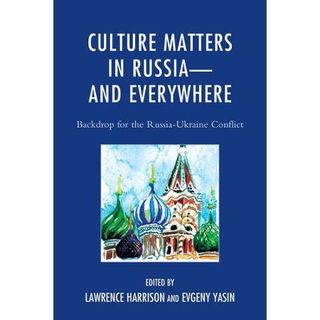
Culture Matters in Russia and Everywhere: Backdrop for the Russia-Ukraine Conflict
Lanham: Lexington Books, 2015.
Similar publications
The Stability Of The Value Typology Of Europeans: Testing Invariance With Confirmatory Latent Class Analysis
Rudnev M., Magun V., Schmidt P., / NRU Higher School of Economics. Series SOC "Sociology". 2014. No. 51.
Unlike variable-centered measures, validity and stability of typologies have been rarely  studied. Magun, Rudnev and Schmidt [in review] developed a value typology of the  European population using data from the 4 th round of the European Social Survey. The  value classes showed heuristic power in the comparison of different parts of the European  population, countries in particular, enabling more differentiated ...
Added: September 2, 2014
Ценностная гетерогенность населения европейских стран: типология по показателям Р.Инглхарта
Magun V., Rudnev M., Вестник общественного мнения. Данные. Анализ. Дискуссии 2012 № 3-4 С. 12–24
С помощью анализа латентных классов (LCA) осуществлена классификация жителей 43 европейских стран в зависимости от их ответов на вопросы о приверженности инглхартовским ценностям Рациональности/Традиции и Самовыражения/Выживания. Выделено три ценностных класса. Первый из них объединил людей с высокими показателями ориентации на подчинение и низкими показателями ориентации на самостоятельное социальное действие, третий,  противоположный по ориентациям класс: с ...
Added: November 30, 2012
Жизненные ценности российского населения: сходства и отличия в сравнении с другими европейскими странами
Magun V., Rudnev M., Вестник общественного мнения. Данные. Анализ. Дискуссии 2008 Т. 93 № 1 С. 33–58
Vladimir Magun and Maxim Rudnev present the data of international comparative European Social Survey in 2006-2007 analyzing the values of Russian population in comparison with those of the inhabitants of 19 European countries. An average Russian as compared to the inhabitants of other countries is characterized by a higher caution (or even fear) and the ...
Added: November 29, 2012
The Life Values of the Russian Population
Magun V., Rudnev M., Sociological Research 2010 Vol. 49 No. 4 P. 3–57
The present article is devoted to a comparison of today’s values of Russians with those of people living in the other countries of Europe. Many publications have broadly discussed the question of similarities and differences in the cultural and psychological characteristics of Russians and other Europeans, and these discussions represent part of a broader polemic ...
Added: November 29, 2012
Within and Between-Country Value Diversity in Europe: Latent Class Analysis
Magun V., Rudnev M., Schmidt P., / NRU Higher School of Economics. Series SOC "Sociology". 2012. No. 06/SOC/2012.
Country averages are the most popular instrument for studying cross-national variability of values, and within-country value diversity is rarely taken into consideration in such studies. Furthermore, traditional value indices only measure distinct value priorities, but do not allow researchers to grasp a system of value preferences. In order to find an alternative way to study ...
Added: August 28, 2012
  • About
  • About
  • Key Figures & Facts
  • Sustainability at HSE University
  • Faculties & Departments
  • International Partnerships
  • Faculty & Staff
  • HSE Buildings
  • HSE University for Persons with Disabilities
  • Public Enquiries
  • Studies
  • Admissions
  • Programme Catalogue
  • Undergraduate
  • Graduate
  • Exchange Programmes
  • Summer University
  • Summer Schools
  • Semester in Moscow
  • Business Internship
  • Research
  • International Laboratories
  • Research Centres
  • Research Projects
  • Monitoring Studies
  • Conferences & Seminars
  • Academic Jobs
  • Yasin (April) International Academic Conference on Economic and Social Development
  • Media & Resources
  • Publications by staff
  • HSE Journals
  • Publishing House
  • iq.hse.ru: commentary by HSE experts
  • Library
  • Economic & Social Data Archive
  • Video
  • HSE Repository of Socio-Economic Information
  • HSE1993–2026
  • Contacts
  • Copyright
  • Privacy Policy
  • Site Map
Edit