A researcher at HSE University has proposed a flowchart to help lecturers decide how to assess students who use artificial intelligence. It shows where the use of AI should be restricted and where it can be incorporated into the learning process. The article has been published in IT Professional.
You cannot study spoken dialects from books. Instead, you need to go to a village, seek out its elders, and earn the trust of local residents before you can record hours of spontaneous stories. This is how Natalia Muravleva, Associate Professor at the Faculty of Humanities, conducts her research. Her internship in Serbia continued her long-standing study of dialects spoken by Macedonian settlers. In this interview, she discusses how diaspora cultural centres help researchers reach informants, why native speakers need to be interviewed only in their own language (otherwise, as she puts it, they may 'break'), and how a single field season helped her finalise her monograph. She also shares warm memories of autumn in Belgrade and of colleagues with whom grammar can be discussed in three languages at once.
Researchers at the HSE FCSAI and Digital Science Institute have developed CAD2TechSpec, a framework that converts 3D models of mechanical parts into machining process plans—step-by-step instructions for machine tools. The solution aims to reduce the time required for the design and preparation of technical process documentation in mechanical engineering, aircraft manufacturing, and other high-tech industries. The study findings have been published in PeerJ Computer Science.
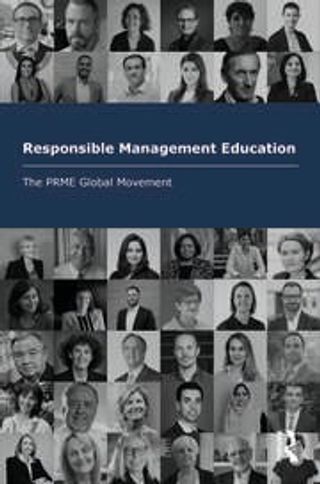
Written by many of the key influencers at the Principles for Responsible Management Education (PRME), the book focuses on advancing sustainable development into education, research and partnerships at higher education institutions and, specifically, at business schools, with the purpose of educating responsible leaders for today and tomorrow.
The book serves as a concrete source of inspiration ...
There is growing awareness among leading responsible management scholars and practitioners that understanding global wicked problems is insufficient in effecting lasting engagement and changed behaviors. Research indicates that to impact behavior, the mindset has to shift, which leaves the question: How do you shift a mindset?
This book guides educators and practitioners, their students and colleagues ...
Yang C., Ivanova E., Hufnagel J., International Journal of Management Education 2021 Vol. 19 No. 3 Article 100568
Developing a sustainability mindset requires a transdisciplinary approach to business education that integrates a rational-analytic mode of thinking and an emotive-holistic understanding of the human mind. In order to cultivate the sustainability mindset of business students, we have designed a contemplative art-based project involving the creation of an electronic portfolio which consists of a student's ...