?
Забытые "мелочи быта" XVIII века и карнавальные аллюзии: к вопросу о возникновении комических смыслов в "Евгении Онегине" и "Домике в Коломне" А.С.Пушкина
С. 459–467.
Левченко Т. В.
The chapter deals with comic meanings in Pushkin’s texts, which appear due to the real trifles of everyday life XVIII.
In book
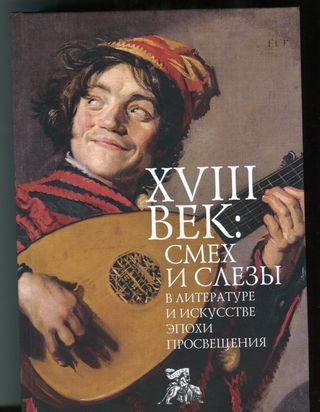
Кира Кашлявик, Пахсарьян Н. Т., Голубков А. В., Чеснокова Т. Г., Иванова-Гледель Е. СПб.: Алетейя, 2018.
Penskaja E., Slavic Literatures (ранее - Russian Literature) 2024 Т. 149 С. 117–151
Kozma Prutkov is a collective pseudonym used by four writers: Alexey, Alexander, and Vladimir Zhemchuzhnikov, along with their cousin Alexei Tolstoy. In the 1850s and 1860s, they published humorous works under this name, creating a versatile character who parodied an official writer through fables, poems, plays, and aphorisms. Prutkov’s works first appeared in 1854 in ...
Added: October 30, 2024
Александрова М. А., Bolshukhin L., Вестник Санкт-Петербургского университета. Язык и литература 2024 Т. 21 № 2 С. 293–303
The recent publication of a volume containing the Pushkin studies authored by Vladimir Markovich Markovich provides an excellent opportunity to reflect on this aspect of his research legacy. The complexity and responsibility of this task is determined by the innovative and programmatic nature of practically every article by V. M. Markovich on Pushkin, even though ...
Added: March 24, 2024
Золян С. Т., Tulchinskii G. L., В кн.: Идентичности: семиотика репрезентации и прагматика позиционирования.: Калининград: Издательство Балтийского федерального университета им. И. Канта, 2022. Гл. 4.4.-4.5. С. 76–133.
Тема оторванности от социума, «лишнего человека», «несовпадения с самим собой», широко и представленная в классической русской литературе, фактически с развиваемой точки зрения — не что иное, как тема самозванства. Чацкий, Онегин, Печорин, даже Чичиков и Хлестаков, а тем более Ставрогин и подпольный человек Достоевского — всех их объединяет тот тип сознания, который восходит к пушкинскому Самозванцу.Недовольство ...
Added: January 19, 2024
Ladynin I. A., Вестник древней истории 2023 Т. 83 № 1 С. 164–184
The article contains a publication and a tentative interpretation of a group of artifacts from the Egyptian collection of the A.S. Pushkin State Museum of Fine Arts, Moscow (ГМИИ I.1a.5001, 4688, 4687, 4689, 4691, 4690–5005). Those are the masks placed on the mummies of sacred falcons and representing an Egyptian king. No analogies to them ...
Added: October 29, 2023
Пестов М. М., Вестник гражданского права 2023 Т. 23 № 3 С. 258–286
In the article there are determined some preconditions of the modern concept of a legal person in Ancient Rome. Researching is preceded by historiographical review aiming to summarize investigation of roman law of persons in the last centuries. The appearance of the notion “persona” is contextualized basing on ancient drama and rhetoric. The features of ...
Added: September 23, 2023
Zenkin S., Новое литературное обозрение 2021 № 172 С. 130–162
The article endeavors to describe how the structure
of Pushkin’s poem The Bronze Horseman shapes the
individual experience of its protagonist and its reader.
This experience is considered not so much in its lexical
as in its visual aspect, taking into account such
features of the poem as its narrative structure, the
inter weaving of two instances of vision and speech
(the ...
Added: November 1, 2022
Isupova O. G., Rozhdestvenskaya E., Лагерева А. Е., Мониторинг общественного мнения: Экономические и социальные перемены 2021 № 5 С. 374–398
The article is devoted to the study of the phenomenon of denial of Covid-19 and resistance to the policy of states associated with this disease. Denial is seen as a motivated judgment charged with emotions and consistent with explanatory ideas, as well as a manifestation of institutional distrust, a form of social resentment that echoes ...
Added: November 8, 2021
Stoyanov R., Ancient Civilizations from Scythia to Siberia 2021 Vol. 27 No. 1 P. 1–10
The article discusses one of the variants of the image of the tendril goddess
(Rankenfrau) with the mask of a satyr recorded in depictions on plates found in
Chersonesos Taurica, in the funerary complex within the Kul-Oba burial-mound and
also in a burial-mound near the village of Ivanovskaya (Fig. 1–3). Examination of the
context for each of the finds ...
Added: May 11, 2021
Левченко Т. В., Искусство в школе 2015 № 2 С. 15–17
Revealing the meaning of images of Venetian culture in the novel by A. S. Pushkin "Eugene Onegin" against the background of paintings of Italian painting. ...
Added: July 16, 2020
Левченко Т. В., В кн.: XVIII век как зеркало других. XVIII век в зеркале других эпох.: СПб.: Алетейя, 2016. С. 525–533.
The world of images and objects of carnivals of Western Europe, especially the Venetian, entered the XVII century into Russian life and culture. He has become an integral part of this life: first for the noble society and then for different walks of life and laid the foundation for the concept of Venice in Russia. However, the disappearance of ...
Added: July 14, 2020
Vinkelman A., Человек 2020 Т. 31 № 1 С. 23–44
This paper deals with the problem of the subject — the crucial task here consists in making compatible the idea of an ineffable, transcendental I with the fact of the empirical subject (in its embodiment, character, etc.). In order to retain the transcendental I, it always had to sacrifice its inseparable connection with the empirical ...
Added: May 24, 2020
Parsamov V., , in: The Enigmatic Tsar and his Empire: Russia under Alexander I, 1801-1825.: Berlin, Warsz., Brux., Oxford, Wien, NY, Bern, Mainz: Peter Lang, 2019. Ch. 10 P. 245–262.
The diversity of the Decembrist projects of the Republican government assumed in Russia has not yet been fully studied. The Decembrists did’t have a common understanding of how to build a new political regime after the coup d'état. And it's not just the differences between P. Pestel and N. Muravyov. M. Orlov and N. Turgenev ...
Added: September 25, 2019
Bodrova A. S., Русская литература 2019 № 3 С. 63–73
The article focuses on the institutional interactions between the literary field and the institutions of the Ministry of Public Education in 1824–1826. In this context, the author explores the editorial and censorial background of the first chapter of Eugene Onegin (1825) and Poems by A. Pushkin (Stikhotvoreniia Alexandra Pushkina, 1826), and argues that Minister Shishkov played a significant role ...
Added: August 29, 2019